From the Division of Cardiology, University of Washington, Seattle, WA.
Department of Cardiovascular and Thoracic Surgery, Loyola University Medical Center, Maywood, Maywood, IL.
ASAIO J. 2020 Aug;66(8):855-861. doi: 10.1097/MAT.0000000000001209.
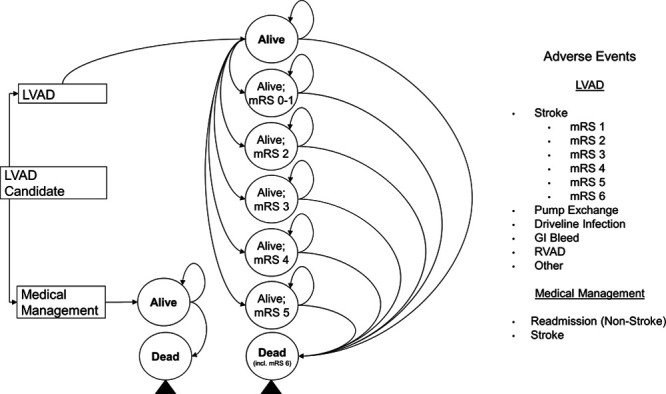
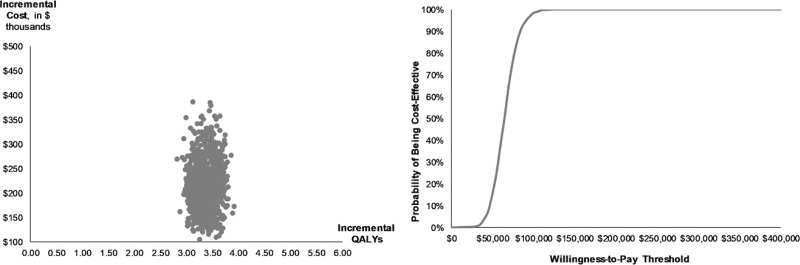
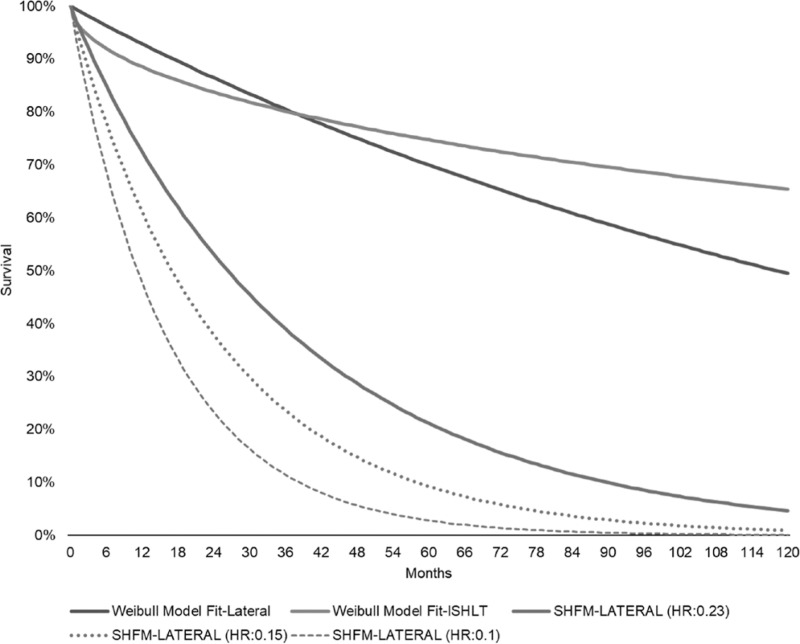
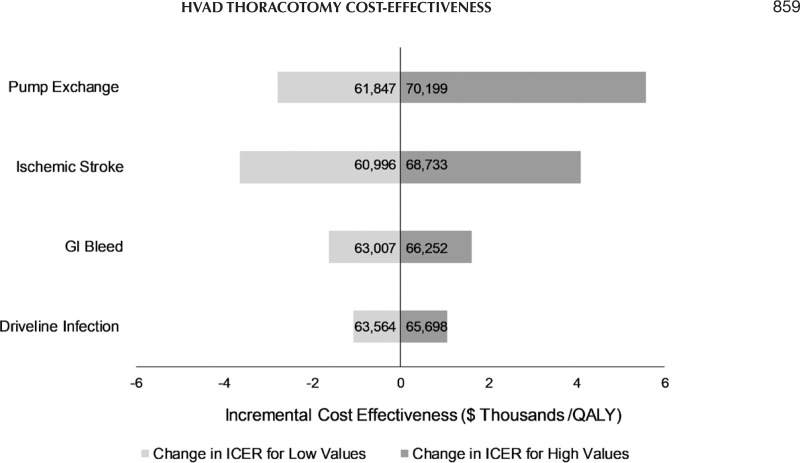
This study reports the first analysis regarding cost-effectiveness of left ventricular assist device (LVAD) implantation via thoracotomy. Cost-effectiveness of LVADs implanted via the traditional surgical approach of sternotomy has been improved through the years because of technological advances, along with understanding the importance of patient selection and postimplant management have on positively affecting outcomes. Given the positive clinical outcomes of the thoracotomy approach, we seek to study the cost-effectiveness of a centrifugal LVAD via this less invasive approach. We developed a Markov model. Survival and quality of life inputs (QALY) for the LVAD arm were based on data from the LATERAL clinical trial. For the Medical Management arm, survival was derived from the Seattle Heart Failure Model. The heart transplant probability was derived from INTERMACS. Survival after heart transplantation used International Society for Heart and Lung Transplantation data. Cost inputs were calculated based on Medicare data and past literature. The incremental cost-effectiveness ratio was found to be $64,632 per quality adjusted life year and $57,891 per life year in the bridge to transplant indication. These results demonstrate further improvement in the overall cost-effectiveness of LVAD therapy and confirm implantation of LVADs via a less invasive approach as being cost-effective.
这项研究报告了首例关于经胸切开术植入左心室辅助装置(LVAD)的成本效益分析。由于技术进步,以及对患者选择和植入后管理对积极影响结果的重要性的认识,经胸骨切开术的传统手术方法植入的 LVAD 的成本效益得到了改善。鉴于经胸切开术方法的积极临床结果,我们试图通过这种微创方法研究离心 LVAD 的成本效益。我们开发了一个马尔可夫模型。LVAD 臂的生存和生活质量(QALY)输入基于 LATERAL 临床试验的数据。对于医疗管理臂,生存来自西雅图心力衰竭模型。心脏移植概率来自 INTERMACS。心脏移植后的生存使用国际心肺移植学会的数据。成本输入是根据医疗保险数据和过去的文献计算的。在桥接移植适应证中,增量成本效益比为每质量调整生命年 64632 美元,每生命年 57891 美元。这些结果进一步证明了 LVAD 治疗的总体成本效益得到了改善,并证实了通过微创方法植入 LVAD 的成本效益。