National Primate Research Center, Korea Research Institute of Bioscience and Biotechnology, Cheongju, Chungcheongbuk, Republic of Korea.
Futuristic Animal Resource Center, Korea Research Institute of Bioscience and Biotechnology, Cheongju, Chungcheongbuk, Republic of Korea.
J Infect Dis. 2020 Oct 13;222(10):1596-1600. doi: 10.1093/infdis/jiaa486.
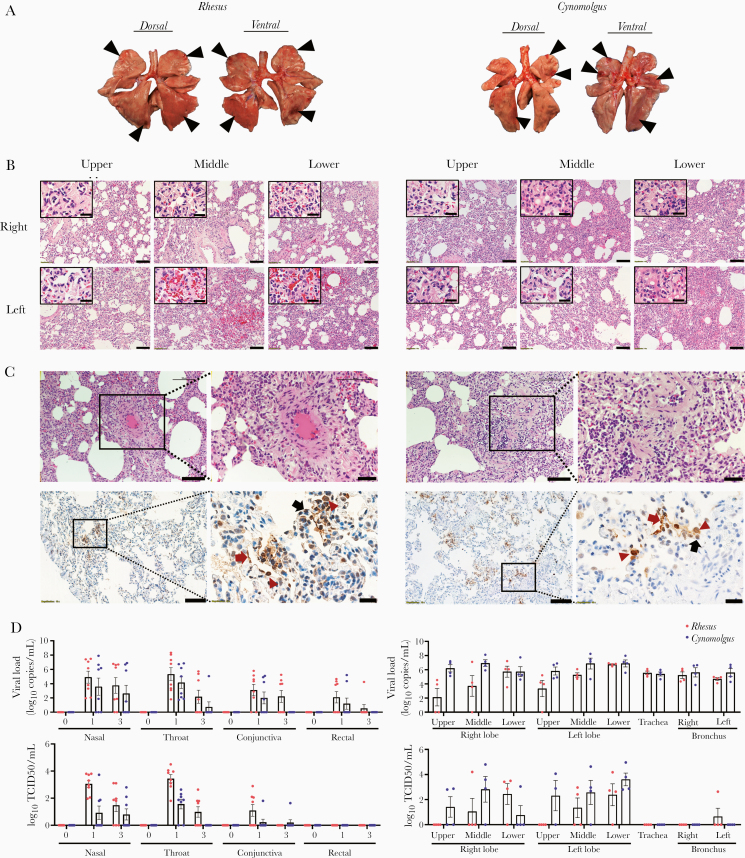
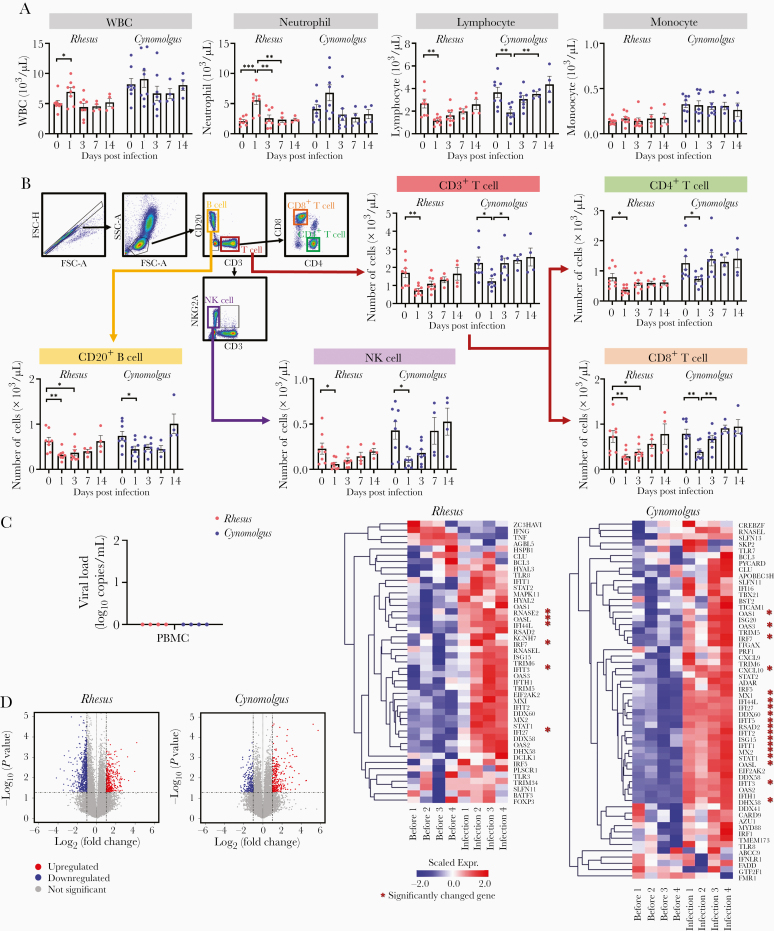
Using a reliable primate model is critical for developing therapeutic advances to treat humans infected with severe acute respiratory syndrome coronavirus-2 (SARS-CoV-2). Here, we exposed macaques to high titers of SARS-CoV-2 via combined transmission routes. We observed acute interstitial pneumonia with endotheliitis in the lungs of all infected macaques. All macaques had a significant loss of total lymphocytes during infection, which were restored over time. These data show that SARS-CoV-2 causes a coronavirus disease 2019 (COVID-19)-like disease in macaques. This new model could investigate the interaction between SARS-CoV-2 and the immune system to test therapeutic strategies.
使用可靠的灵长类动物模型对于开发治疗严重急性呼吸综合征冠状病毒 2 型(SARS-CoV-2)感染人类的方法至关重要。在这里,我们通过联合传播途径使猕猴暴露于高滴度的 SARS-CoV-2 下。我们观察到所有感染猕猴的肺部均有急性间质性肺炎伴内皮炎。所有猕猴在感染期间总淋巴细胞明显减少,随时间推移逐渐恢复。这些数据表明,SARS-CoV-2 可在猕猴中引起类似于 2019 冠状病毒病(COVID-19)的疾病。这种新模型可以研究 SARS-CoV-2 与免疫系统的相互作用,以测试治疗策略。