School of Pharmacy, Hanpu Science and Education District, Hunan University of Chinese Medicine, 300 Xueshi Road, Changsha, 410208, Hunan, China.
Division of Stem Cell Regulation and Application, Hunan University of Chinese Medicine, Changsha, Hunan, China.
Cell Commun Signal. 2020 Aug 3;18(1):119. doi: 10.1186/s12964-020-00581-2.
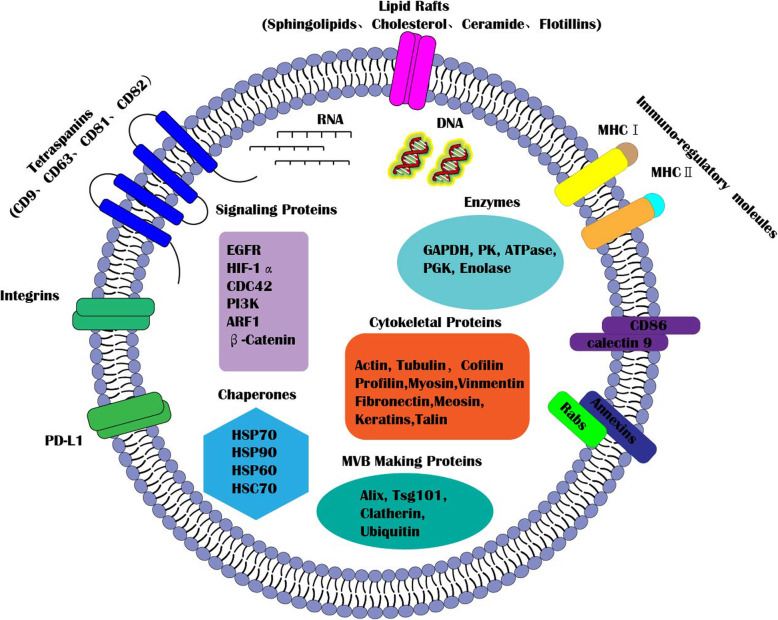
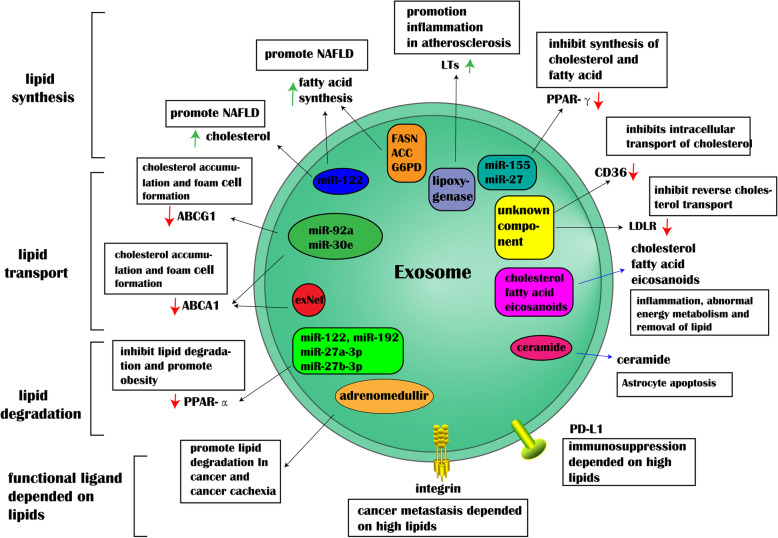
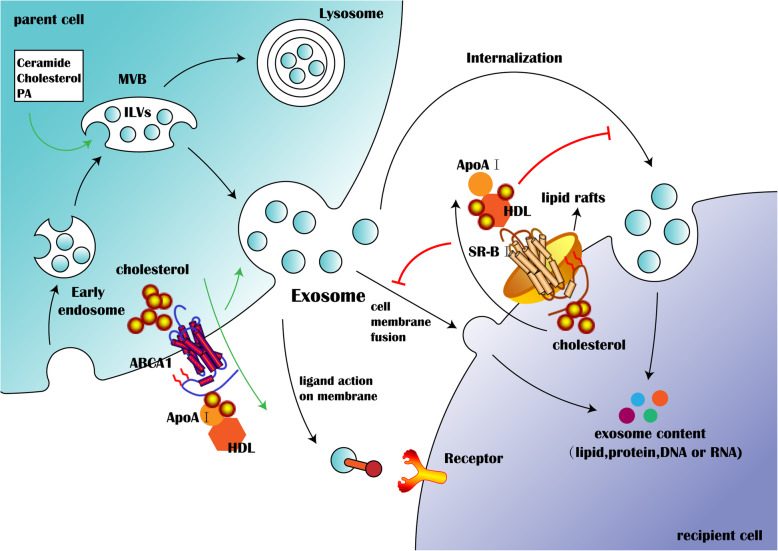
Exosomes have been considered as novel and potent vehicles of intercellular communication, instead of "cell dust". Exosomes are consistent with anucleate cells, and organelles with lipid bilayer consisting of the proteins and abundant lipid, enhancing their "rigidity" and "flexibility". Neighboring cells or distant cells are capable of exchanging genetic or metabolic information via exosomes binding to recipient cell and releasing bioactive molecules, such as lipids, proteins, and nucleic acids. Of note, exosomes exert the remarkable effects on lipid metabolism, including the synthesis, transportation and degradation of the lipid. The disorder of lipid metabolism mediated by exosomes leads to the occurrence and progression of diseases, such as atherosclerosis, cancer, non-alcoholic fatty liver disease (NAFLD), obesity and Alzheimer's diseases and so on. More importantly, lipid metabolism can also affect the production and secretion of exosomes, as well as interactions with the recipient cells. Therefore, exosomes may be applied as effective targets for diagnosis and treatment of diseases. Video abstract.
外泌体被认为是细胞间通讯的新型有效载体,而不是“细胞尘埃”。外泌体与无核细胞一致,由双层脂膜组成,其中含有丰富的蛋白质和脂质,从而增强了其“刚性”和“柔性”。通过外泌体与受体细胞结合并释放生物活性分子(如脂质、蛋白质和核酸),邻近细胞或远处细胞能够交换遗传或代谢信息。值得注意的是,外泌体对脂质代谢有显著影响,包括脂质的合成、运输和降解。外泌体介导的脂质代谢紊乱导致疾病的发生和发展,如动脉粥样硬化、癌症、非酒精性脂肪性肝病(NAFLD)、肥胖和阿尔茨海默病等。更重要的是,脂质代谢也可以影响外泌体的产生和分泌,以及与受体细胞的相互作用。因此,外泌体可能成为疾病诊断和治疗的有效靶点。视频摘要。