Rotterdam School of Management, Erasmus University, 3062 PA Rotterdam, The Netherlands
Rotterdam School of Management, Erasmus University, 3062 PA Rotterdam, The Netherlands.
Proc Natl Acad Sci U S A. 2020 Aug 11;117(32):19080-19091. doi: 10.1073/pnas.2003480117. Epub 2020 Aug 3.
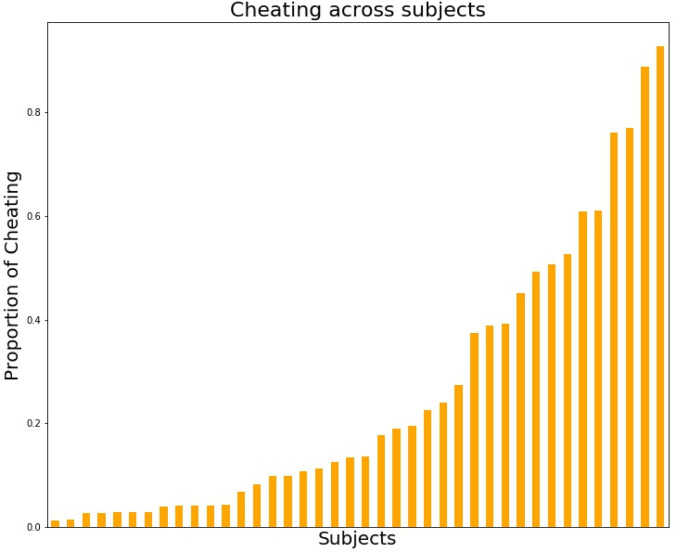
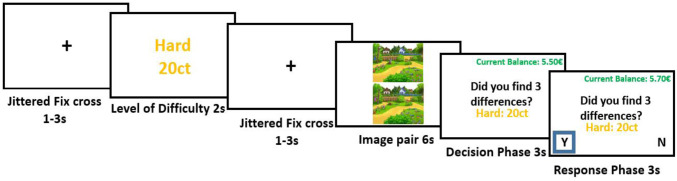
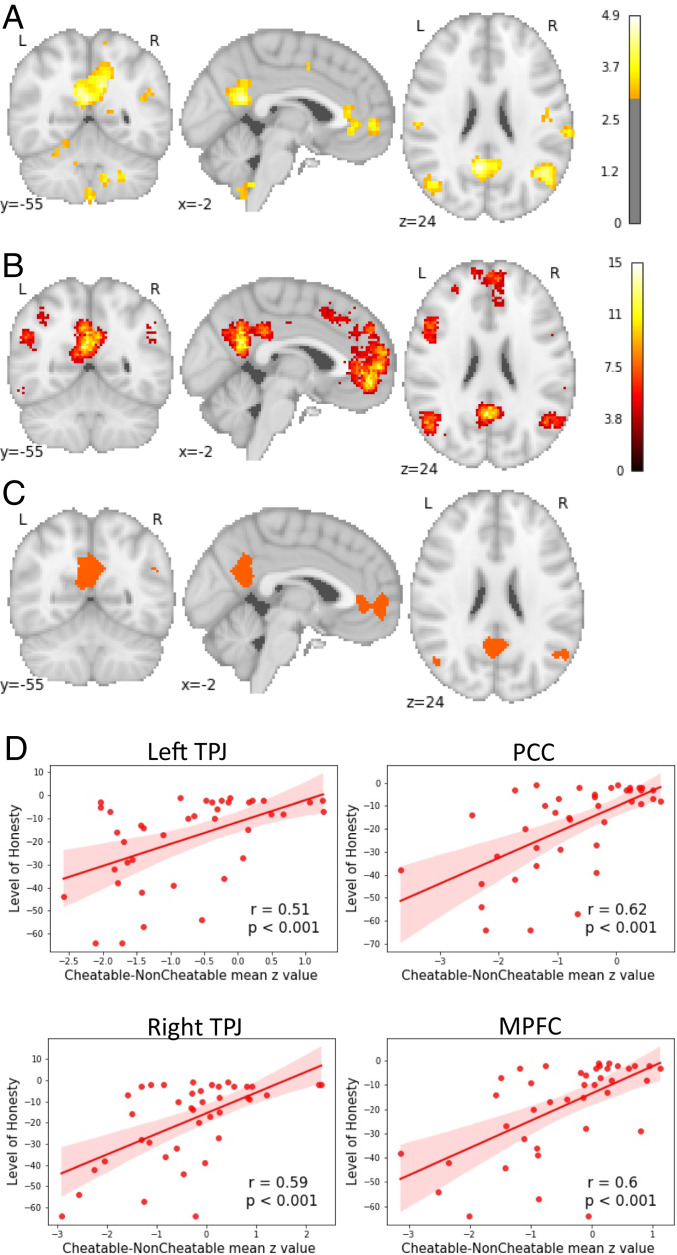
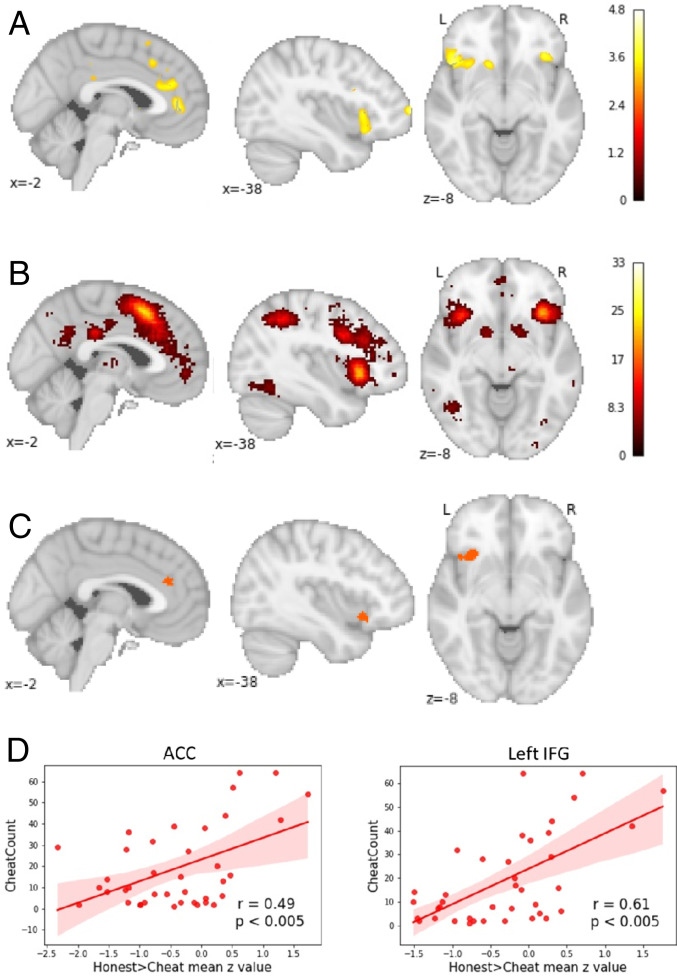
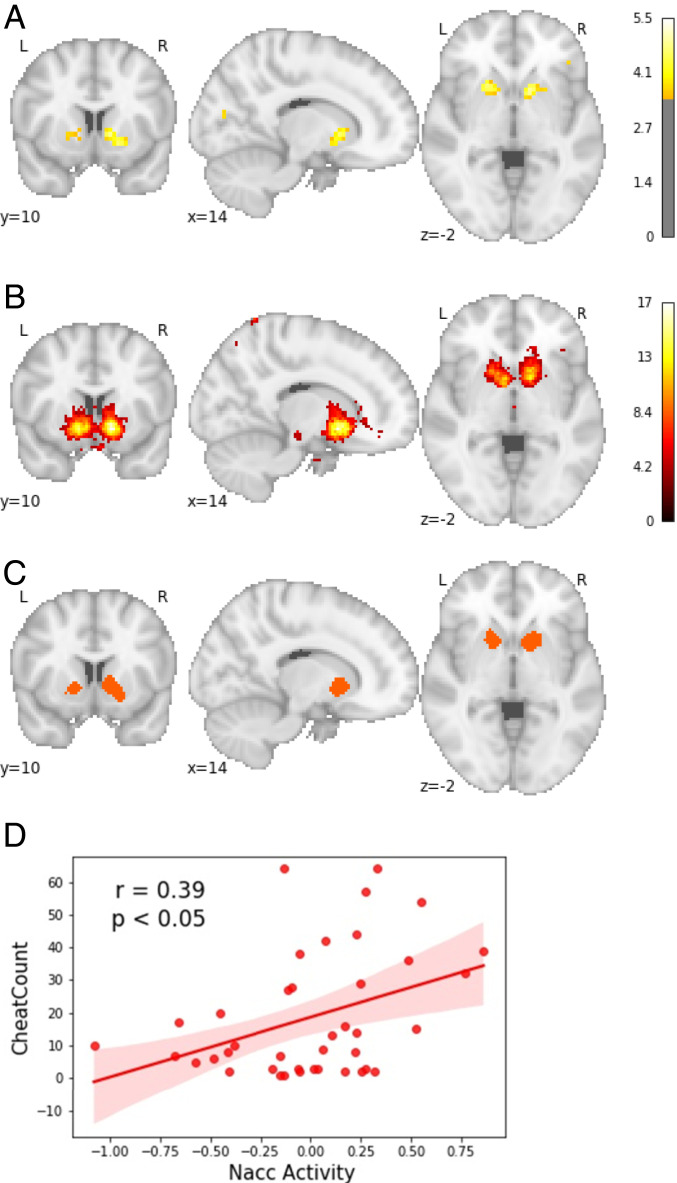
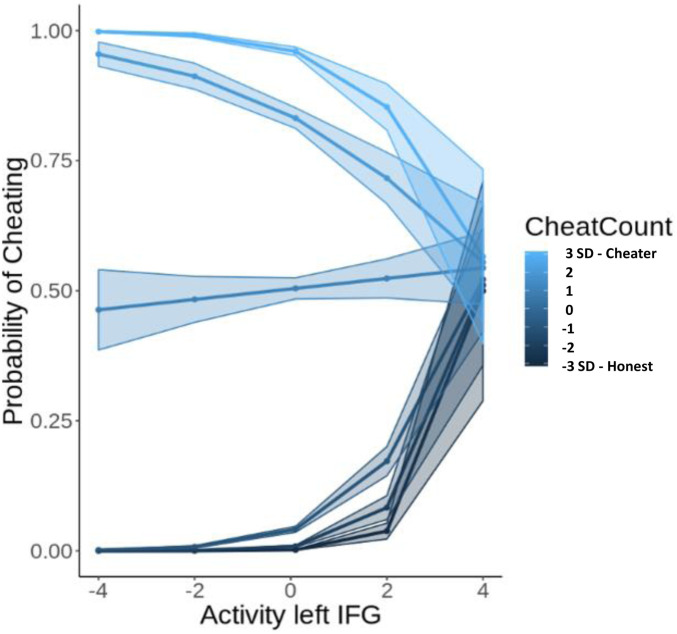
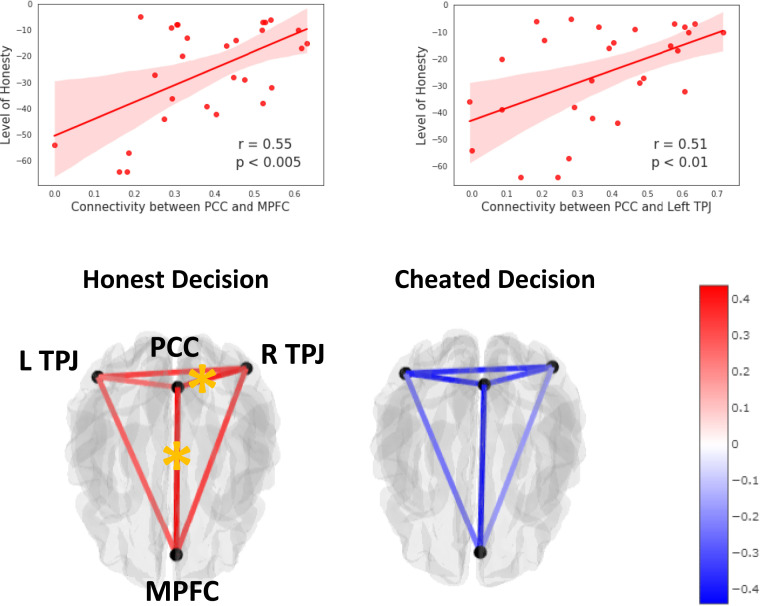
Every day, we are faced with the conflict between the temptation to cheat for financial gains and maintaining a positive image of ourselves as being a "good person." While it has been proposed that cognitive control is needed to mediate this conflict between reward and our moral self-image, the exact role of cognitive control in (dis)honesty remains elusive. Here we identify this role, by investigating the neural mechanism underlying cheating. We developed a task which allows for inconspicuously measuring spontaneous cheating on a trial-by-trial basis in the MRI scanner. We found that activity in the nucleus accumbens promotes cheating, particularly for individuals who cheat a lot, while a network consisting of posterior cingulate cortex, temporoparietal junction, and medial prefrontal cortex promotes honesty, particularly in individuals who are generally honest. Finally, activity in areas associated with cognitive control (anterior cingulate cortex and inferior frontal gyrus) helped dishonest participants to be honest, whereas it enabled cheating for honest participants. Thus, our results suggest that cognitive control is not needed to be honest or dishonest per se but that it depends on an individual's moral default.
每天,我们都面临着为了经济利益而作弊的诱惑,以及保持自己作为“好人”的积极形象之间的冲突。虽然有人提出认知控制对于调节这种奖励和我们道德自我形象之间的冲突是必要的,但认知控制在(不)诚实中的具体作用仍然难以捉摸。在这里,我们通过研究作弊的神经机制来确定这种作用。我们开发了一项任务,允许在 MRI 扫描仪中在逐案的基础上不显眼地测量自发作弊。我们发现,伏隔核的活动促进了作弊,特别是对于经常作弊的人,而由后扣带皮层、颞顶叶联合区和内侧前额叶组成的网络则促进了诚实,特别是对于一般诚实的人。最后,与认知控制(前扣带皮层和额下回)相关的区域的活动帮助不诚实的参与者变得诚实,而对于诚实的参与者,则使其能够作弊。因此,我们的结果表明,认知控制本身并不是诚实或不诚实所必需的,而是取决于个人的道德默认。