Department of Biochemistry, University of Washington, Seattle, United States.
Institute for Protein Design, University of Washington, Seattle, United States.
Elife. 2020 Aug 4;9:e57659. doi: 10.7554/eLife.57659.
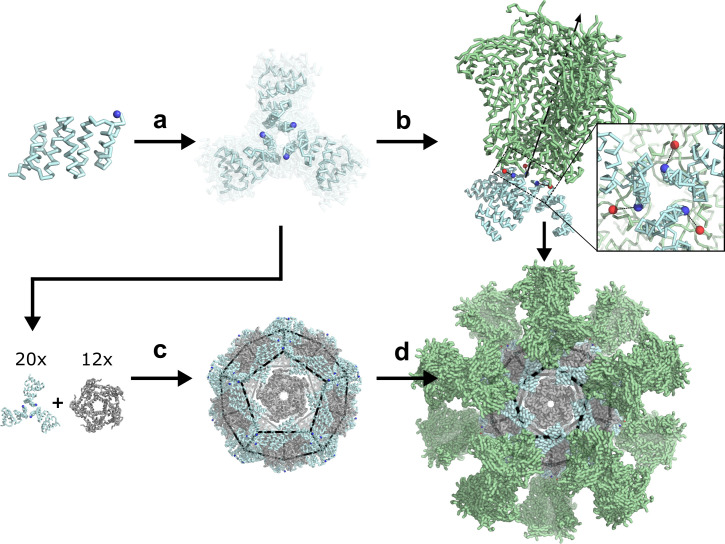
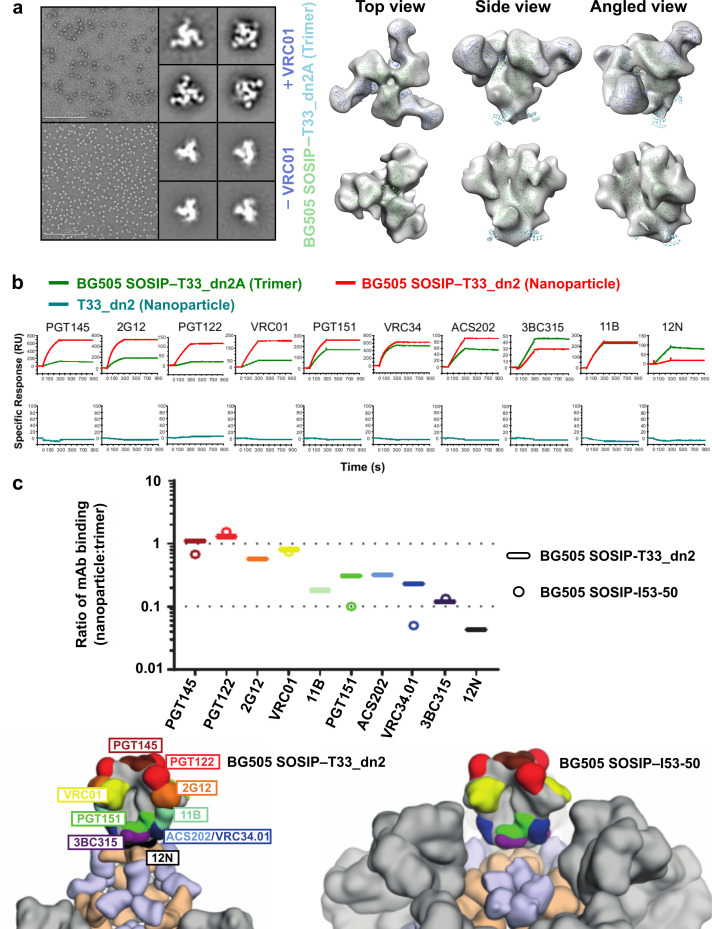
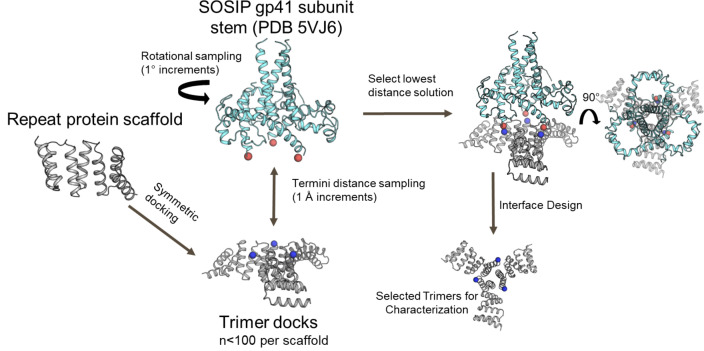
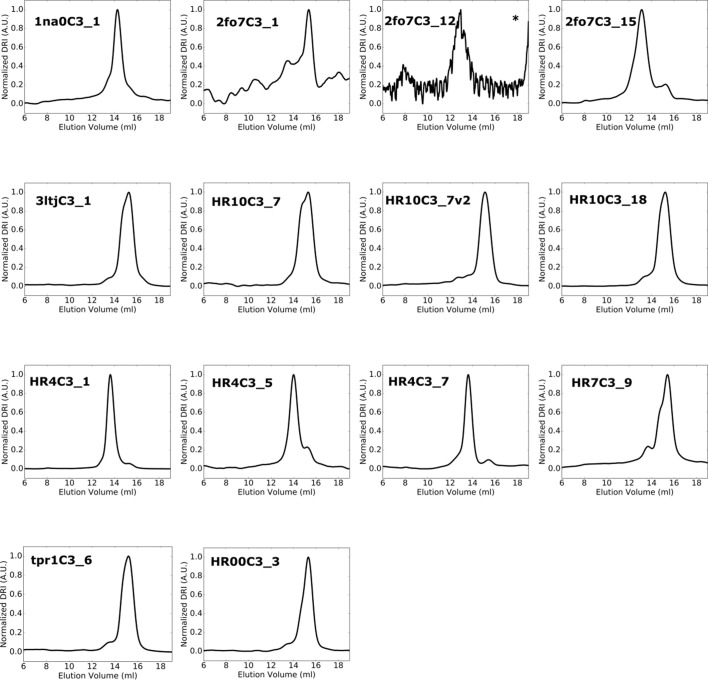
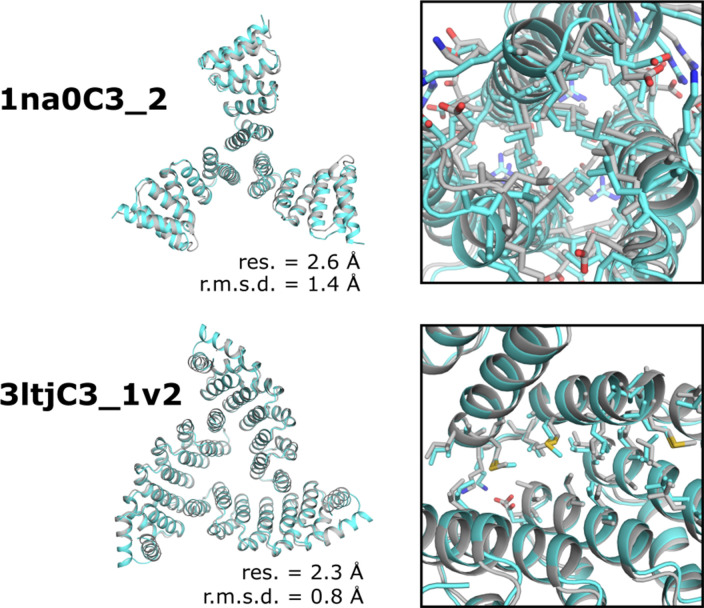
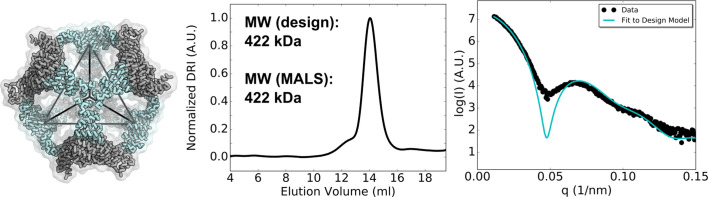
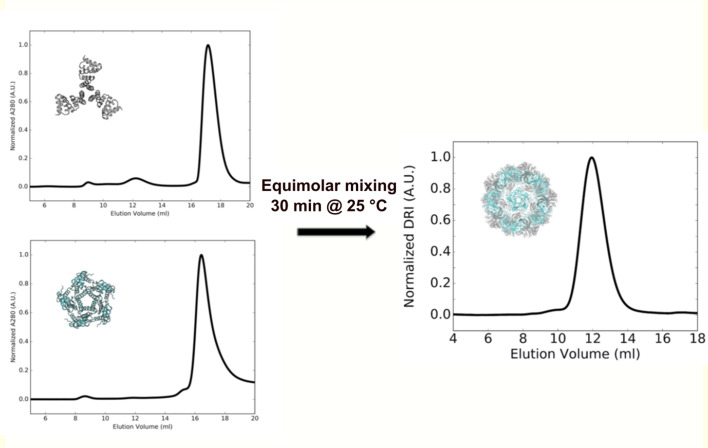
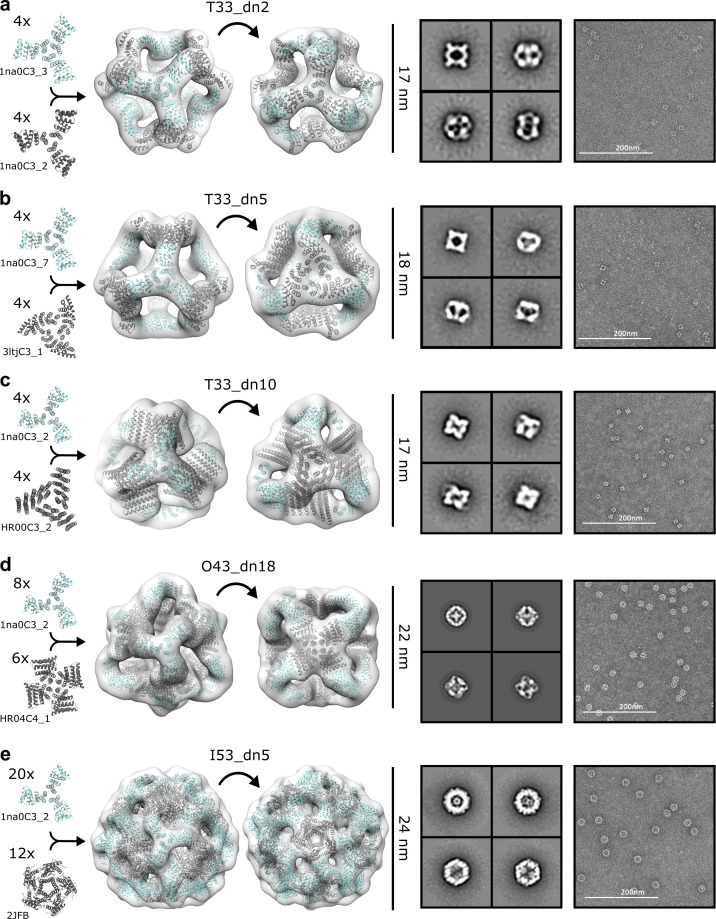
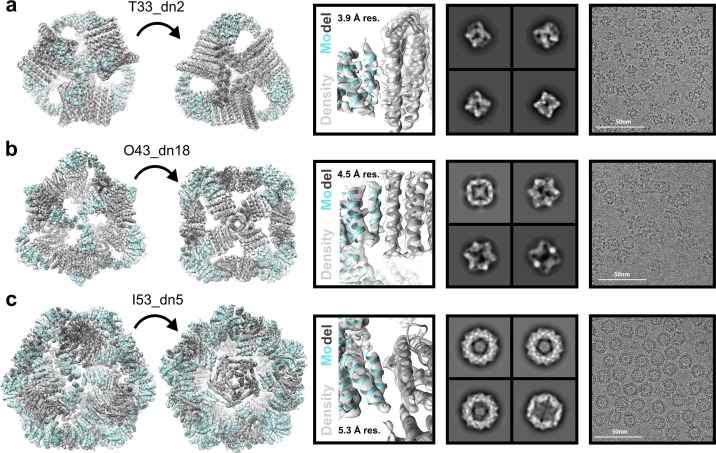
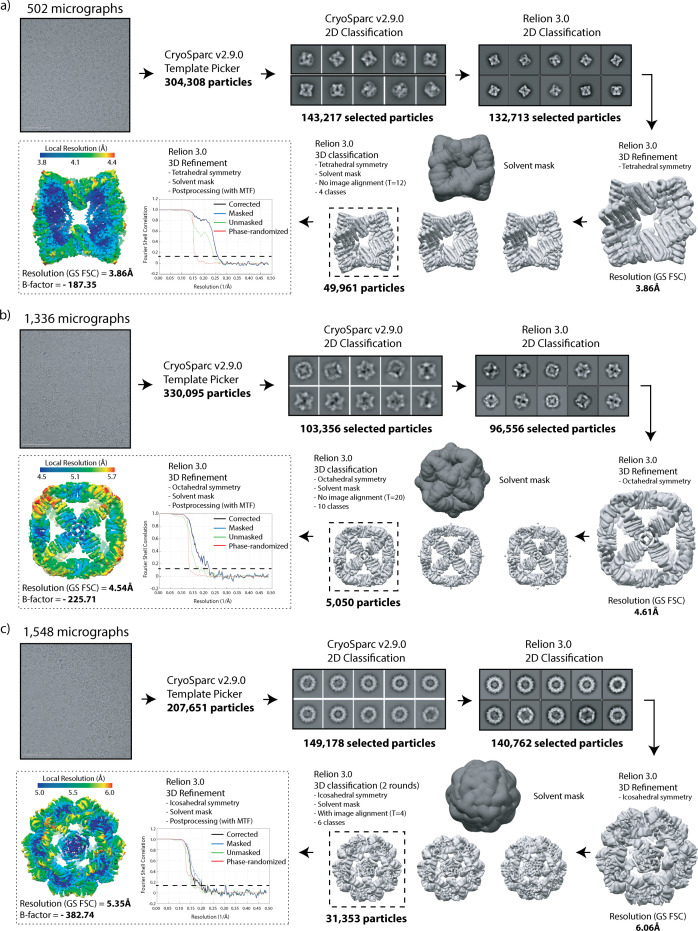
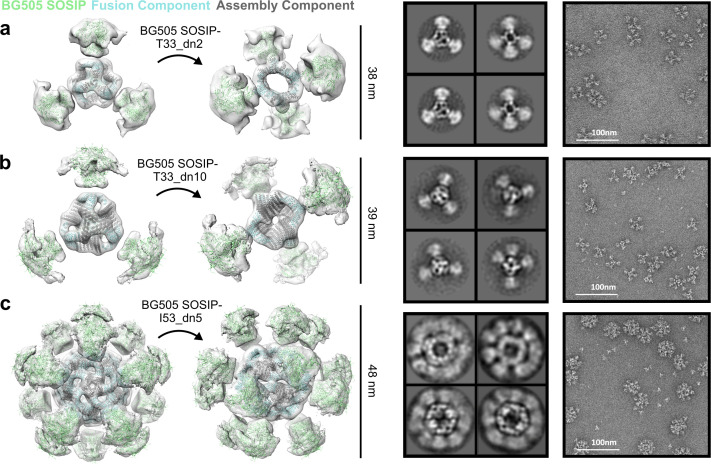
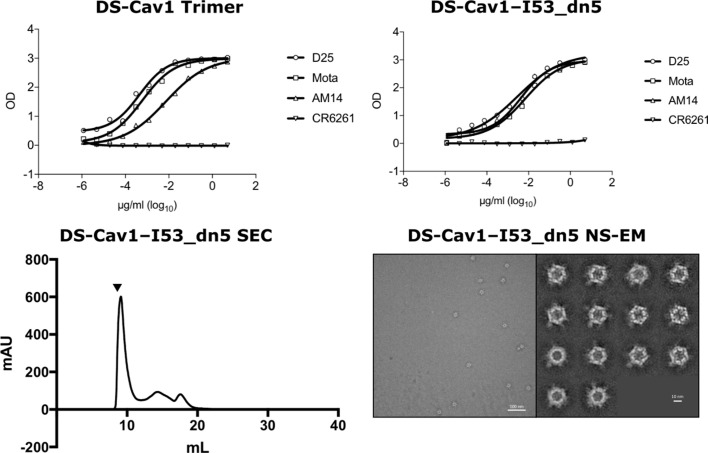
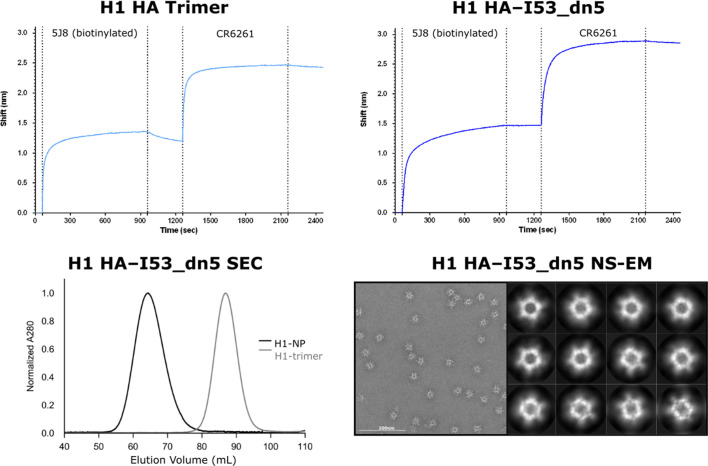
Multivalent presentation of viral glycoproteins can substantially increase the elicitation of antigen-specific antibodies. To enable a new generation of anti-viral vaccines, we designed self-assembling protein nanoparticles with geometries tailored to present the ectodomains of influenza, HIV, and RSV viral glycoprotein trimers. We first designed trimers tailored for antigen fusion, featuring N-terminal helices positioned to match the C termini of the viral glycoproteins. Trimers that experimentally adopted their designed configurations were incorporated as components of tetrahedral, octahedral, and icosahedral nanoparticles, which were characterized by cryo-electron microscopy and assessed for their ability to present viral glycoproteins. Electron microscopy and antibody binding experiments demonstrated that the designed nanoparticles presented antigenically intact prefusion HIV-1 Env, influenza hemagglutinin, and RSV F trimers in the predicted geometries. This work demonstrates that antigen-displaying protein nanoparticles can be designed from scratch, and provides a systematic way to investigate the influence of antigen presentation geometry on the immune response to vaccination.
病毒糖蛋白的多价呈现可以显著增加抗原特异性抗体的产生。为了开发新一代抗病毒疫苗,我们设计了具有特定几何形状的自组装蛋白纳米颗粒,以呈现流感、艾滋病毒和呼吸道合胞病毒糖蛋白三聚体的外域。我们首先设计了针对抗原融合的三聚体,其 N 端螺旋定位以匹配病毒糖蛋白的 C 端。实验上采用设计构象的三聚体被纳入四面体、八面体和二十面体纳米颗粒的组成部分,这些颗粒通过冷冻电子显微镜进行了表征,并评估了它们呈现病毒糖蛋白的能力。电子显微镜和抗体结合实验表明,设计的纳米颗粒以预测的几何形状呈现出抗原性完整的融合前 HIV-1 Env、流感血凝素和 RSV F 三聚体。这项工作表明,可以从头开始设计展示抗原的蛋白纳米颗粒,并提供了一种系统的方法来研究抗原呈现几何形状对疫苗接种免疫反应的影响。