Kemona Aleksandra, Piotrowska Małgorzata
Institute of Fermentation Technology and Microbiology, Faculty of Biotechnology and Food Sciences, Lodz University of Technology, Wólczańska 71/173, 90-924 Łódź, Poland.
Polymers (Basel). 2020 Aug 5;12(8):1752. doi: 10.3390/polym12081752.
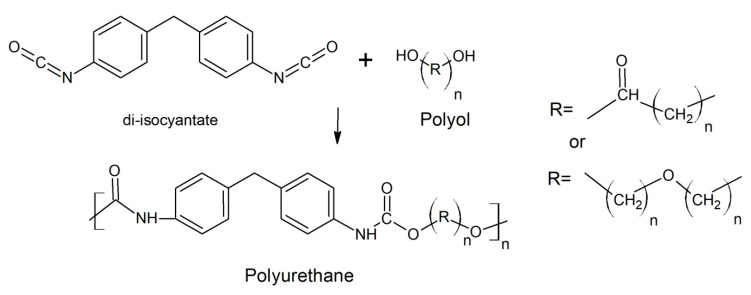
Growing water and land pollution, the possibility of exhaustion of raw materials and resistance of plastics to physical and chemical factors results in increasing importance of synthetic polymers waste recycling, recovery and environmentally friendly ways of disposal. Polyurethanes (PU) are a family of versatile synthetic polymers with highly diverse applications. They are class of polymers derived from the condensation of polyisocyanates and polyalcohols. This paper reports the latest developments in the field of polyurethane disposal, recycling and recovery. Various methods tested and applied in recent years have proven that the processing of PU waste can be economically and ecologically beneficial. At the moment mechanical recycling and glycolysis are the most important ones. Polyurethanes' biological degradation is highly promising for both post-consumer and postproduction waste. It can also be applied in bioremediation of water and soil contaminated with polyurethanes. Another possibility for biological methods is the synthesis of PU materials sensitive to biological degradation. In conclusion, a high diversity of polyurethane waste types and derivation results in demand for a wide range of methods of processing. Furthermore, already existing ones appear to be enough to state that the elimination of not reprocessed polyurethane waste in the future is possible.
水和土地污染日益严重,原材料枯竭的可能性以及塑料对物理和化学因素的耐受性,使得合成聚合物废料的回收利用、再利用以及环保处置方式变得愈发重要。聚氨酯(PU)是一类用途广泛的合成聚合物,应用极为多样。它们是由多异氰酸酯和多元醇缩合而成的聚合物类别。本文报道了聚氨酯处置、回收利用领域的最新进展。近年来测试和应用的各种方法已证明,聚氨酯废料的处理在经济和生态方面均有益处。目前,机械回收和醇解是最为重要的方法。聚氨酯的生物降解对于消费后废料和生产后废料都极具前景。它还可应用于被聚氨酯污染的水和土壤的生物修复。生物方法的另一种可能性是合成对生物降解敏感的聚氨酯材料。总之,聚氨酯废料类型和来源的高度多样性导致需要多种处理方法。此外,现有的方法似乎足以表明未来消除未再加工的聚氨酯废料是可行的。