Department of Chemical and Environmental Engineering, School of Engineering and Applied Science, Yale University, New Haven, CT, 06511, USA.
SEARCH (Solutions for Energy, Air, Climate and Health) Center, Yale University, New Haven, CT, USA.
J Expo Sci Environ Epidemiol. 2021 Nov;31(6):943-952. doi: 10.1038/s41370-020-0258-7. Epub 2020 Aug 6.
The COVID-19 pandemic has presented an acute shortage of regulation-tested masks. Many of the alternatives available to hospitals have not been certified, leaving uncertainty about their ability to properly protect healthcare workers from SARS-CoV-2 transmission.
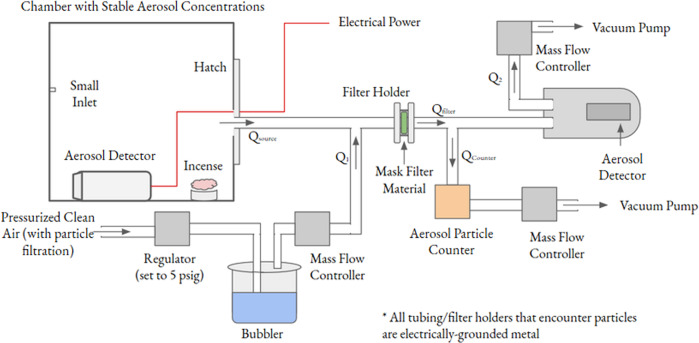
For situations where regulatory methods are not accessible, we present experimental methods to evaluate mask filtration and breathability quickly via cost-effective approaches (e.g., ~$2000 USD) that could be replicated in communities of need without extensive infrastructure. We demonstrate the need for screening by evaluating an existing diverse inventory of masks/respirators from a local hospital.
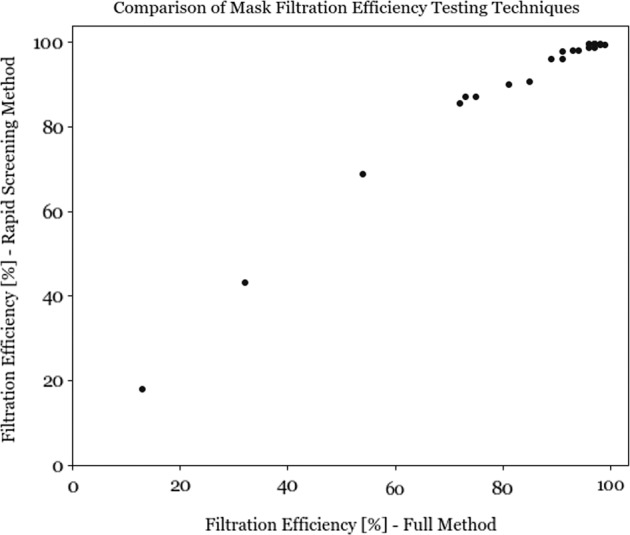
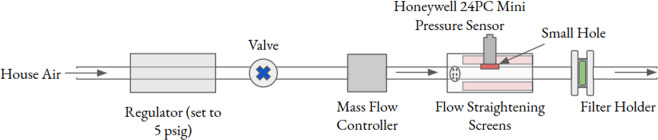
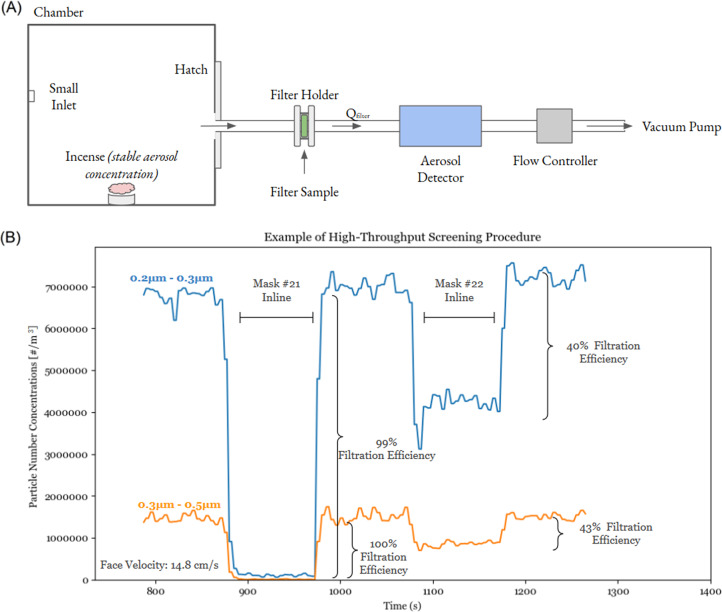
Two experimental approaches are presented to examine both aerosol filtration and flow impedance (i.e., breathability). For one of the approaches ("quick assessment"), screening for appropriate filtration could be performed under 10 min per mask, on average. Mask fit tests were conducted in tandem but are not the focus of this study.
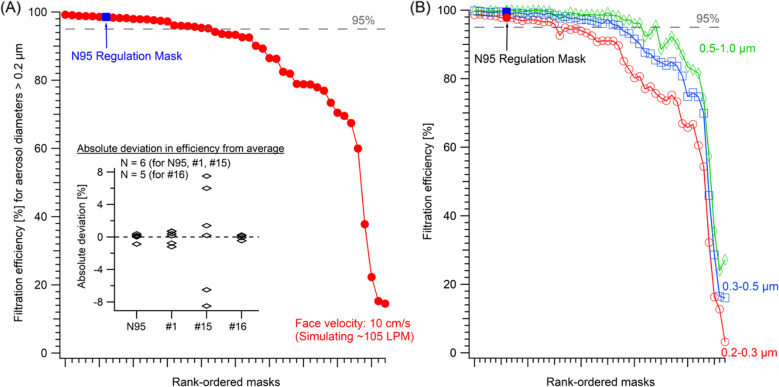
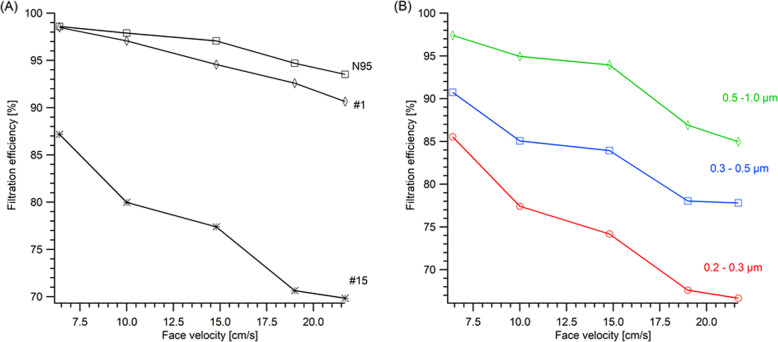
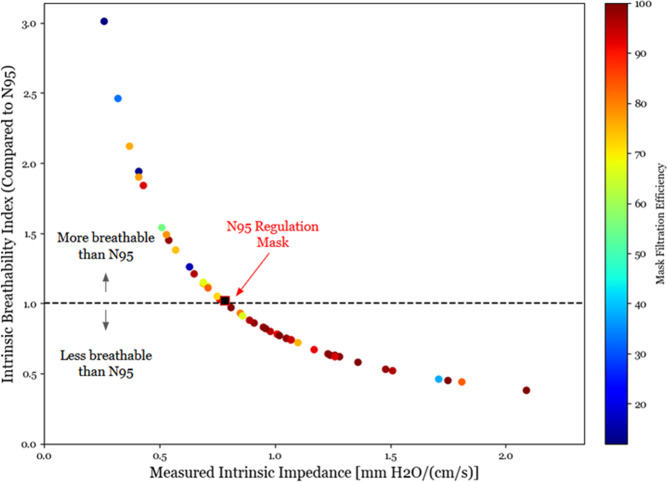
Tests conducted of 47 nonregulation masks reveal variable performance. A number of commercially available masks in hospital inventories perform similarly to N95 masks for aerosol filtration of 0.2 μm and above, but there is a range of masks with relatively lower filtration efficiencies (e.g., <90%) and a subset with poorer filtration (e.g., <70%). All masks functioned acceptably for breathability, and impedance was not correlated with filtration efficiency.
With simplified tests, organizations with mask/respirator shortages and uncertain inventories can make informed decisions about use and procurement.
COVID-19 大流行导致经过监管测试的口罩严重短缺。医院可用的许多替代品未经认证,其保护医护人员免受 SARS-CoV-2 传播的能力存在不确定性。
在无法获得监管方法的情况下,我们提出了通过经济有效的方法(例如,约 2000 美元)快速评估口罩过滤和透气性的实验方法,这些方法无需广泛的基础设施即可在有需求的社区中复制。我们通过评估当地医院现有多样化的口罩/呼吸器库存来证明筛选的必要性。
提出了两种实验方法来检查气溶胶过滤和流动阻抗(即透气性)。对于其中一种方法(“快速评估”),平均每个口罩的筛选过滤性能可在 10 分钟内完成。同时进行了口罩贴合度测试,但不是本研究的重点。
对 47 个未经监管的口罩进行的测试显示出不同的性能。医院库存中的一些商业上可获得的口罩在过滤 0.2μm 及以上的气溶胶方面与 N95 口罩性能相似,但也有一些口罩的过滤效率相对较低(例如,<90%),还有一部分口罩的过滤效果较差(例如,<70%)。所有口罩的透气性均表现良好,且阻抗与过滤效率无关。
通过简化测试,口罩/呼吸器短缺且库存不确定的组织可以就使用和采购做出明智的决策。