• 文献检索
  • 文档翻译
  • 深度研究
  • 学术资讯
  • Suppr Zotero 插件Zotero 插件
  • 邀请有礼
  • 套餐&价格
  • 历史记录
应用&插件
Suppr Zotero 插件Zotero 插件浏览器插件Mac 客户端Windows 客户端微信小程序
定价
高级版会员购买积分包购买API积分包
服务
文献检索文档翻译深度研究API 文档MCP 服务
关于我们
关于 Suppr公司介绍联系我们用户协议隐私条款
关注我们

Suppr 超能文献

核心技术专利:CN118964589B侵权必究
粤ICP备2023148730 号-1Suppr @ 2026

文献检索

告别复杂PubMed语法,用中文像聊天一样搜索,搜遍4000万医学文献。AI智能推荐,让科研检索更轻松。

立即免费搜索

文件翻译

保留排版,准确专业,支持PDF/Word/PPT等文件格式,支持 12+语言互译。

免费翻译文档

深度研究

AI帮你快速写综述,25分钟生成高质量综述,智能提取关键信息,辅助科研写作。

立即免费体验

流感患者患病期间和康复后咳嗽产生的气溶胶颗粒的数量和大小分布。

Quantity and size distribution of cough-generated aerosol particles produced by influenza patients during and after illness.

机构信息

National Institute for Occupational Safety and Health, Health Effects Laboratory Division, Morgantown, West Virginia, USA.

出版信息

J Occup Environ Hyg. 2012;9(7):443-9. doi: 10.1080/15459624.2012.684582.

DOI:10.1080/15459624.2012.684582
PMID:22651099
原文链接:https://pmc.ncbi.nlm.nih.gov/articles/PMC4676262/
Abstract

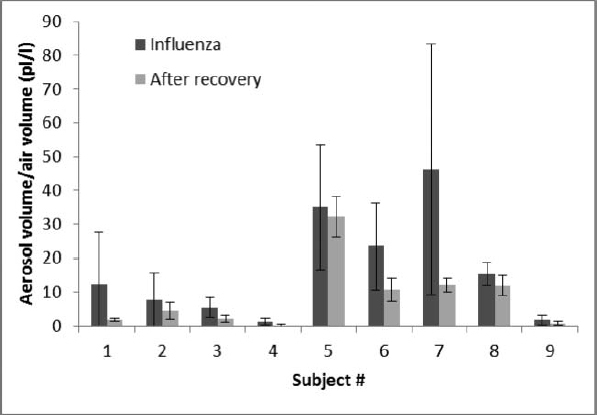
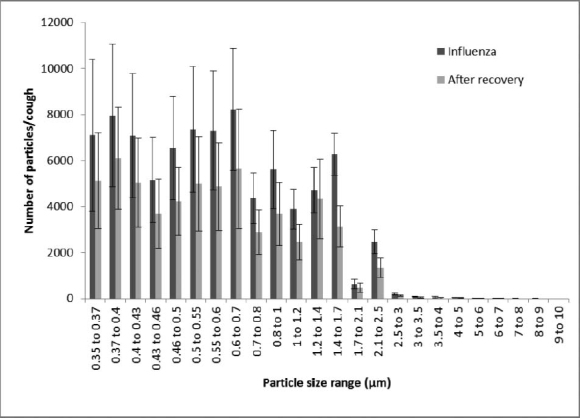
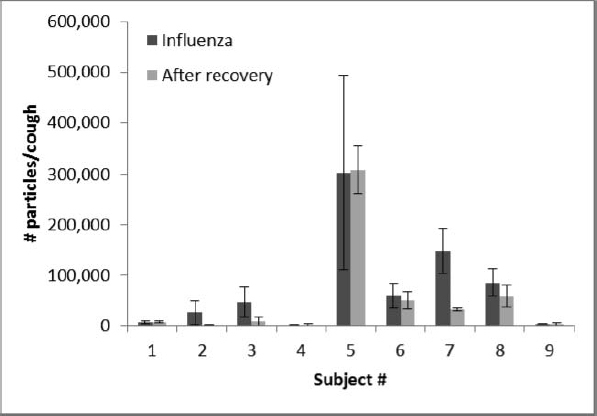
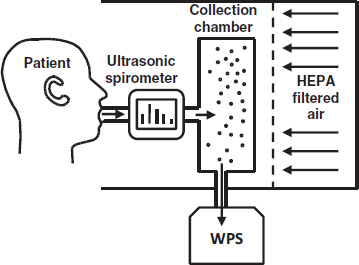
The question of whether influenza is transmitted to a significant degree by aerosols remains controversial, in part, because little is known about the quantity and size of potentially infectious airborne particles produced by people with influenza. In this study, the size and amount of aerosol particles produced by nine subjects during coughing were measured while they had influenza and after they had recovered, using a laser aerosol particle spectrometer with a size range of 0.35 to 10 μm. Individuals with influenza produce a significantly greater volume of aerosol when ill compared with afterward (p = 0.0143). When the patients had influenza, their average cough aerosol volume was 38.3 picoliters (pL) of particles per cough (SD 43.7); after patients recovered, the average volume was 26.4 pL per cough (SD 45.6). The number of particles produced per cough was also higher when subjects had influenza (average 75,400 particles/cough, SD 97,300) compared with afterward (average 52,200, SD 98,600), although the difference did not reach statistical significance (p = 0.1042). The average number of particles expelled per cough varied widely from patient to patient, ranging from 900 to 302,200 particles/cough while subjects had influenza and 1100 to 308,600 particles/cough after recovery. When the subjects had influenza, an average of 63% of each subject's cough aerosol particle volume in the detection range was in the respirable size fraction (SD 22%), indicating that these particles could reach the alveolar region of the lungs if inhaled by another person. This enhancement in aerosol generation during illness may play an important role in influenza transmission and suggests that a better understanding of this phenomenon is needed to predict the production and dissemination of influenza-laden aerosols by people infected with this virus. [Supplementary materials are available for this article. Go to the publisher's online edition of Journal of Occupational and Environmental Hygiene for the following free supplemental resources: a PDF file of demographic information, influenza test results, and volume and peak flow rate during each cough and a PDF file containing number and size of aerosol particles produced.].

摘要

关于流感是否在很大程度上通过气溶胶传播,这一问题仍然存在争议,部分原因是人们对流感患者产生的具有潜在传染性的空气传播飞沫的数量和大小知之甚少。在这项研究中,使用激光气溶胶粒子谱仪(粒径范围为 0.35 至 10μm),对 9 名流感患者咳嗽时产生的气溶胶粒子的大小和数量进行了测量,这 9 名患者在患病和康复后分别进行了测量。与康复后相比,流感患者咳嗽时产生的气溶胶体积明显更大(p = 0.0143)。当患者患有流感时,他们每次咳嗽的平均咳嗽气溶胶体积为 38.3 皮升(pL)的颗粒(SD 43.7);在患者康复后,每次咳嗽的平均体积为 26.4 pL(SD 45.6)。与康复后相比,患者咳嗽时产生的颗粒数量也更高(平均每咳嗽 75400 个颗粒/咳嗽,SD 97300),尽管差异没有达到统计学意义(p = 0.1042)。每个患者每次咳嗽排出的颗粒数量差异很大,范围从 900 到 302200 个颗粒/咳嗽,而在患者患病时,范围从 1100 到 308600 个颗粒/咳嗽。当患者患有流感时,每个患者咳嗽气溶胶粒子体积的检测范围内的平均有 63%是可吸入的粒径部分(SD 22%),这表明如果另一个人吸入这些颗粒,它们可能会到达肺部的肺泡区域。在患病期间,气溶胶生成的这种增强可能在流感传播中发挥重要作用,这表明需要更好地了解这种现象,以便预测感染这种病毒的人产生和传播携带流感病毒的气溶胶。[本文提供了补充材料。请访问《职业与环境卫生杂志》的出版商在线版本,获取以下免费补充资源:一份 PDF 文件,其中包含人口统计学信息、流感检测结果以及每次咳嗽的体积和峰值流量;以及一份包含产生的气溶胶粒子数量和大小的 PDF 文件。]
https://cdn.ncbi.nlm.nih.gov/pmc/blobs/74c1/7196693/2a6a9f51ec5f/UOEH_A_684582_F0004_B.jpg
https://cdn.ncbi.nlm.nih.gov/pmc/blobs/74c1/7196693/a791b65e3170/UOEH_A_684582_F0001_B.jpg
https://cdn.ncbi.nlm.nih.gov/pmc/blobs/74c1/7196693/94514b75a0c3/UOEH_A_684582_F0002_B.jpg
https://cdn.ncbi.nlm.nih.gov/pmc/blobs/74c1/7196693/8836e464d8e5/UOEH_A_684582_F0003_B.jpg
https://cdn.ncbi.nlm.nih.gov/pmc/blobs/74c1/7196693/2a6a9f51ec5f/UOEH_A_684582_F0004_B.jpg
https://cdn.ncbi.nlm.nih.gov/pmc/blobs/74c1/7196693/a791b65e3170/UOEH_A_684582_F0001_B.jpg
https://cdn.ncbi.nlm.nih.gov/pmc/blobs/74c1/7196693/94514b75a0c3/UOEH_A_684582_F0002_B.jpg
https://cdn.ncbi.nlm.nih.gov/pmc/blobs/74c1/7196693/8836e464d8e5/UOEH_A_684582_F0003_B.jpg
https://cdn.ncbi.nlm.nih.gov/pmc/blobs/74c1/7196693/2a6a9f51ec5f/UOEH_A_684582_F0004_B.jpg

相似文献

1
Quantity and size distribution of cough-generated aerosol particles produced by influenza patients during and after illness.流感患者患病期间和康复后咳嗽产生的气溶胶颗粒的数量和大小分布。
J Occup Environ Hyg. 2012;9(7):443-9. doi: 10.1080/15459624.2012.684582.
2
Viable influenza A virus in airborne particles expelled during coughs versus exhalations.咳嗽与呼气时呼出的空气颗粒中存活的甲型流感病毒。
Influenza Other Respir Viruses. 2016 Sep;10(5):404-13. doi: 10.1111/irv.12390. Epub 2016 Apr 15.
3
Viable influenza A virus in airborne particles from human coughs.来自人类咳嗽的空气传播颗粒中的活甲型流感病毒。
J Occup Environ Hyg. 2015;12(2):107-13. doi: 10.1080/15459624.2014.973113.
4
Efficacy of face shields against cough aerosol droplets from a cough simulator.面罩对咳嗽模拟器产生的咳嗽气溶胶飞沫的防护效果。
J Occup Environ Hyg. 2014;11(8):509-18. doi: 10.1080/15459624.2013.877591.
5
Measurements of airborne influenza virus in aerosol particles from human coughs.人咳嗽飞沫中气溶胶颗粒中流感病毒的测量。
PLoS One. 2010 Nov 30;5(11):e15100. doi: 10.1371/journal.pone.0015100.
6
[Standard technical specifications for methacholine chloride (Methacholine) bronchial challenge test (2023)].[氯化乙酰甲胆碱支气管激发试验标准技术规范(2023年)]
Zhonghua Jie He He Hu Xi Za Zhi. 2024 Feb 12;47(2):101-119. doi: 10.3760/cma.j.cn112147-20231019-00247.
7
Dispersion and exposure to a cough-generated aerosol in a simulated medical examination room.在模拟的医疗检查室中咳嗽产生的气溶胶的分散和暴露情况。
J Occup Environ Hyg. 2012;9(12):681-90. doi: 10.1080/15459624.2012.725986.
8
Cough aerosol in healthy participants: fundamental knowledge to optimize droplet-spread infectious respiratory disease management.健康受试者的咳嗽气溶胶:优化飞沫传播传染性呼吸道疾病管理的基本知识。
BMC Pulm Med. 2012 Mar 21;12:11. doi: 10.1186/1471-2466-12-11.
9
Influenza virus aerosols in human exhaled breath: particle size, culturability, and effect of surgical masks.人呼出的飞沫中的流感病毒:颗粒大小、可培养性和手术口罩的效果。
PLoS Pathog. 2013 Mar;9(3):e1003205. doi: 10.1371/journal.ppat.1003205. Epub 2013 Mar 7.
10
Exposures and cross-shift lung function declines in wildland firefighters.野外消防员的暴露和轮班肺功能下降。
J Occup Environ Hyg. 2014;11(9):591-603. doi: 10.1080/15459624.2014.895372.

引用本文的文献

1
Multi-objective performance assessment of HVAC systems and physical barriers on COVID-19 infection transmission in a high-speed train.高速列车中暖通空调系统和物理屏障对新冠病毒感染传播的多目标性能评估
J Build Eng. 2022 Aug 1;53:104544. doi: 10.1016/j.jobe.2022.104544. Epub 2022 Apr 21.
2
Water and Pathogenic Viruses Inactivation-Food Engineering Perspectives.水与致病病毒的灭活——食品工程视角
Food Eng Rev. 2020;12(3):251-267. doi: 10.1007/s12393-020-09234-z. Epub 2020 Jun 20.
3
Air-liquid interface model for influenza aerosol exposure .

本文引用的文献

1
Origin of exhaled breath particles from healthy and human rhinovirus-infected subjects.健康人群和人鼻病毒感染人群呼气颗粒的来源。
J Aerosol Med Pulm Drug Deliv. 2011 Jun;24(3):137-47. doi: 10.1089/jamp.2010.0815. Epub 2011 Mar 1.
2
Measurements of airborne influenza virus in aerosol particles from human coughs.人咳嗽飞沫中气溶胶颗粒中流感病毒的测量。
PLoS One. 2010 Nov 30;5(11):e15100. doi: 10.1371/journal.pone.0015100.
3
Influenza A virus transmission: contributing factors and clinical implications.甲型流感病毒传播:影响因素及临床意义。
流感气溶胶暴露的气液界面模型
J Virol. 2025 Jul 22;99(7):e0061925. doi: 10.1128/jvi.00619-25. Epub 2025 Jun 3.
4
Comparative assessment of airborne infection risk tools in enclosed spaces: Implications for disease control.封闭空间中空气传播感染风险工具的比较评估:对疾病控制的启示
Infect Dis Model. 2024 Nov 28;10(1):338-352. doi: 10.1016/j.idm.2024.11.003. eCollection 2025 Mar.
5
Creating respiratory pathogen-free environments in healthcare and nursing-care settings: a comprehensive review.在医疗保健和护理环境中创建无呼吸道病原体的环境:一项综合综述。
Geroscience. 2025 Feb;47(1):543-571. doi: 10.1007/s11357-024-01379-7. Epub 2024 Oct 11.
6
Evaluating layer contributions and salt coating effects on mask performance.评估各层对掩膜性能的贡献及盐涂层效应。
RSC Adv. 2024 Sep 2;14(38):27644-27656. doi: 10.1039/d4ra04581e. eCollection 2024 Aug 29.
7
Effects of recirculation and air change per hour on COVID-19 transmission in indoor settings: A CFD study with varying HVAC parameters.每小时换气次数和循环对室内环境中新冠病毒传播的影响:一项针对不同暖通空调参数的计算流体动力学研究
Heliyon. 2024 Jul 23;10(15):e35092. doi: 10.1016/j.heliyon.2024.e35092. eCollection 2024 Aug 15.
8
An overview for monitoring and prediction of pathogenic microorganisms in the atmosphere.大气中致病微生物的监测与预测概述。
Fundam Res. 2023 Aug 28;4(3):430-441. doi: 10.1016/j.fmre.2023.05.022. eCollection 2024 May.
9
Effect of an accelerating metro cabin on the diffusion of cough droplets.地铁车厢内加速度对咳嗽飞沫扩散的影响。
Sci Rep. 2024 Jun 19;14(1):14150. doi: 10.1038/s41598-024-64026-3.
10
The BioCascade-VIVAS system for collection and delivery of virus-laden size-fractionated airborne particles.用于收集和输送载有病毒的粒径分级空气传播颗粒的生物级联-VIVAS系统。
J Aerosol Sci. 2024 Jan;175. doi: 10.1016/j.jaerosci.2023.106263. Epub 2023 Sep 11.
Expert Rev Mol Med. 2010 Dec 9;12:e39. doi: 10.1017/S1462399410001705.
4
The role of particle size in aerosolised pathogen transmission: a review.粒径在气溶胶传播病原体中的作用:综述。
J Infect. 2011 Jan;62(1):1-13. doi: 10.1016/j.jinf.2010.11.010. Epub 2010 Nov 19.
5
The size and the duration of air-carriage of respiratory droplets and droplet-nuclei.呼吸道飞沫和飞沫核的空气传播大小及持续时间。
J Hyg (Lond). 1946 Sep;44(6):471-9. doi: 10.1017/s0022172400019288.
6
Distribution of airborne influenza virus and respiratory syncytial virus in an urgent care medical clinic.在一家紧急护理医疗诊所中,空气传播流感病毒和呼吸道合胞病毒的分布情况。
Clin Infect Dis. 2010 Mar 1;50(5):693-8. doi: 10.1086/650457.
7
Effect of airway opening on production of exhaled particles.气道开口对呼出颗粒产生的影响。
J Appl Physiol (1985). 2010 Mar;108(3):584-8. doi: 10.1152/japplphysiol.00873.2009. Epub 2010 Jan 7.
8
Exhaled droplets due to talking and coughing.因说话和咳嗽而呼出的飞沫。
J R Soc Interface. 2009 Dec 6;6 Suppl 6(Suppl 6):S703-14. doi: 10.1098/rsif.2009.0388.focus. Epub 2009 Oct 7.
9
Aerosol transmission of influenza A virus: a review of new studies.甲型流感病毒气溶胶传播:新研究综述。
J R Soc Interface. 2009 Dec 6;6 Suppl 6(Suppl 6):S783-90. doi: 10.1098/rsif.2009.0302.focus. Epub 2009 Sep 22.
10
Exhalation of respiratory viruses by breathing, coughing, and talking.通过呼吸、咳嗽和说话呼出呼吸道病毒。
J Med Virol. 2009 Sep;81(9):1674-9. doi: 10.1002/jmv.21556.