Department of Pharmacology and Toxicology, Ernest Mario School of Pharmacy, Rutgers University, Piscataway, New Jersey.
Department of Pharmacology and Toxicology, University of Utah, Salt Lake City, Utah.
Ann N Y Acad Sci. 2020 Nov;1480(1):146-154. doi: 10.1111/nyas.14444. Epub 2020 Aug 6.
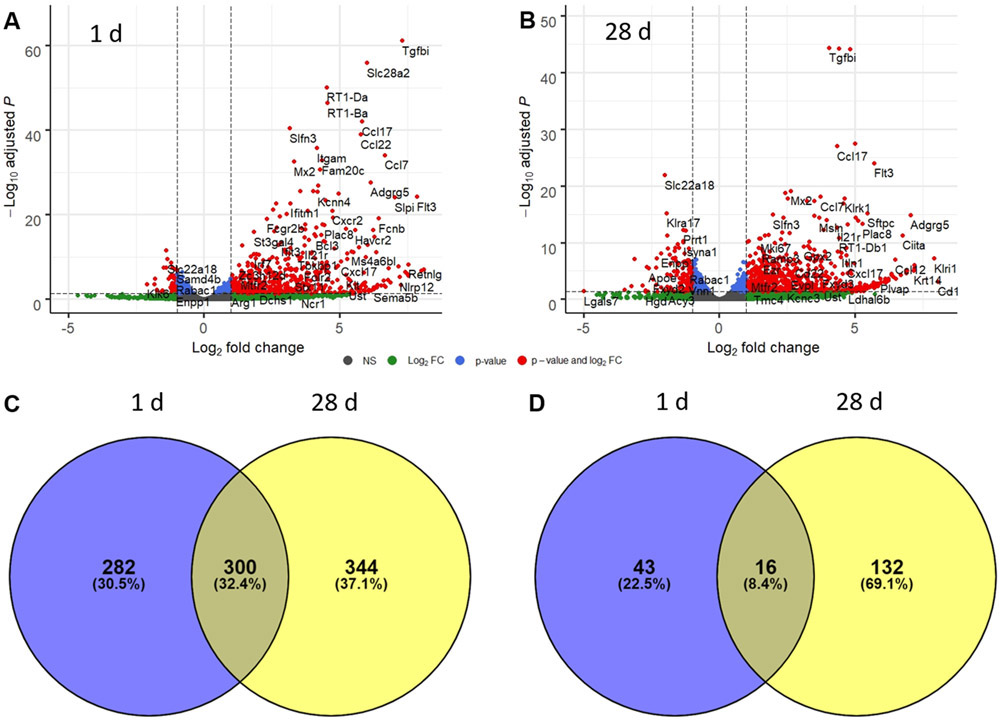
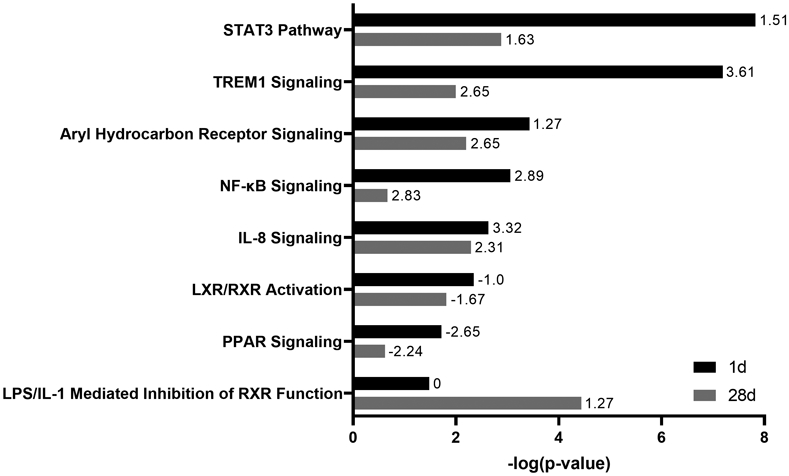
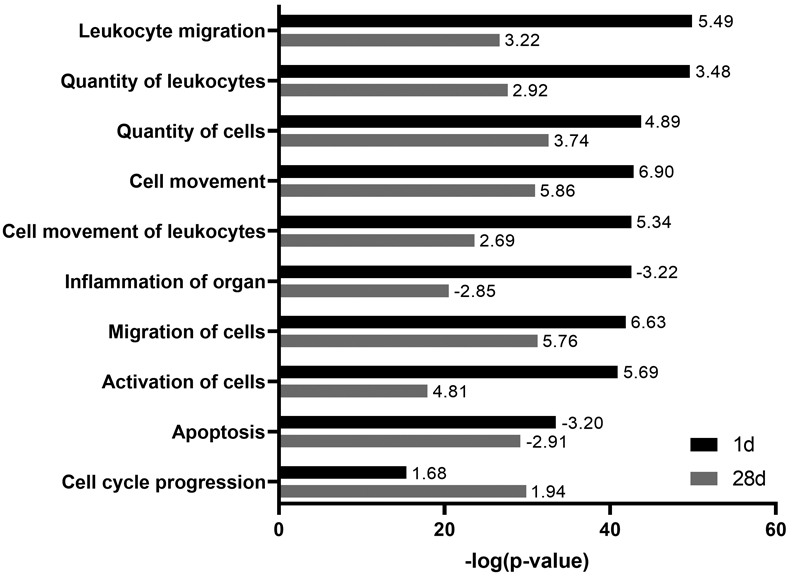
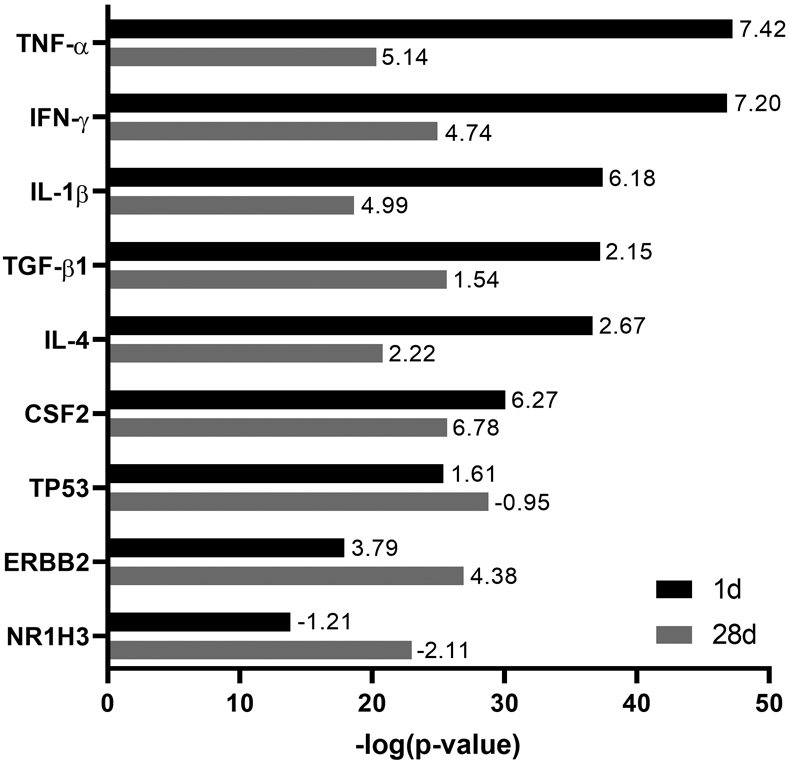
Nitrogen mustard (NM) and sulfur mustard are cytotoxic alkylating agents that cause severe and progressive damage to the respiratory tract. Evidence indicates that macrophages play a key role in the acute inflammatory phase and the later resolution/profibrotic phase of the pathogenic response. These diverse roles are mediated by inflammatory macrophages broadly classified as M1 proinflammatory and M2 anti-inflammatory that sequentially accumulate in the lung in response to injury. The goal of the present study was to identify signaling mechanisms contributing to macrophage activation in response to mustards. To accomplish this, we used RNA sequencing to analyze the gene expression profiles of lung macrophages isolated 1 and 28 days after intratracheal exposure of rats to NM (0.125 mg/kg) or phosphate-buffered saline control. We identified 641 and 792 differentially expressed genes 1 and 28 days post-NM exposure, respectively. These genes are primarily involved in processes related to cell movement and are regulated by cytokines, including tumor necrosis factor-α, interferon-γ, and interleukin-1β. Some of the most significantly enriched canonical pathways included STAT3 and NF-κB signaling. These cytokines and pathways may represent potential targets for therapeutic intervention to mitigate mustard-induced lung toxicity.
氮芥(NM)和硫芥是细胞毒性烷化剂,可导致呼吸道严重且进行性损伤。有证据表明,巨噬细胞在致病反应的急性炎症期和后期的消退/抗纤维化期发挥关键作用。这些不同的作用是由广泛分类为 M1 促炎和 M2 抗炎的炎症巨噬细胞介导的,这些巨噬细胞在受伤后顺序积聚在肺部。本研究的目的是确定导致巨噬细胞对芥末产生激活作用的信号转导机制。为了实现这一目标,我们使用 RNA 测序分析了气管内暴露于 NM(0.125 mg/kg)或磷酸盐缓冲盐水对照的大鼠肺巨噬细胞分离后 1 天和 28 天的基因表达谱。我们分别在 NM 暴露后 1 天和 28 天鉴定出 641 个和 792 个差异表达基因。这些基因主要涉及与细胞运动相关的过程,并受细胞因子(包括肿瘤坏死因子-α、干扰素-γ和白细胞介素-1β)调节。一些最显著富集的经典途径包括 STAT3 和 NF-κB 信号通路。这些细胞因子和途径可能代表治疗干预以减轻芥末引起的肺毒性的潜在靶点。