State Key Laboratory of Oncogenes and Related Genes, Renji-Med X Stem Cell Research Center, Renji Hospital, School of Medicine, Shanghai Jiaotong University, Shanghai, China.
Department of Gastrointestinal Surgery, Renji Hospital, School of Medicine, Shanghai Jiaotong University, Shanghai, China.
BMC Immunol. 2020 Aug 8;21(1):46. doi: 10.1186/s12865-020-00375-8.
Early detection of capecitabine-resistance could largely increase overall survival of colorectal cancer (CRC) patients. Previous studies suggested examination of immune cells in peripheral blood would help to predict efficacy of chemotherapy.
We examined the immunological characteristics of peripheral blood in CRC patients with capecitabine treatment. We analyzed the relationships between the abnormal immune cell population in capecitabine-resistance patients and major clinical features. Furthermore, RNA sequencing, analyses of cell surface marker expression and the correlations with other major immune cell populations were performed using this population to explore the possible function of these cells.
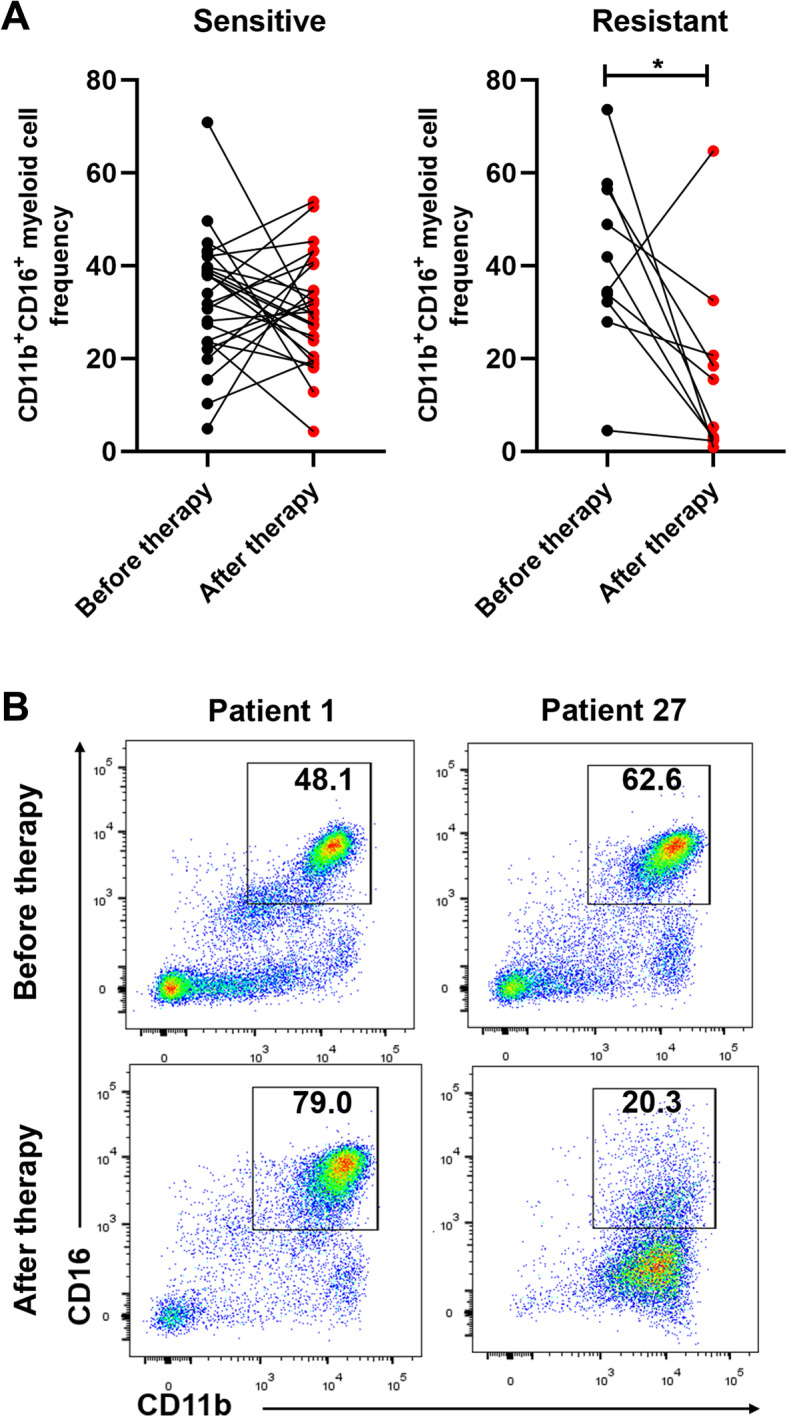
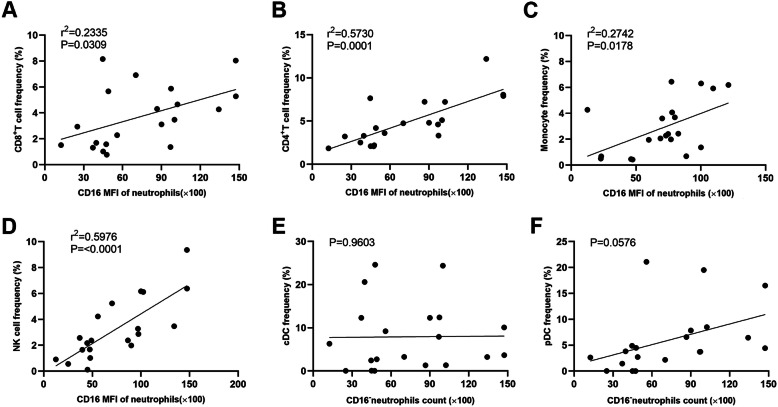
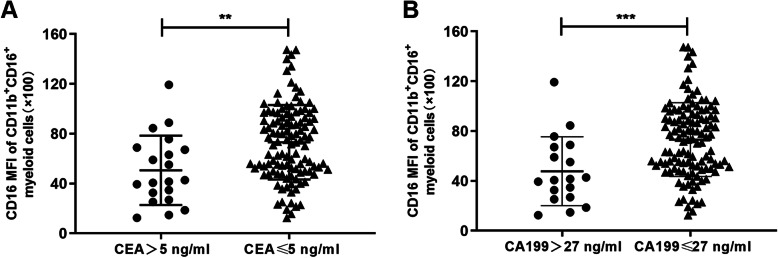
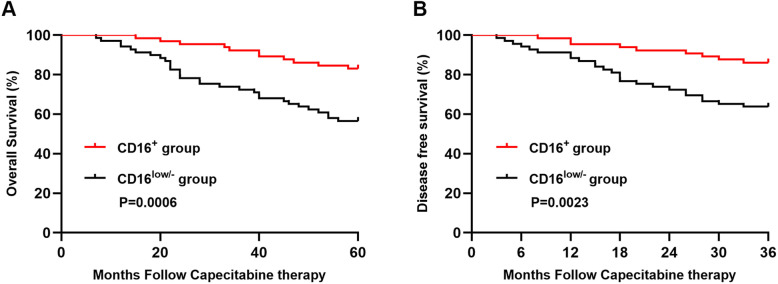
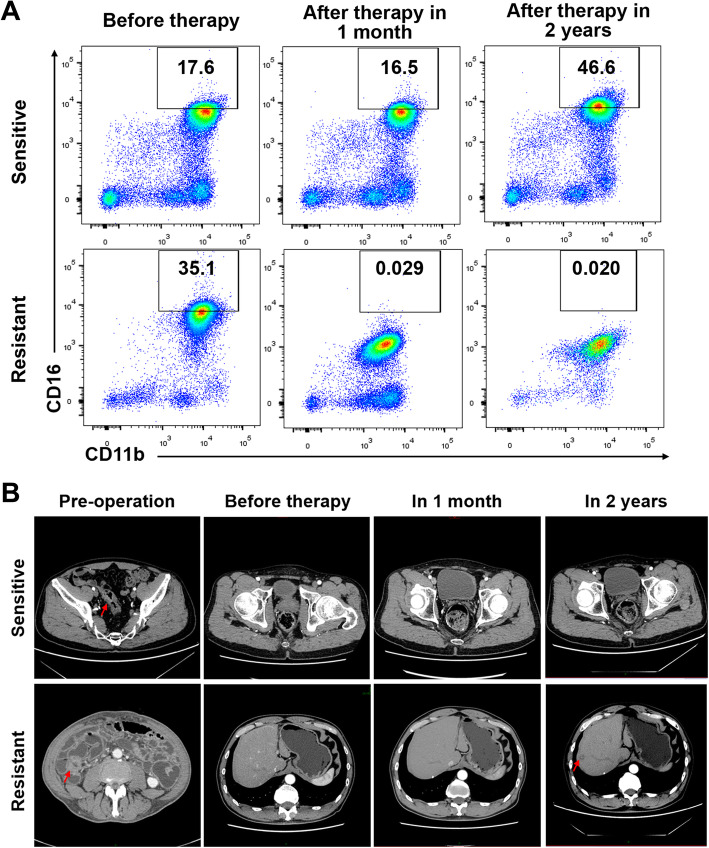
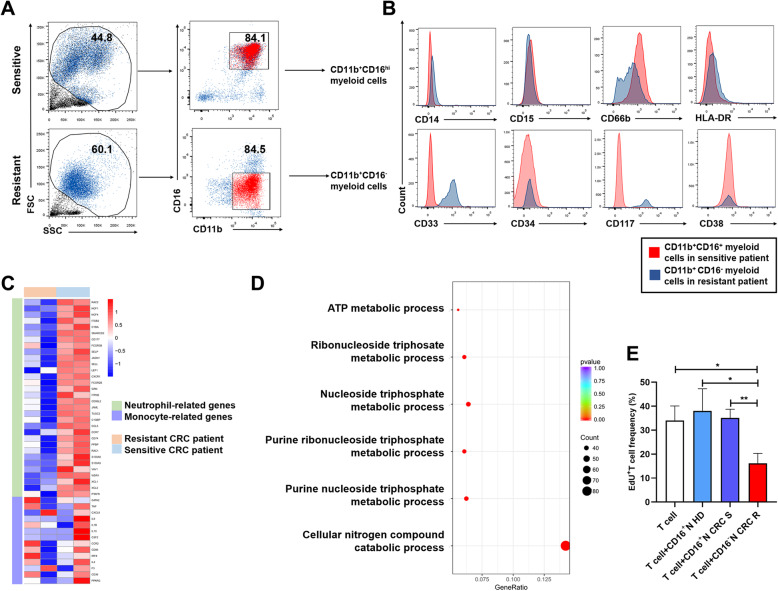
The expression level of CD16 on neutrophils was down-regulated in capecitabine-resistant CRC patients. Patients with CD16neutrophils after capecitabine therapy had adverse clinical features. What's important, the change of CD16 expression level on neutrophils appeared much earlier than CT scan. RNA sequencing revealed that CD16neutrophils in capecitabine-resistant patients had lower expression level of neutrophil-related genes, compared to CD16neutrophils in capecitabine-sensitive patients, suggesting this CD16population might be immature neutrophils. Furthermore, the expression level of CD16 on neutrophils in patients with capecitabine treatment was positively correlated with the number of anti-tumor immune cell subsets, such as CD8T cell, CD4T cell, NK cell and monocyte.
Our findings indicated that CD16 expression on neutrophils in peripheral blood was a good prognostic marker for predicting efficacy of capecitabine in CRC patients.
早期检测卡培他滨耐药性可以大大提高结直肠癌(CRC)患者的总生存率。先前的研究表明,检查外周血中的免疫细胞有助于预测化疗的疗效。
我们检查了接受卡培他滨治疗的 CRC 患者外周血的免疫特征。我们分析了卡培他滨耐药患者中异常免疫细胞群体与主要临床特征之间的关系。此外,使用该群体进行 RNA 测序、细胞表面标志物表达分析以及与其他主要免疫细胞群体的相关性分析,以探索这些细胞的可能功能。
卡培他滨耐药 CRC 患者中性粒细胞上 CD16 的表达水平下调。接受卡培他滨治疗后 CD16 中性粒细胞的患者具有不良的临床特征。重要的是,中性粒细胞上 CD16 表达水平的变化比 CT 扫描出现得更早。RNA 测序显示,与卡培他滨敏感患者相比,卡培他滨耐药患者的 CD16 中性粒细胞中与中性粒细胞相关的基因表达水平较低,这表明该 CD16 群体可能是不成熟的中性粒细胞。此外,接受卡培他滨治疗的患者中性粒细胞上 CD16 的表达水平与抗肿瘤免疫细胞亚群(如 CD8T 细胞、CD4T 细胞、NK 细胞和单核细胞)的数量呈正相关。
我们的研究结果表明,外周血中性粒细胞上 CD16 的表达是预测 CRC 患者卡培他滨疗效的良好预后标志物。