From the Department of Pediatrics (GB, KJ, WW, CC), University of California San Diego, San Diego, California.
OMNI-Net Ukraine Birth Defects Program (WW, LY, NZ-Z, IG, LP), Rivne, Ukraine.
Alcohol Clin Exp Res. 2020 Oct;44(10):2045-2052. doi: 10.1111/acer.14430. Epub 2020 Sep 6.
In animal models, it is possible to induce different alcohol-related dysmorphic abnormalities based on the timing of prenatal alcohol exposure (PAE). Our objective was to assess whether patterns of PAE differentially predict alcohol-related dysmorphic features in 415 infants.
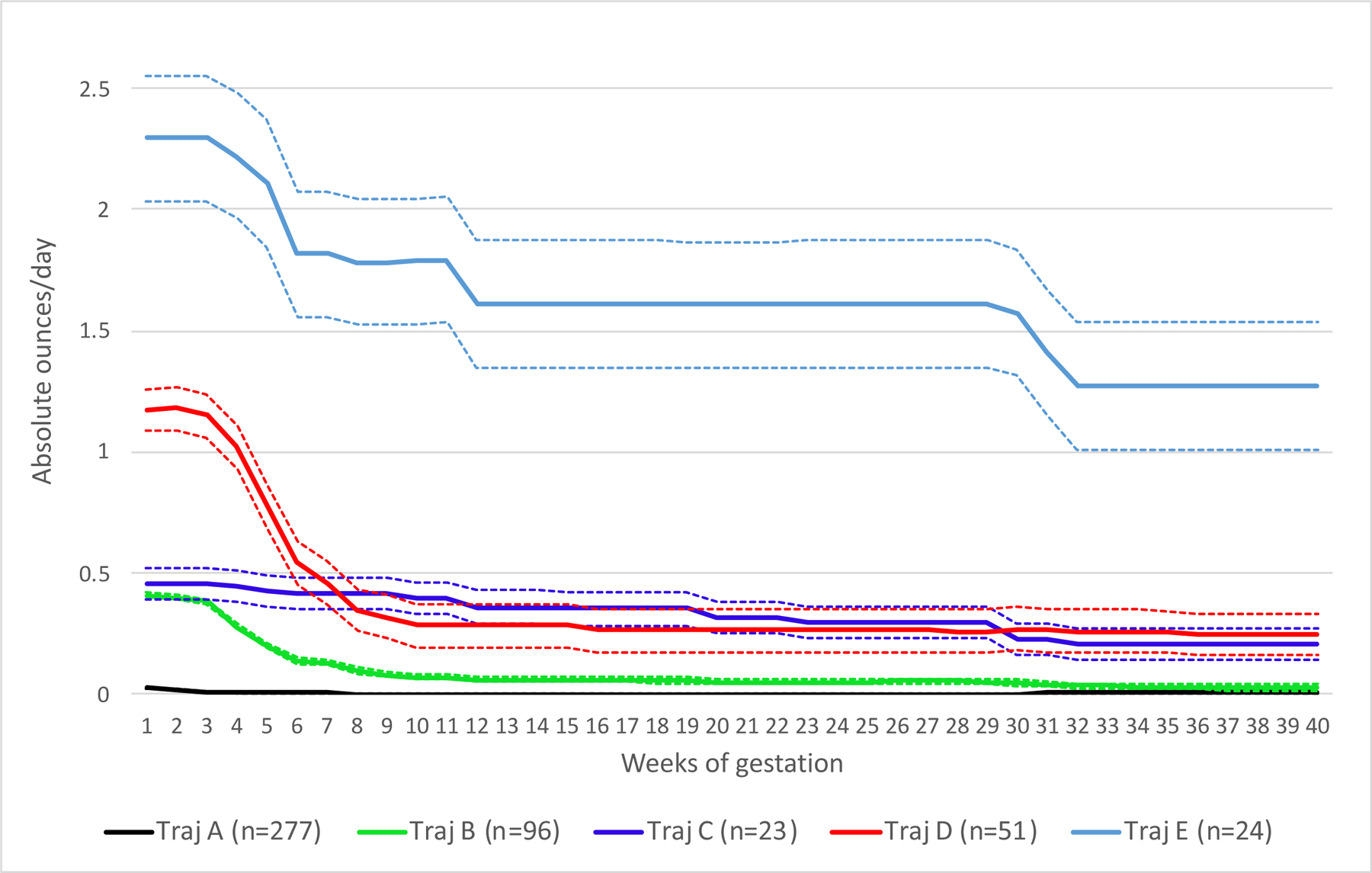
We analyzed a prospective pregnancy cohort in western Ukraine enrolled between 2008 and 2014. Five distinct trajectories were previously identified to summarize PAE: (i) minimal/no PAE (n = 253), (ii) low/moderate PAE with reduction early in gestation (n = 78), (iii) low/moderate sustained PAE (n = 20), (iv) moderate/high PAE with reduction early in gestation (n = 45), and (v) high sustained PAE (n = 19). A dysmorphology examination of body size, 3 cardinal, and 15 noncardinal dysmorphic features was performed at approximately 6 to 12 months of age. A modified dysmorphology score was created based on previously published weights. Univariate comparisons were made between each dysmorphic feature and trajectory group. Features that differed by trajectory group were assessed in multivariable analyses. Models were adjusted for maternal age, prenatal vitamin use, socioeconomic status, smoking, and child's age at dysmorphology examination, with censoring weights for losses to follow-up.
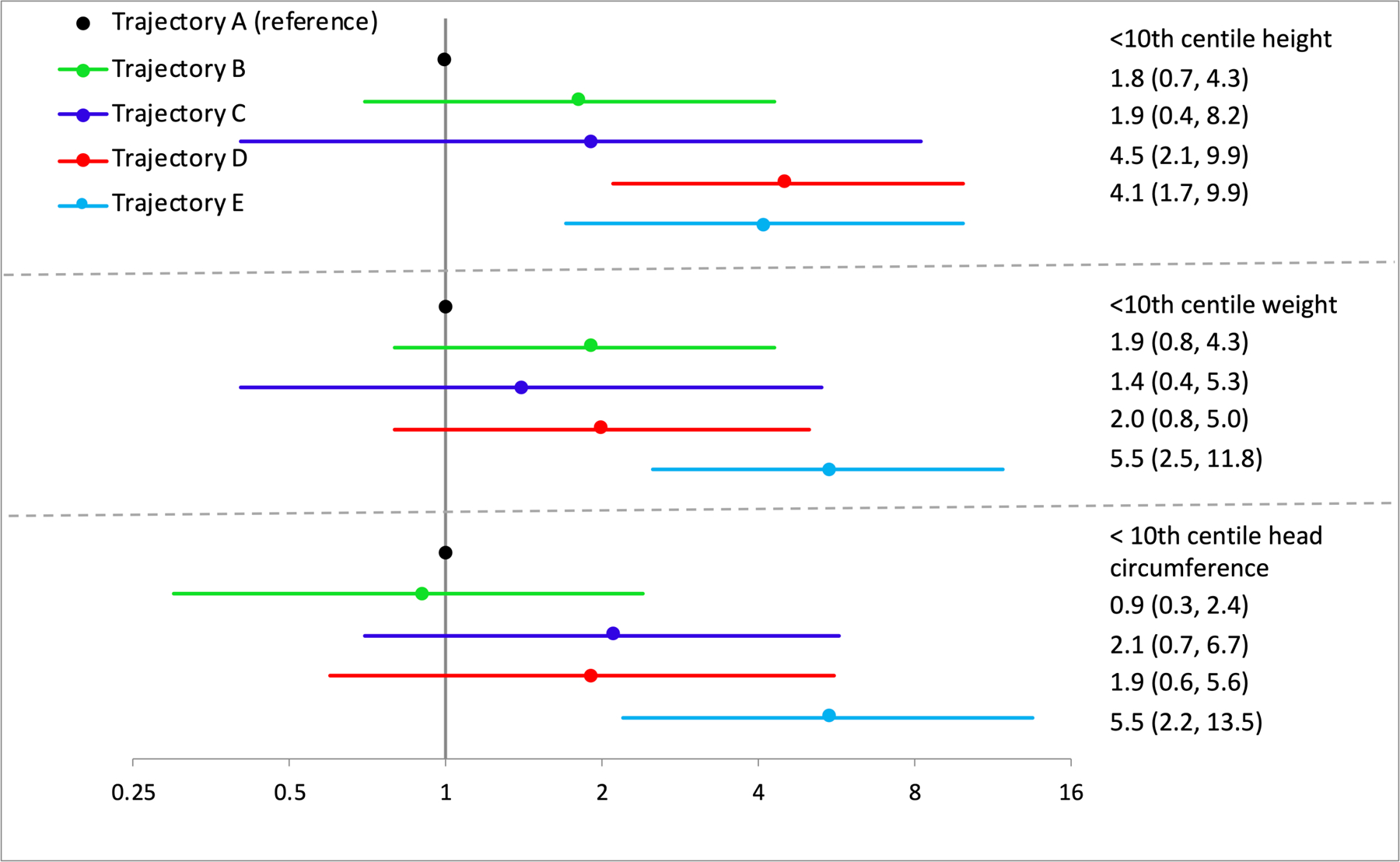
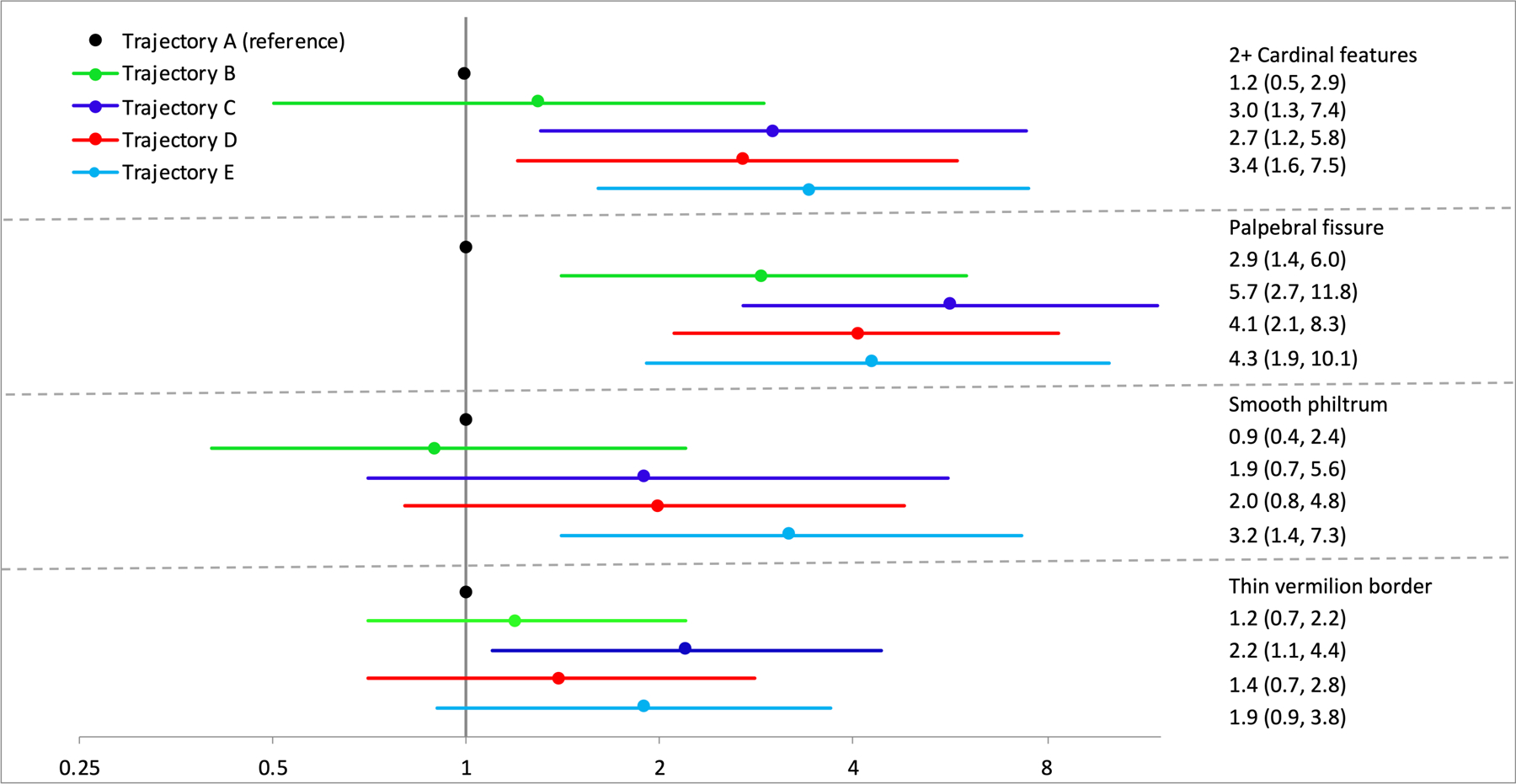
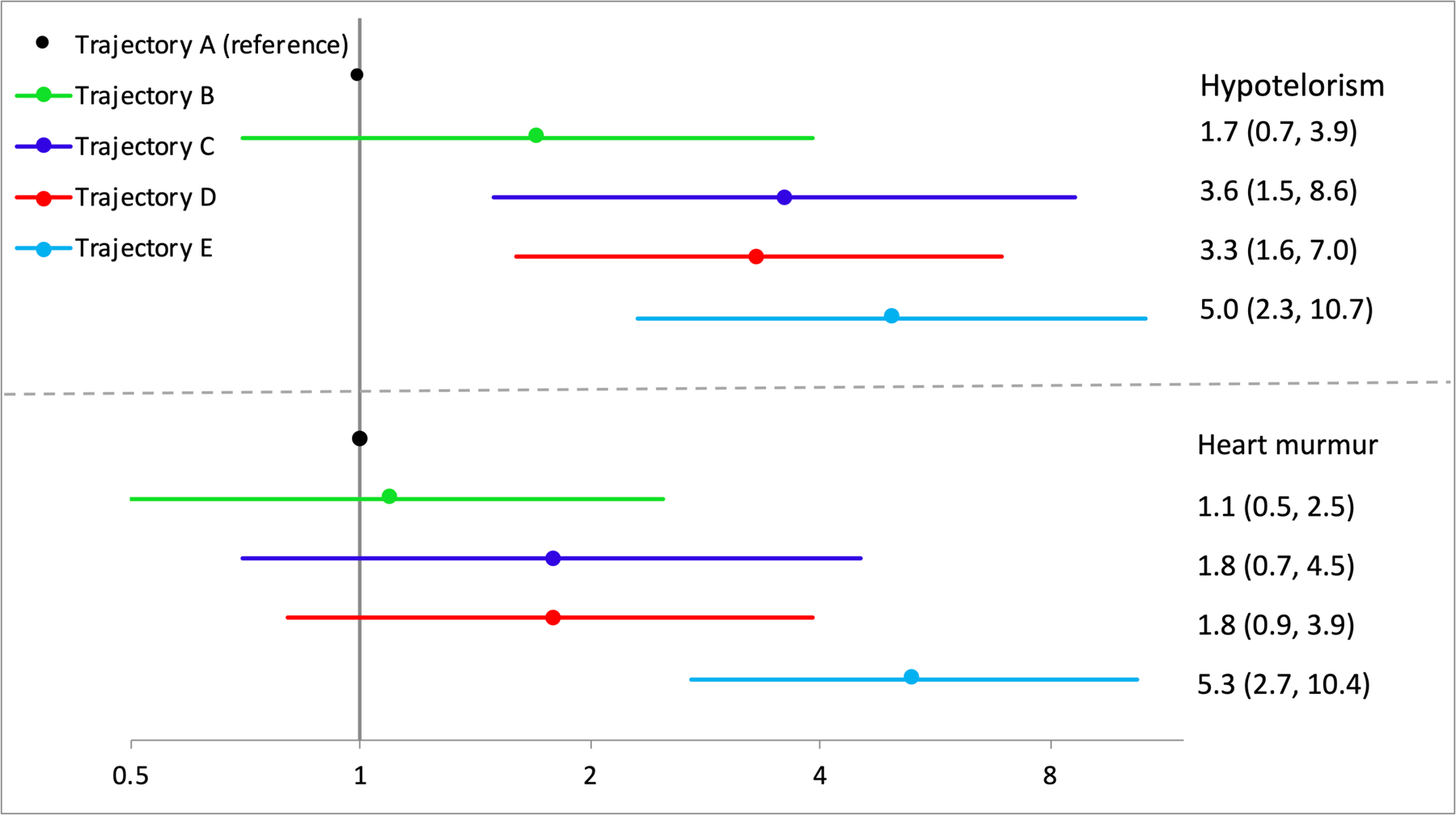
The 3 highest trajectories predicted total dysmorphology score, with larger effects in sustained exposure groups. Cardinal features: The 3 highest trajectories were each associated with a 2- to 3-fold increased risk of having 2 + cardinal facial features. When assessed individually, there were no consistent associations between the individual trajectories and each cardinal feature. Noncardinal features: The 3 highest trajectories were associated with increased risk of hypotelorism. Only the highest trajectory was associated with heart murmur. The highest trajectory predicted <10th centile for sex and age on height, weight, and head circumference; and moderate/high with reduction trajectory also predicted height.
While we did not observe differential results based on specific trajectories of exposure, findings support the wide range of dysmorphic features associated with PAE, particularly at high and sustained levels.
在动物模型中,可以根据产前酒精暴露(PAE)的时间来诱导不同的与酒精相关的畸形异常。我们的目的是评估 PAE 模式是否会对 415 名婴儿的与酒精相关的畸形特征产生不同的预测。
我们分析了 2008 年至 2014 年在乌克兰西部进行的一项前瞻性妊娠队列研究。之前已经确定了五种不同的 PAE 轨迹来概括 PAE:(i)最小/无 PAE(n=253),(ii)妊娠早期减少的低/中度 PAE(n=78),(iii)持续低/中度 PAE(n=20),(iv)妊娠早期减少的中/高 PAE(n=45)和(v)持续高 PAE(n=19)。在大约 6 至 12 个月大时,对体型、3 个主要特征和 15 个非主要特征进行了畸形检查。根据之前发表的权重创建了一个修改后的畸形评分。在每个畸形特征和轨迹组之间进行了单变量比较。在多变量分析中评估了与轨迹组不同的特征。模型根据母亲年龄、产前维生素使用、社会经济地位、吸烟和儿童畸形检查时的年龄进行调整,并对随访损失进行了加权。
前 3 高轨迹预测总畸形评分,持续暴露组的影响更大。主要特征:前 3 高轨迹均与 2 至 3 倍的存在 2+主要面部特征的风险增加相关。当单独评估时,各个轨迹与每个主要特征之间没有一致的关联。非主要特征:前 3 高轨迹与眼距过短的风险增加相关。只有最高轨迹与心脏杂音相关。最高轨迹预测性器官和年龄的身高、体重和头围处于第 10 百分位以下;减少轨迹的中/高轨迹也预测身高。
虽然我们没有观察到基于暴露的具体轨迹的差异结果,但研究结果支持与 PAE 相关的广泛的畸形特征,特别是在高和持续水平。