Olaoba Olamide Tosin, Karina Dos Santos Patty, Selistre-de-Araujo Heloisa Sobreiro, Ferreira de Souza Dulce Helena
Departamento de Química, Universidade Federal de São Carlos, Rodovia Washington Luís, Km 235, São Carlos, São Paulo, Brazil.
Departamento de Ciências Fisiológicas, Universidade Federal de São Carlos, Rodovia Washington Luís, Km 235, São Carlos, São Paulo, Brazil.
Toxicon X. 2020 Jul 21;7:100052. doi: 10.1016/j.toxcx.2020.100052. eCollection 2020 Sep.
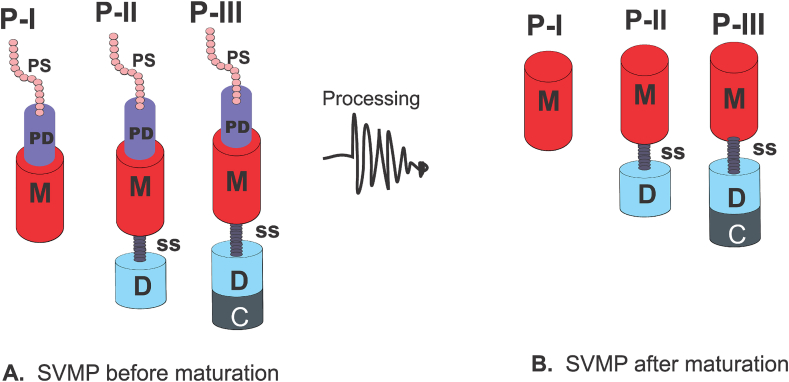
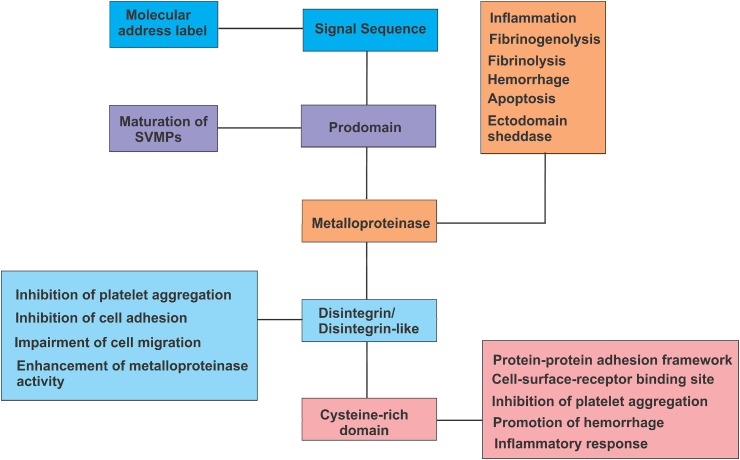
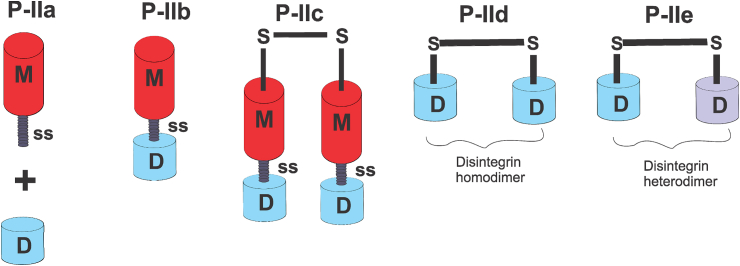
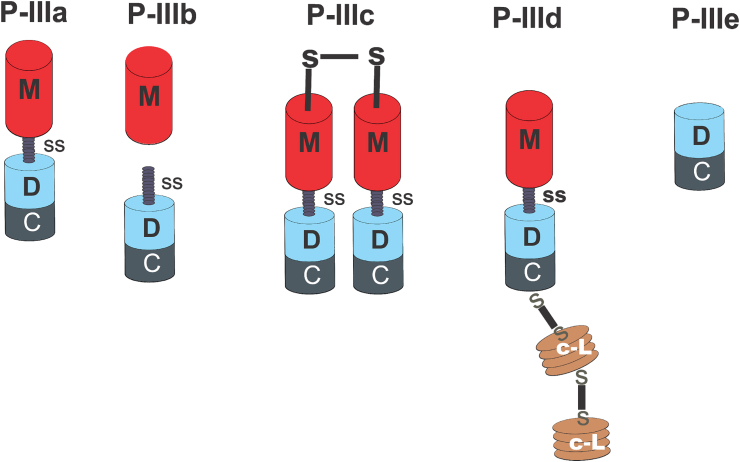
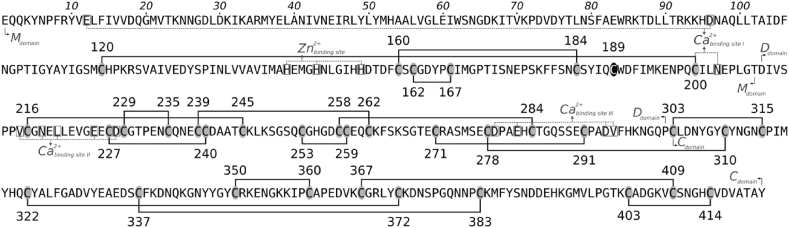
Snake venom metalloproteinases (SVMPs) represent a diverse group of multi-domain proteins with several biological activities such as the ability to induce hemorrhage, proteolytic degradation of fibrinogen and fibrin, induction of apoptosis and inhibition of platelet aggregation. Due to these activities, SVMPs are responsible for many of the well-known pathological phenotypes in snake envenomations caused particularly by species from the family and the subfamily. These proteins have been classified based on their size and domain structure into P-I, P-II and P-III classes. Comparatively, members of the P-I SVMPs possess the simplest structures, formed by the catalytic metalloproteinase domain only; the P-II SVMPs are moderately more complex, having the canonical disintegrin domain in addition to the metalloproteinase domain; members of the P-III class are more structurally varied, comprising the metalloproteinase, disintegrin-like, and cysteine-rich domains. Proteolytic cleavage, repeated domain loss and presence of other ancillary domains are responsible for structural diversities in the P-III class. However, studies continue to unveil the relationship between the structure and function of these proteins. In this review, we recovered evidences from literature on the structural peculiarities and functional classification of Snake Venom Metalloproteinases. In addition, we reflect on diversities that exist among each class while taking into account specific and up-to-date class-based activities.
蛇毒金属蛋白酶(SVMPs)是一类多样的多结构域蛋白质,具有多种生物学活性,如诱导出血、纤维蛋白原和纤维蛋白的蛋白水解降解、诱导细胞凋亡以及抑制血小板聚集。由于这些活性,SVMPs是许多蛇咬伤所致著名病理表型的原因,特别是由蝰蛇科和眼镜蛇亚科的物种引起的。这些蛋白质已根据其大小和结构域结构分为P-I、P-II和P-III类。相比之下,P-I类SVMPs的结构最简单,仅由催化金属蛋白酶结构域构成;P-II类SVMPs稍复杂一些,除金属蛋白酶结构域外还具有典型的去整合素结构域;P-III类成员的结构更为多样,包括金属蛋白酶、去整合素样和富含半胱氨酸的结构域。蛋白水解切割、重复结构域缺失以及其他辅助结构域的存在导致了P-III类的结构多样性。然而,研究仍在不断揭示这些蛋白质的结构与功能之间的关系。在本综述中,我们从文献中收集了有关蛇毒金属蛋白酶结构特点和功能分类的证据。此外,我们在考虑基于类别的特定和最新活性的同时,思考了每一类中存在的多样性。