Eckelmann Bradley J, Bacolla Albino, Wang Haibo, Ye Zu, Guerrero Erika N, Jiang Wei, El-Zein Randa, Hegde Muralidhar L, Tomkinson Alan E, Tainer John A, Mitra Sankar
Department of Radiation Oncology, Houston Methodist Research Institute, Houston, TX 77030, USA.
Departments of Cancer Biology and Molecular and Cellular Oncology, University of Texas MD Anderson Cancer Center, Houston, TX 77030, USA.
NAR Cancer. 2020 Sep;2(3):zcaa013. doi: 10.1093/narcan/zcaa013. Epub 2020 Aug 1.
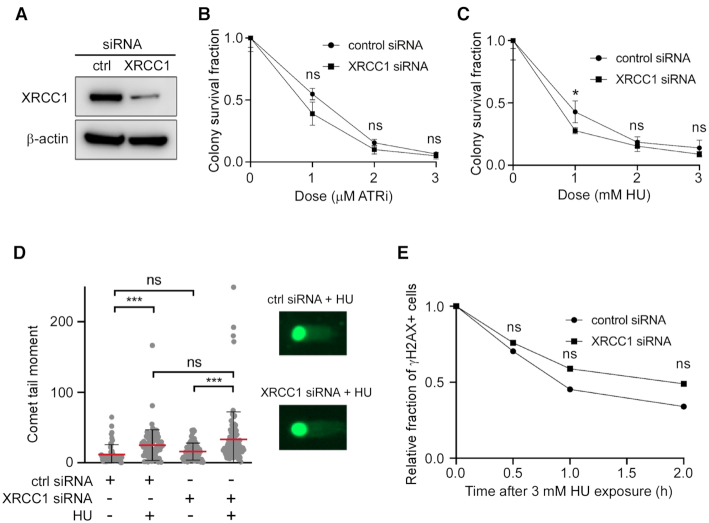
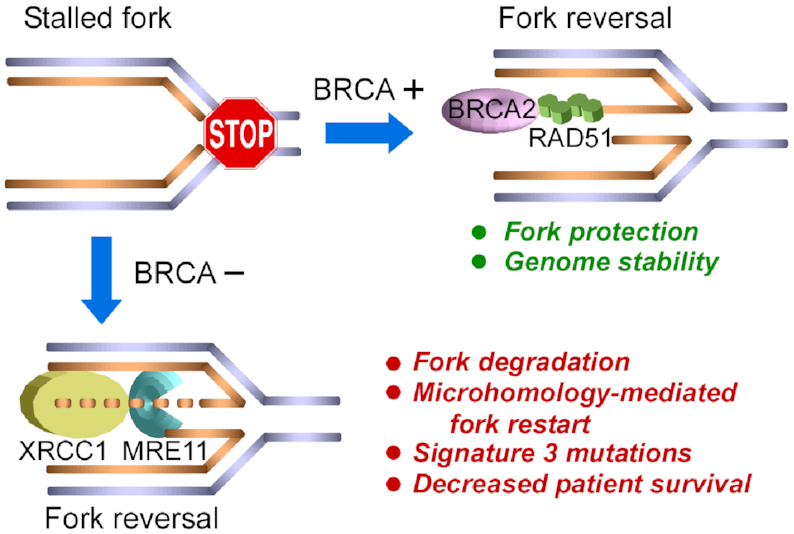
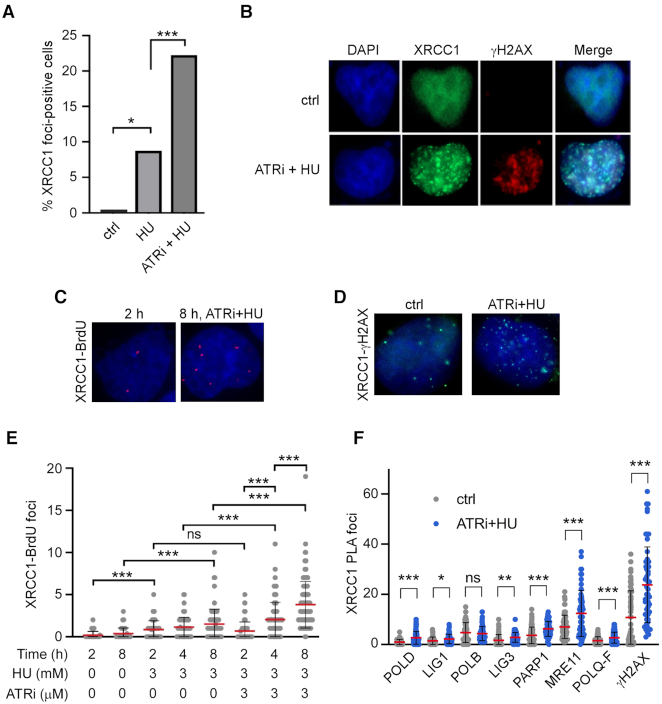
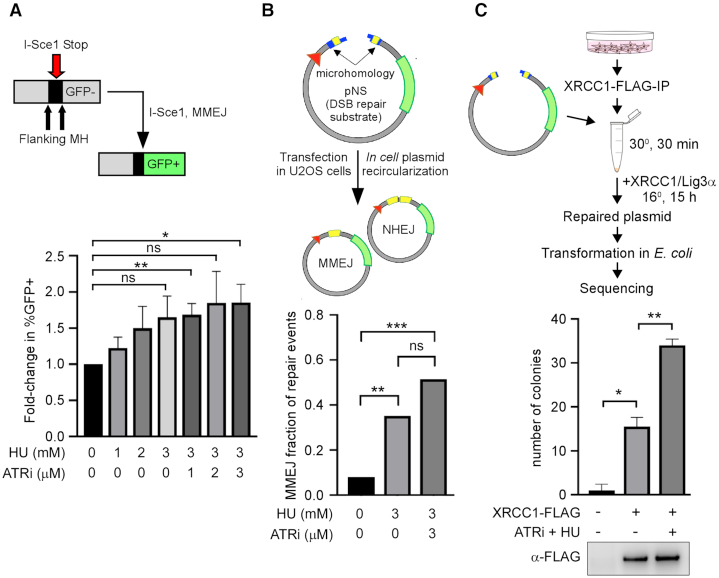
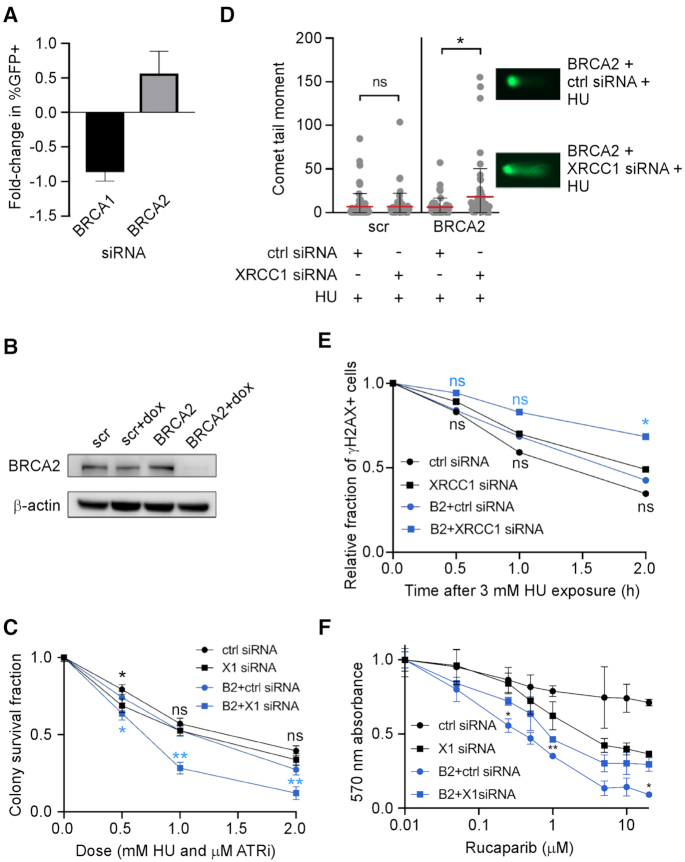
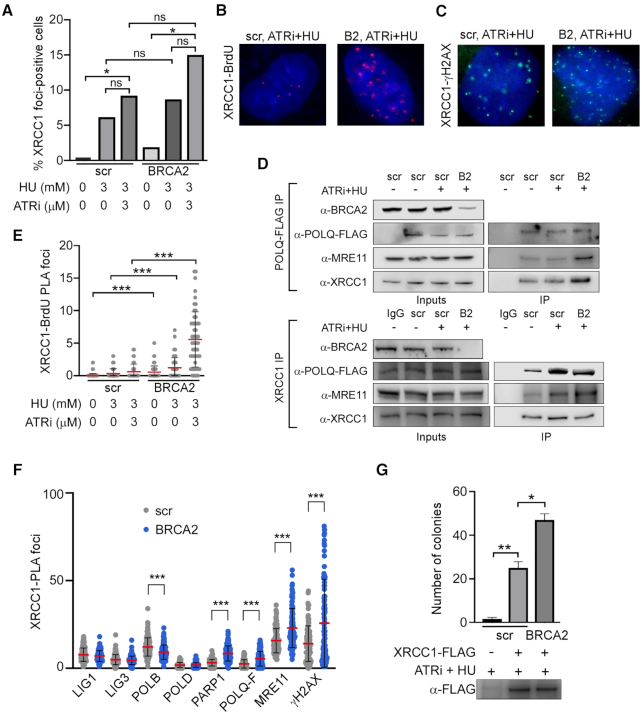
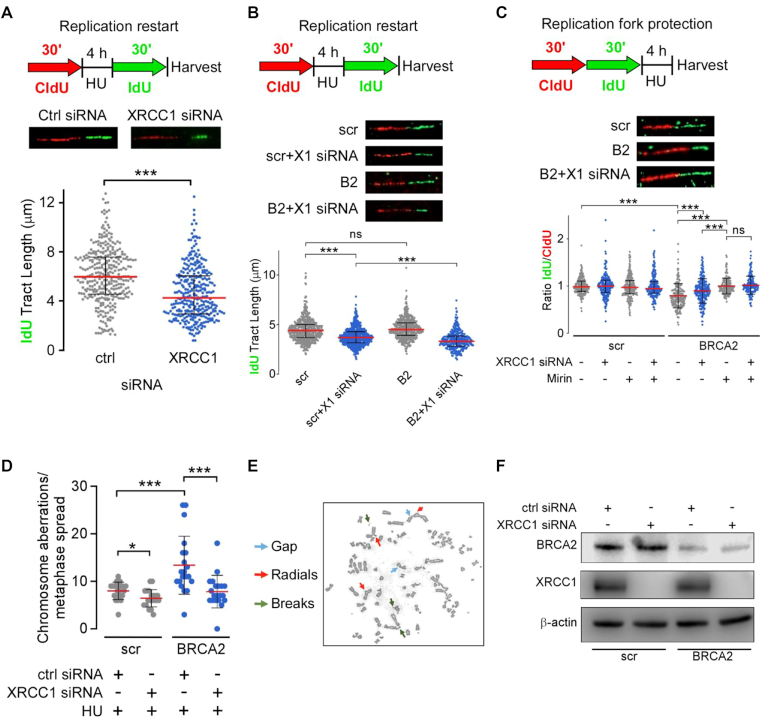
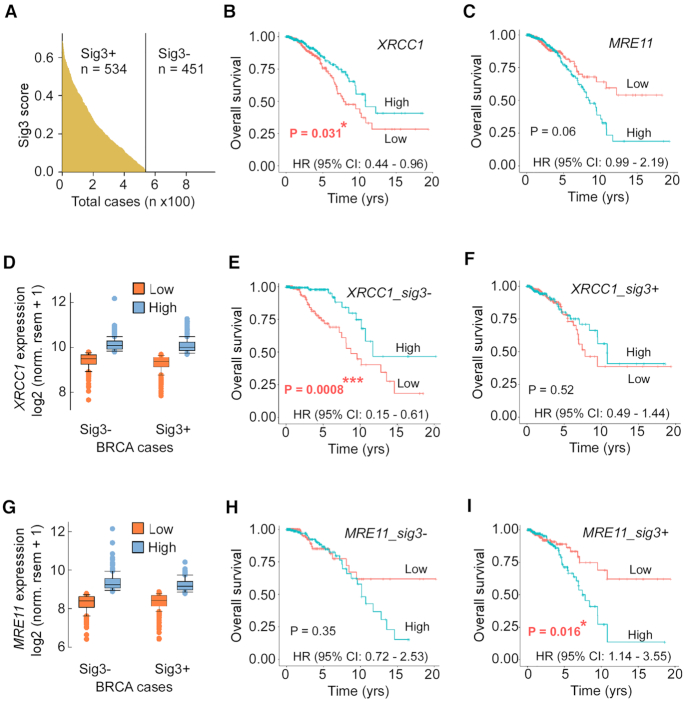
Homologous recombination/end joining (HR/HEJ)-deficient cancers with mutations utilize alternative DNA double-strand break repair pathways, particularly alternative non-homologous end joining or microhomology-mediated end joining (alt-EJ/MMEJ) during S and G2 cell cycle phases. Depletion of alt-EJ factors, including XRCC1, PARP1 and POLQ, is synthetically lethal with BRCA2 deficiency; yet, XRCC1 roles in HR-deficient cancers and replication stress are enigmatic. Here, we show that after replication stress, XRCC1 forms an active repair complex with POLQ and MRE11 that supports alt-EJ activity . BRCA2 limits XRCC1 recruitment and repair complex formation to suppress alt-EJ at stalled forks. Without BRCA2 fork protection, XRCC1 enables cells to complete DNA replication at the expense of increased genome instability by promoting MRE11-dependent fork resection and restart. High and gene expression negatively impacts Kaplan-Meier survival curves and hazard ratios for HR-deficient breast cancer patients in The Cancer Genome Atlas. The additive effects of depleting both BRCA2 and XRCC1 indicate distinct pathways for replication restart. Our collective data show that XRCC1-mediated processing contributes to replication fork degradation, replication restart and chromosome aberrations in BRCA2-deficient cells, uncovering new roles of XRCC1 and microhomology-mediated repair mechanisms in HR-deficient cancers, with implications for chemotherapeutic strategies targeting POLQ and PARP activities.
具有突变的同源重组/末端连接(HR/HEJ)缺陷型癌症在S期和G2期细胞周期阶段利用替代DNA双链断裂修复途径,特别是替代非同源末端连接或微同源性介导的末端连接(alt-EJ/MMEJ)。包括XRCC1、PARP1和POLQ在内的alt-EJ因子的缺失与BRCA2缺陷具有合成致死性;然而,XRCC1在HR缺陷型癌症和复制应激中的作用尚不清楚。在这里,我们表明,在复制应激后,XRCC1与POLQ和MRE11形成一个活性修复复合物,支持alt-EJ活性。BRCA2限制XRCC1的募集和修复复合物的形成,以抑制停滞叉处的alt-EJ。没有BRCA2的叉保护,XRCC1通过促进MRE11依赖性叉切除和重新启动,使细胞能够以增加基因组不稳定性为代价完成DNA复制。在癌症基因组图谱中,高 和 基因表达对HR缺陷型乳腺癌患者的Kaplan-Meier生存曲线和风险比有负面影响。同时耗尽BRCA2和XRCC1的累加效应表明复制重新启动的途径不同。我们的总体数据表明,XRCC1介导的加工有助于BRCA2缺陷型细胞中的复制叉降解、复制重新启动和染色体畸变,揭示了XRCC1和微同源性介导的修复机制在HR缺陷型癌症中的新作用,对靶向POLQ和PARP活性的化疗策略具有启示意义。