Lavi Ethan S, Lin Z Ping, Ratner Elena S
Department of Obstetrics, Gynecology, and Reproductive Sciences, Yale University School of Medicine, New Haven, CT 06510, USA.
iScience. 2023 Sep 15;26(10):107934. doi: 10.1016/j.isci.2023.107934. eCollection 2023 Oct 20.
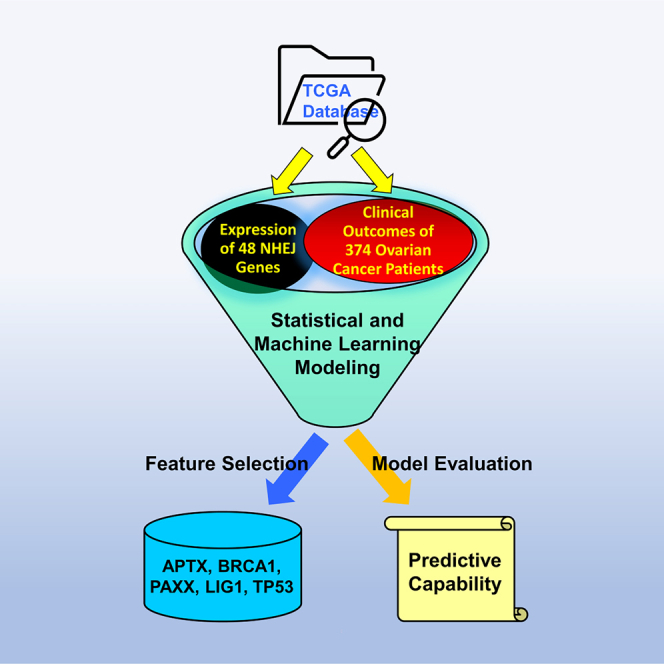
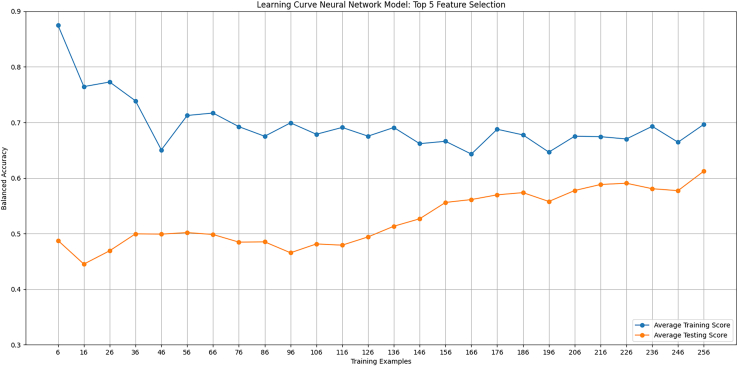
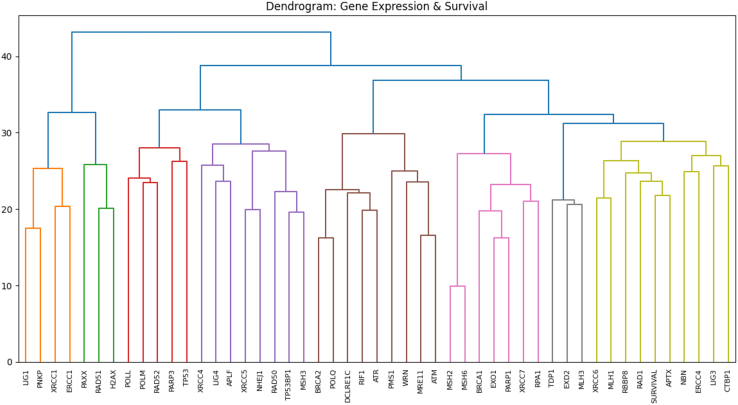
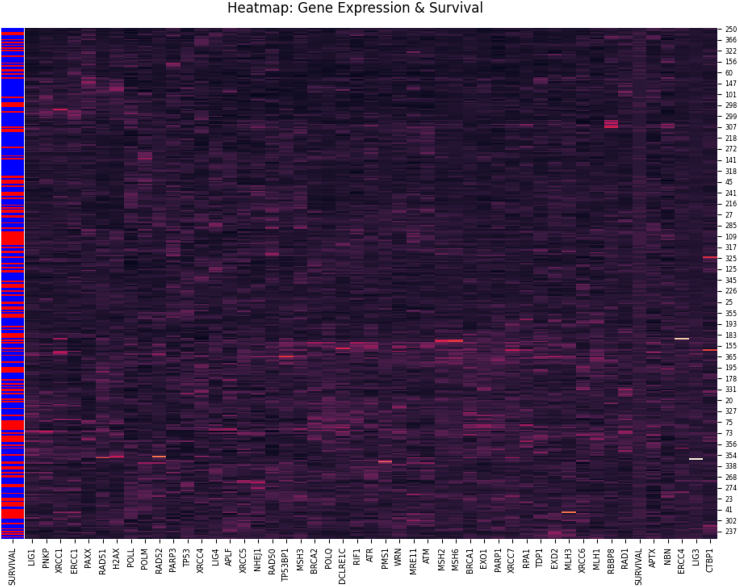
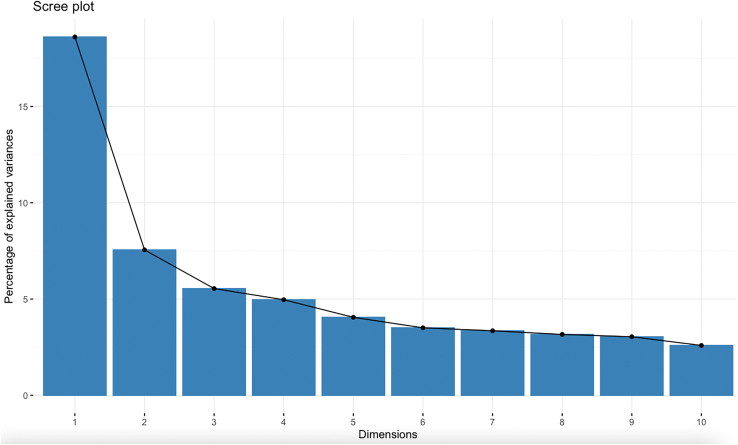
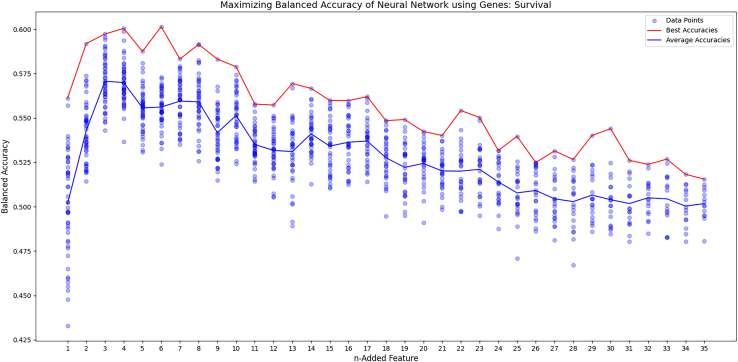
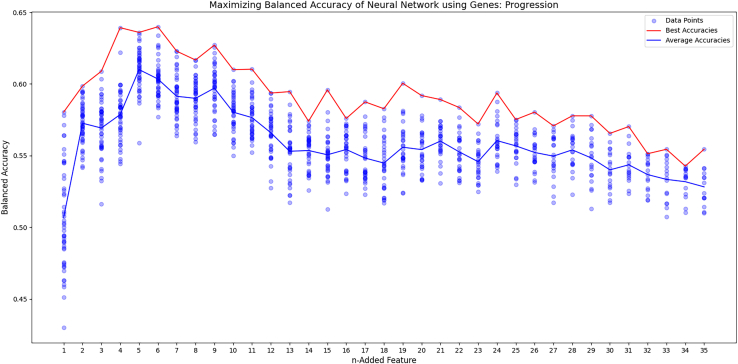
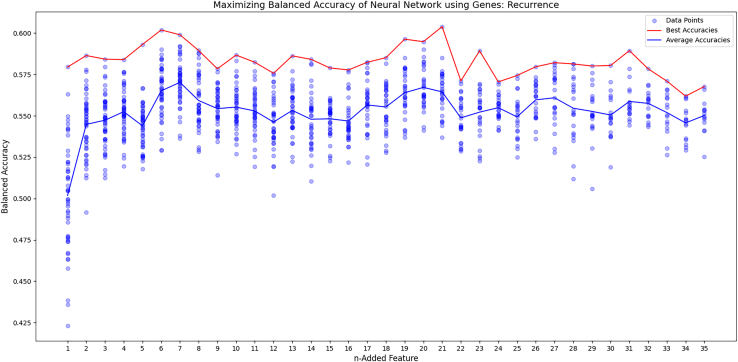
Ovarian cancer is the deadliest gynecologic malignancy in women, with a 46% five-year overall survival rate. The objective of the study was to investigate the effects of non-homologous end-joining (NHEJ) genes on clinical outcomes of ovarian cancer patients. To determine if these genes act as prognostic biomarkers of mortality and disease progression, the expression profiles of 48 NHEJ-associated genes were analyzed using an array of statistical and machine learning techniques: logistic regression models, decision trees, naive-Bayes, two sample t-tests, support vector machines, hierarchical clustering, principal component analysis, and neural networks. In this process, the correlation of genes with patient survival and disease progression and recurrence was noted. Also, multiple features from the gene set were found to have significant predictive capabilities. , , , , and were identified as most important out of all the candidate genes for predicting clinical outcomes of ovarian cancer patients.
卵巢癌是女性中最致命的妇科恶性肿瘤,五年总生存率为46%。本研究的目的是调查非同源末端连接(NHEJ)基因对卵巢癌患者临床结局的影响。为了确定这些基因是否作为死亡率和疾病进展的预后生物标志物,使用一系列统计和机器学习技术分析了48个与NHEJ相关基因的表达谱:逻辑回归模型、决策树、朴素贝叶斯、两样本t检验、支持向量机、层次聚类、主成分分析和神经网络。在此过程中,记录了基因与患者生存、疾病进展和复发的相关性。此外,发现基因集中的多个特征具有显著的预测能力。在所有预测卵巢癌患者临床结局的候选基因中, 、 、 、 和 被确定为最重要的基因。