Dhar Jahnvi, Samanta Jayanta, Kochhar Rakesh
Department of Gastroenterology, Post Graduate Institute of Medical Education and Research, Chandigarh, Sector - 12, Chandigarh, 160 012, India.
Indian J Gastroenterol. 2020 Jun;39(3):220-231. doi: 10.1007/s12664-020-01075-2. Epub 2020 Aug 12.
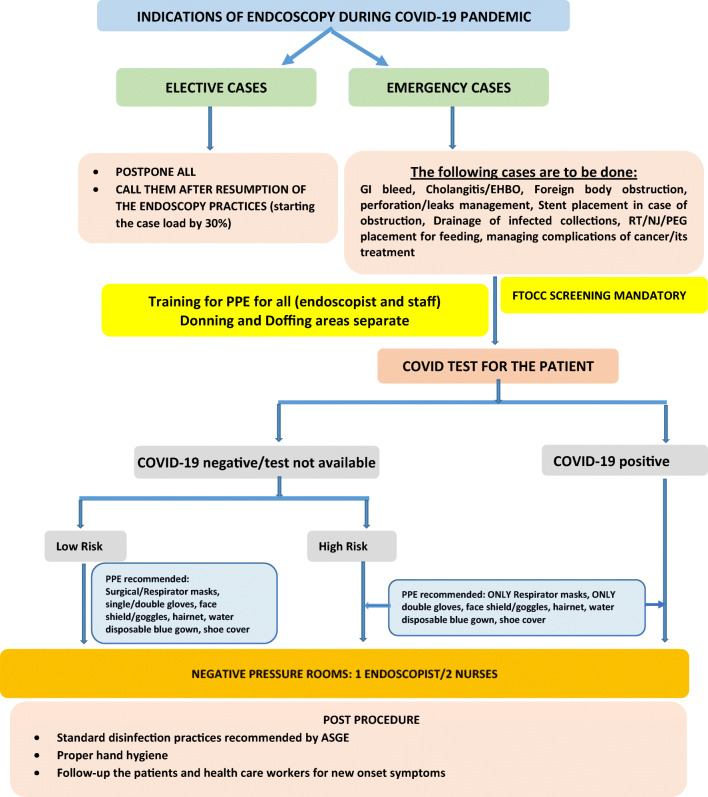
The world is witnessing a serious public health threat in the wake of the third corona virus pandemic, a novel corona virus (severe acute respiratory syndrome coronavirus 2 [SARS-CoV-2]). The Corona Virus Disease-19 (COVID-19) is not limited to the respiratory system but has widespread involvement including the gastrointestinal (GI) tract and liver, with evidence of prolonged fecal shedding and feco-oral transmission. This finding has stirred up a hornet's nest of not only a newer modality of the spread of the virus but also a risk of the unpredictable duration of the infective potential of the shedders. We reviewed the literature on fecal shedding and possible implications on prevention and surveillance strategies. The pandemic is changing the management of underlying chronic diseases such as inflammatory bowel disease (IBD) and other diseases. Moreover, for the gastroenterologist, doing endoscopic procedures in this COVID-19 era poses a high risk of contamination, as it is an aerosol-generating procedure. There is a daily influx of data on this disease, and multiple societies are coming up with various recommendations. We provide a comprehensive review of all the reported GI manifestations of COVID-19 infection and the side effects of confounding drugs. We have summarized the management recommendations for diseases such as IBD with COVID-19 and nutritional recommendations and provided a concise review of the endoscopy guidelines by the various societies. This review provides a comprehensive account and a lucid guide covering various aspects of gastroenterology practice during this COVID-19 pandemic.
在新型冠状病毒(严重急性呼吸综合征冠状病毒2 [SARS-CoV-2])引发的第三次冠状病毒大流行之后,世界正面临着严重的公共卫生威胁。冠状病毒病-19(COVID-19)不仅局限于呼吸系统,还广泛累及包括胃肠道(GI)和肝脏在内的多个系统,有证据表明粪便排毒时间延长以及存在粪口传播。这一发现不仅引发了关于病毒传播新方式的热议,还带来了病毒排出者感染潜能持续时间不可预测的风险。我们回顾了关于粪便排毒以及对预防和监测策略可能影响的文献。这场大流行正在改变诸如炎症性肠病(IBD)等潜在慢性病以及其他疾病的管理方式。此外,对于胃肠病学家而言,在这个COVID-19时代进行内镜检查程序存在很高的污染风险,因为这是一种会产生气溶胶的操作。关于这种疾病的数据每日都在大量涌入,多个学会也提出了各种建议。我们对所有已报道的COVID-19感染的胃肠道表现以及混杂药物的副作用进行了全面综述。我们总结了IBD等疾病合并COVID-19时的管理建议和营养建议,并对各学会的内镜检查指南进行了简要综述。本综述全面阐述并清晰指导了在这场COVID-19大流行期间胃肠病学实践的各个方面。