Center of Infectious Diseases, Virology, Heidelberg University Hospital, 69120 Heidelberg, Germany.
Schaller Research Groups, Center of Infectious Diseases, Virology, Heidelberg University Hospital, 69120 Heidelberg, Germany.
Viruses. 2020 Aug 7;12(8):863. doi: 10.3390/v12080863.
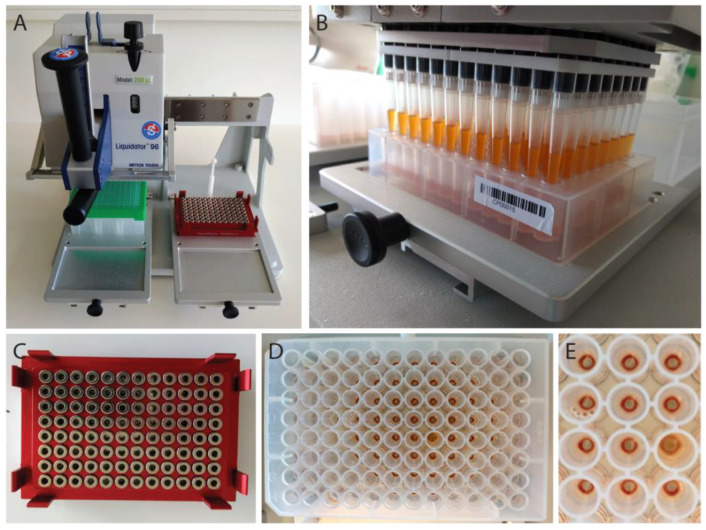
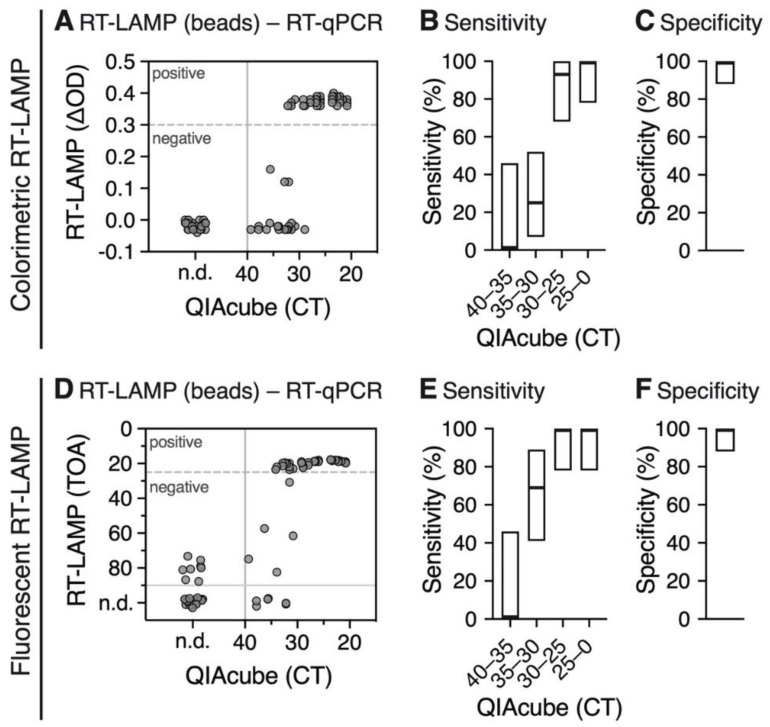
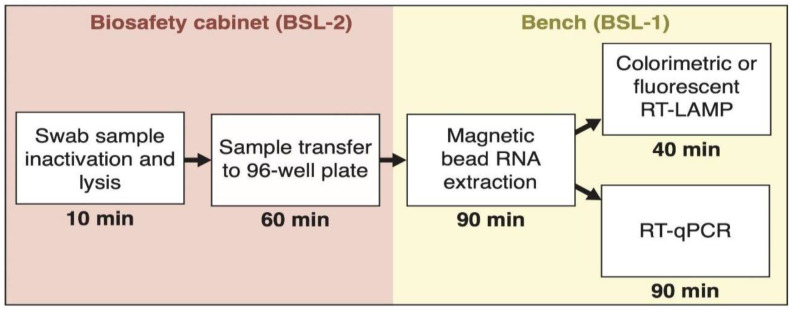
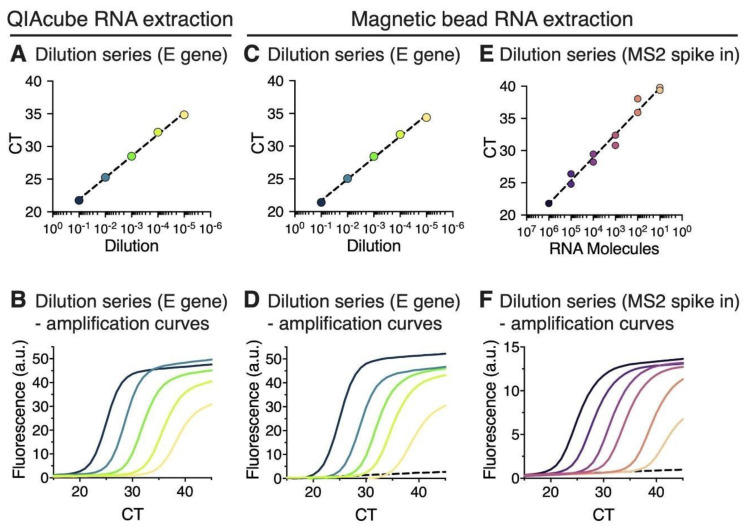
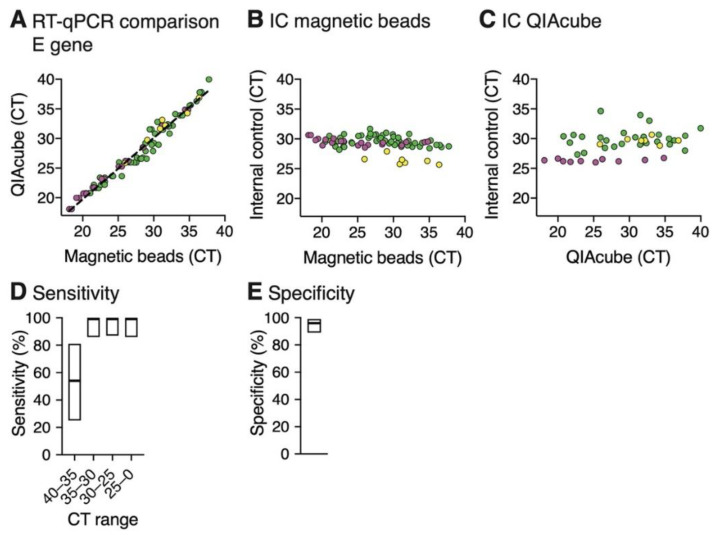
Rapid large-scale testing is essential for controlling the ongoing pandemic of severe acute respiratory syndrome coronavirus 2 (SARS-CoV-2). The standard diagnostic pipeline for testing SARS-CoV-2 presence in patients with an ongoing infection is predominantly based on pharyngeal swabs, from which the viral RNA is extracted using commercial kits, followed by reverse transcription and quantitative PCR detection. As a result of the large demand for testing, commercial RNA extraction kits may be limited and, alternatively, non-commercial protocols are needed. Here, we provide a magnetic bead RNA extraction protocol that is predominantly based on in-house made reagents and is performed in 96-well plates supporting large-scale testing. Magnetic bead RNA extraction was benchmarked against the commercial QIAcube extraction platform. Comparable viral RNA detection sensitivity and specificity were obtained by fluorescent and colorimetric reverse transcription loop-mediated isothermal amplification (RT-LAMP) using a primer set targeting the N gene, as well as RT-qPCR using a primer set targeting the E gene, showing that the RNA extraction protocol presented here can be combined with a variety of detection methods at high throughput. Importantly, the presented diagnostic workflow can be quickly set up in a laboratory without access to an automated pipetting robot.
快速大规模检测对于控制严重急性呼吸综合征冠状病毒 2(SARS-CoV-2)的持续流行至关重要。目前,用于检测持续性感染患者体内 SARS-CoV-2 存在的标准诊断流程主要基于咽拭子,使用商业试剂盒从咽拭子中提取病毒 RNA,然后进行逆转录和定量 PCR 检测。由于检测需求量大,商业 RNA 提取试剂盒可能会受到限制,因此需要替代的非商业方案。在这里,我们提供了一种主要基于内部试剂的磁珠 RNA 提取方案,可在 96 孔板中进行,支持大规模检测。磁珠 RNA 提取与商业 QIAcube 提取平台进行了基准测试。使用针对 N 基因的引物对进行荧光和比色逆转录环介导等温扩增(RT-LAMP)以及针对 E 基因的引物对进行 RT-qPCR 检测,均获得了可比的病毒 RNA 检测灵敏度和特异性,表明这里提出的 RNA 提取方案可以与多种检测方法相结合,实现高通量检测。重要的是,在没有自动化移液机器人的情况下,该实验室也可以快速建立该诊断工作流程。