Department of Internal Medicine and Clinic of Diseases of Horses, Dogs and Cats, Faculty of Veterinary Medicine, Wroclaw University of Environmental and Life Sciences, pl. Grunwaldzki 47, 50-366, Wrocław, Poland.
Department of Pathology, Faculty of Veterinary Medicine, Wroclaw University of Environmental and Life Sciences, ul. C.K. Norwida 31, 50-375, Wrocław, Poland.
Acta Vet Scand. 2020 Aug 12;62(1):44. doi: 10.1186/s13028-020-00542-2.
The Sydney system for assessing inflammatory lesions in the gastric mucosa is based on endoscopic and histological examinations. This study aimed to apply the Sydney system to diagnose gastritis in dogs. The study also compared the results of endoscopic and histological examinations conducted on gastric mucosal biopsy specimens. A total of 56 dogs with chronic vomiting were analyzed in the study. The physical appearance of the gastric mucosa was assessed through endoscopic examination, while the severity of the gastric inflammation, inflammation activity, glandular atrophy, and intestinal metaplasia were assessed by histopathological examination.
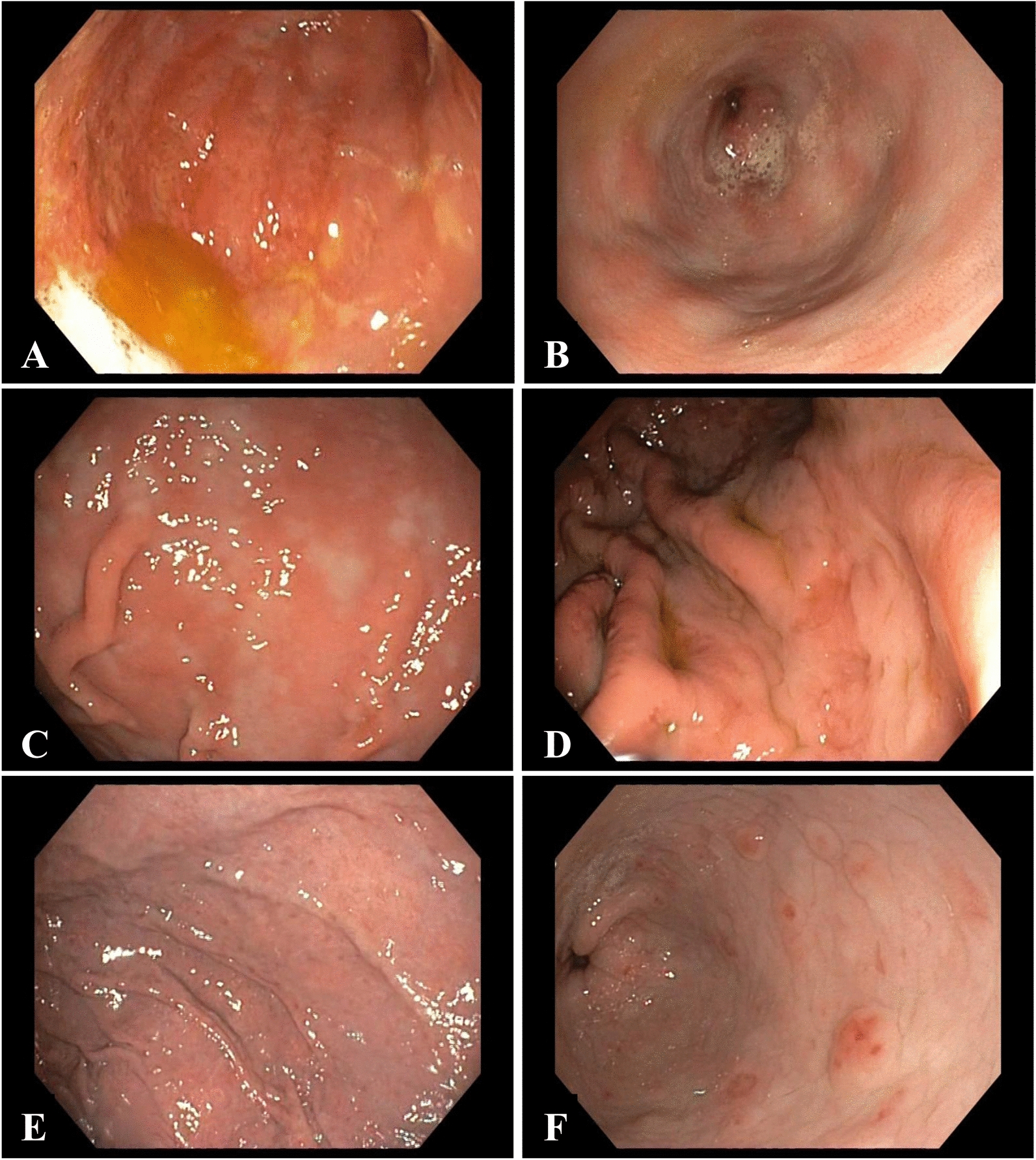
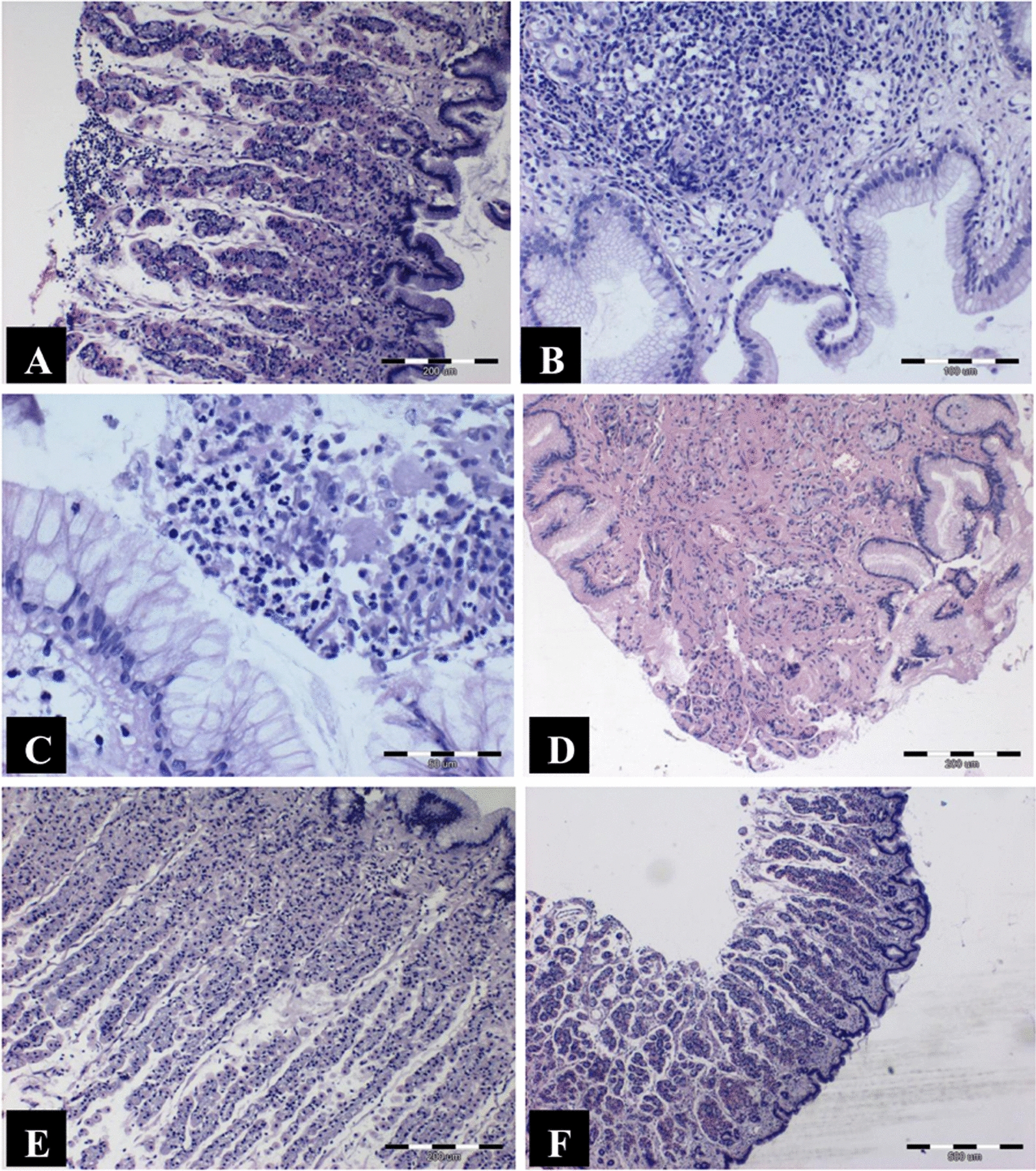
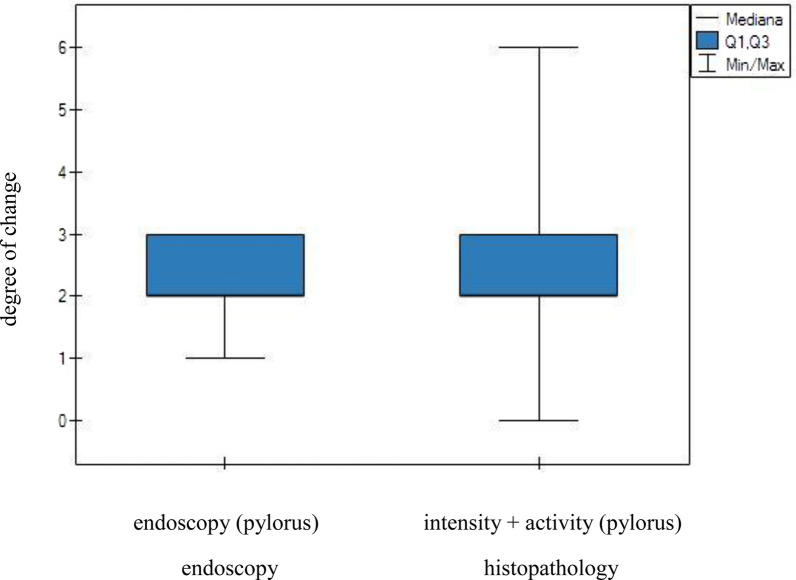
The endoscopic examination confirmed the presence of inflammatory lesions affecting the gastric corpus and pylorus in all the dogs, although the severity of these lesions differed between the individuals. Reflux gastritis was the most commonly observed gastric inflammation. In the histopathological examination of the gastric mucosal samples, inflammatory lesions were found in the gastric corpus of 53 dogs, while 55 dogs had lesions in the pylorus. This corresponds to a 96.4% agreement between the methods.
The Sydney system is a useful tool for macroscopic and microscopic assessment of changes in the gastric mucosa as it enables the determination of inflammation type and severity, which helps the canine gastroenterologists to reliably compare the results of the tests performed in different facilities. Besides, the use of the Sydney system in diagnosing lesions facilitates the selection and effective monitoring of treatment. However, despite a high rate of agreement between the results of endoscopic and histopathological examinations, it is recommended to use both these methods for the assessment of the gastric mucosa in dogs.
悉尼系统用于评估胃黏膜的炎症病变,其依据是内镜和组织学检查。本研究旨在将悉尼系统应用于犬胃炎的诊断,并比较胃黏膜活检标本的内镜和组织学检查结果。本研究共分析了 56 只患有慢性呕吐的犬。通过内镜检查评估胃黏膜的外观,通过组织病理学检查评估胃炎症的严重程度、炎症活动度、腺体萎缩和肠化生。
内镜检查证实所有犬的胃体和幽门部均存在炎症病变,但病变的严重程度因人而异。反流性胃炎是最常见的胃炎症。在胃黏膜组织学检查中,53 只犬的胃体有炎症病变,55 只犬的幽门有病变。这两种方法的一致性为 96.4%。
悉尼系统是一种用于胃黏膜宏观和微观评估的有用工具,可确定炎症类型和严重程度,有助于犬科胃肠病学家可靠地比较不同机构进行的检测结果。此外,悉尼系统在诊断病变中的应用有助于选择和有效监测治疗。然而,尽管内镜和组织学检查结果的一致性很高,但仍建议同时使用这两种方法评估犬的胃黏膜。