Li Qian, Liu Jianru, Liu Wenyi, Chu Yi, Zhong Jinsheng, Xie Ying, Lou Xinzhe, Ouyang Xiangying
Department of Periodontology, Peking University School and Hospital of Stomatology, Beijing, China.
First Clinical Division, Peking University School and Hospital of Stomatology, Beijing, China.
Front Cell Dev Biol. 2020 Jul 14;8:596. doi: 10.3389/fcell.2020.00596. eCollection 2020.
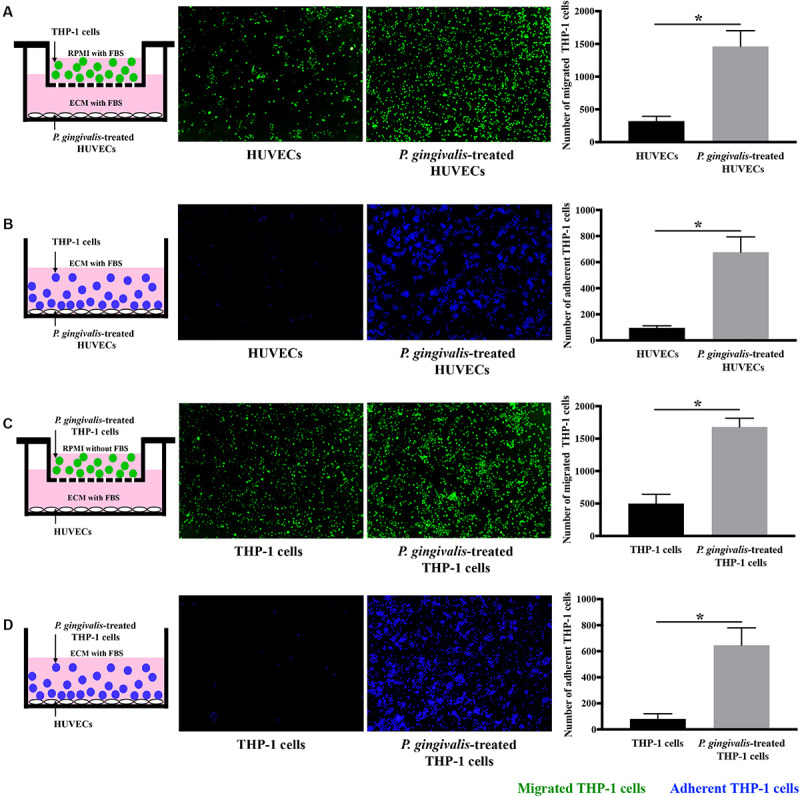
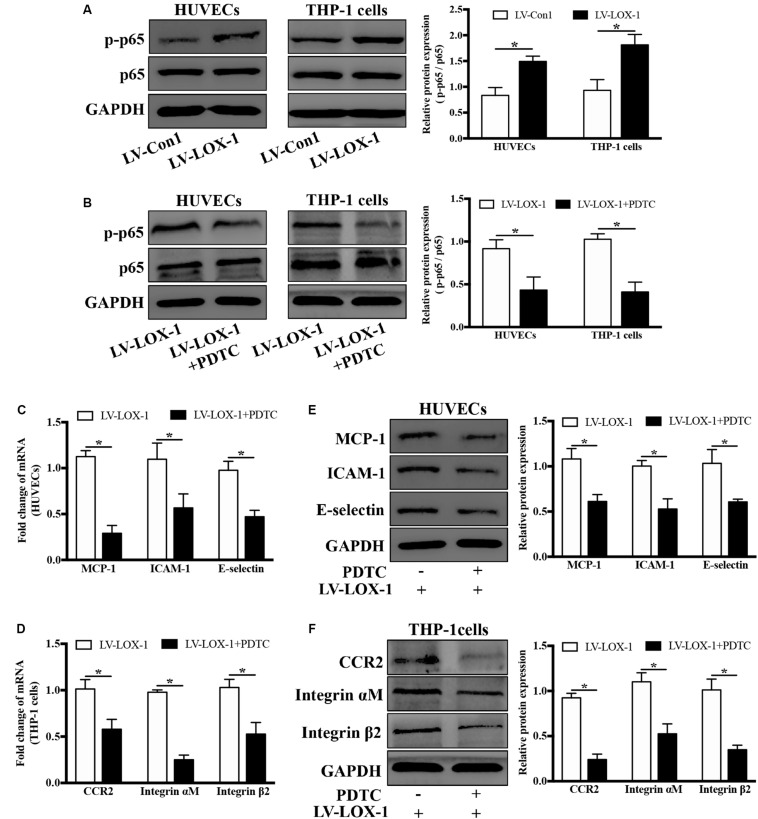
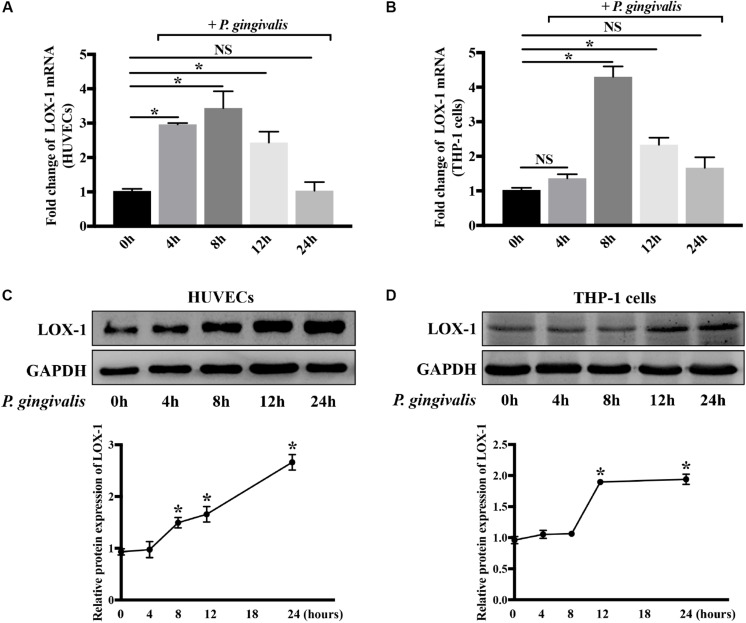
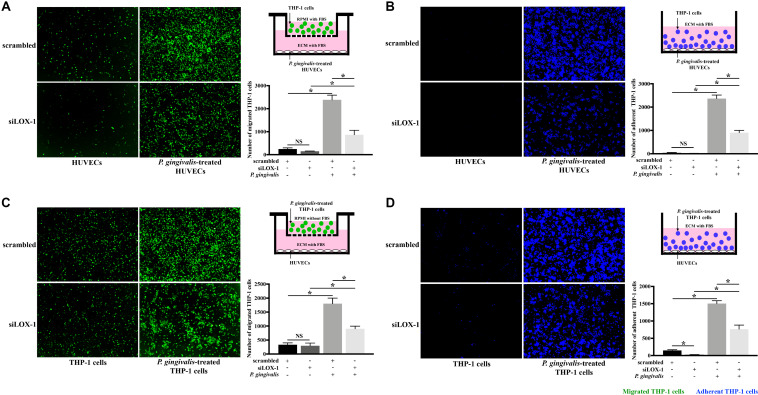
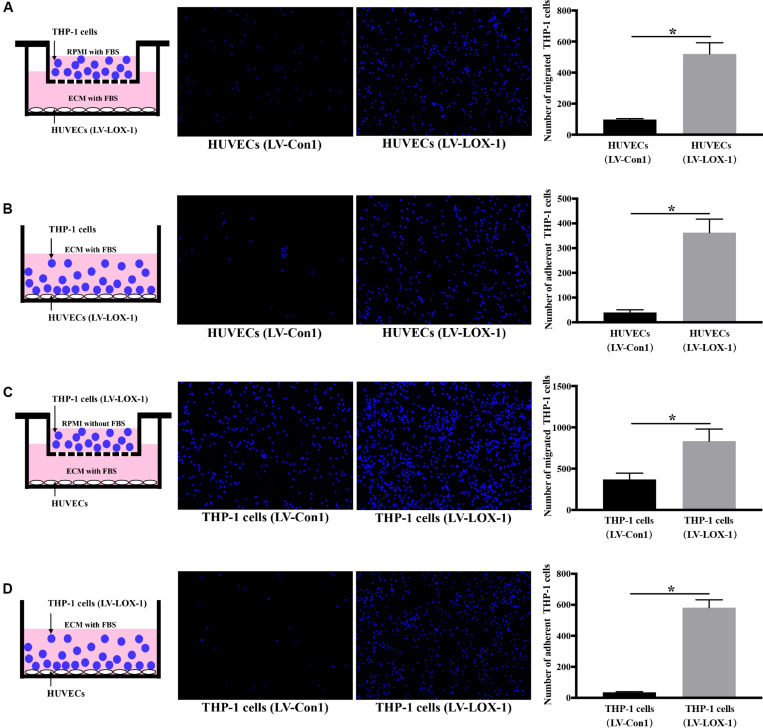
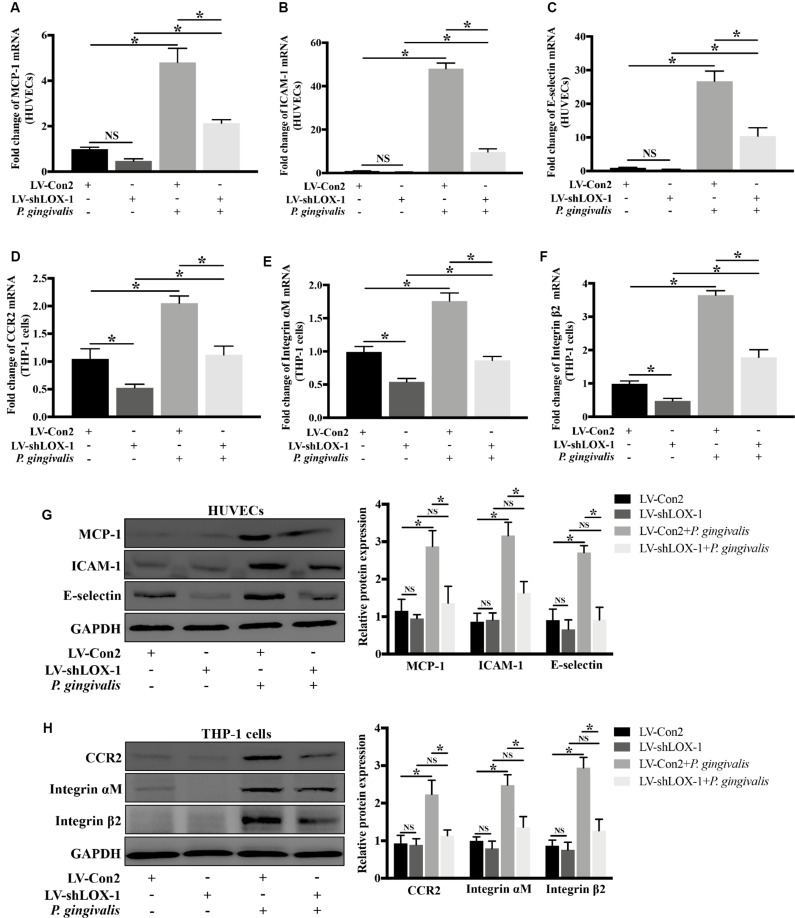
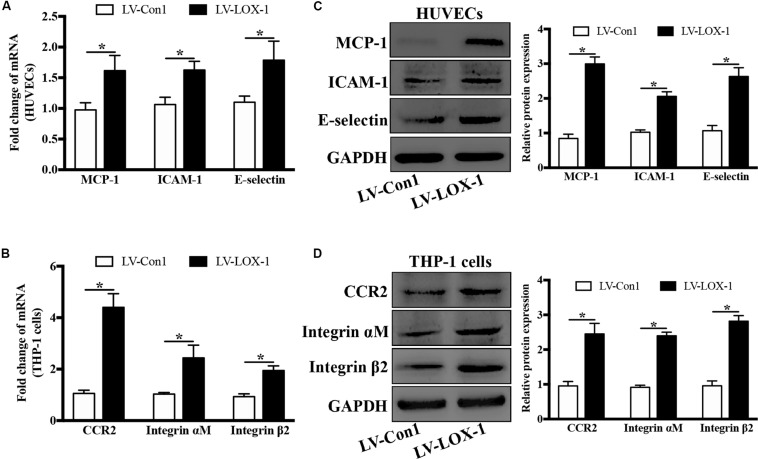
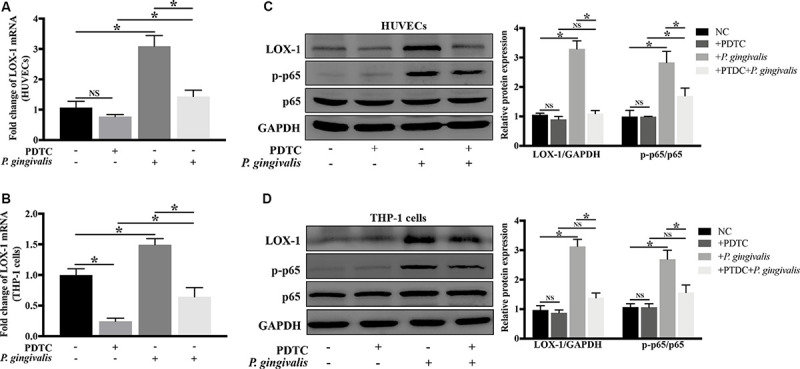
() is one of the main periodontal bacteria. This pathogen was reported to enhance monocyte migration and adhesion to endothelial cells in atherosclerosis. The scavenger receptor lectin-like oxidized low-density lipoprotein receptor-1 (LOX-1) plays a pivotal role in atherogenesis. The aim of this study was to investigate whether LOX-1 modulates -mediated monocyte migration and adhesion to endothelial cells and how it works. The results showed that the migration and adhesion of monocytic THP-1 cells to human umbilical vein endothelial cells (HUVECs) were significantly enhanced when HUVECs or THP-1 cells were challenged with . Meanwhile, the expression level of LOX-1 in both HUVECs and THP-1 cells were also significantly increased by stimulation. It is well known that ligand/receptor pairs monocyte chemoattractant protein-1 (MCP-1)/CC chemokine receptor 2 (CCR2), selectins/Integrins, and cell adhesion molecules (CAMs)/Integrins mediate monocyte migration and adhesion to endothelial cells. In this study, LOX-1 was demonstrated to be crucially involved in -induced THP-1 cell migration and adhesion to HUVECs, by regulating expression of ligands MCP-1, intercellular adhesion molecule-1 (ICAM-1) and E-selectin in HUVECs and that of their receptors CCR2 and Integrin αMβ2 in THP-1 cells. The nuclear factor-kappa B (NF-κB) signaling pathway was proved to be involved in this process. In conclusion, LOX-1 plays a crucial role in . induced monocyte migration and adhesion to endothelial cells. This result implies LOX-1 may act as a bridge in linking periodontitis to atherosclerosis.
()是主要的牙周细菌之一。据报道,这种病原体可增强动脉粥样硬化中单核细胞的迁移以及与内皮细胞的黏附。清道夫受体凝集素样氧化型低密度脂蛋白受体-1(LOX-1)在动脉粥样硬化形成中起关键作用。本研究旨在探讨LOX-1是否调节介导的单核细胞迁移以及与内皮细胞的黏附,及其作用机制。结果显示,当人脐静脉内皮细胞(HUVECs)或单核细胞THP-1细胞受到()攻击时,单核细胞THP-1细胞向HUVECs的迁移和黏附显著增强。同时,刺激也使HUVECs和THP-1细胞中LOX-1的表达水平显著升高。众所周知,配体/受体对单核细胞趋化蛋白-1(MCP-1)/CC趋化因子受体2(CCR2)、选择素/整合素以及细胞黏附分子(CAMs)/整合素介导单核细胞迁移和与内皮细胞的黏附。在本研究中,通过调节HUVECs中配体MCP-1、细胞间黏附分子-1(ICAM-1)和E-选择素及其在THP-1细胞中受体CCR2和整合素αMβ2的表达,证明LOX-1在诱导的THP-1细胞迁移和与HUVECs黏附中起关键作用。核因子-κB(NF-κB)信号通路被证明参与此过程。总之,LOX-1在诱导的单核细胞迁移和与内皮细胞黏附中起关键作用。这一结果表明LOX-1可能在连接牙周炎和动脉粥样硬化中起桥梁作用。