Liu Guang-Jie, Tao Tao, Wang Han, Zhou Yan, Gao Xuan, Gao Yong-Yue, Hang Chun-Hua, Li Wei
Department of Neurosurgery, Nanjing Drum Tower Hospital, The Affiliated Hospital of Nanjing University Medical School, Nanjing, China.
Department of Neurosurgery, Nanjing Drum Tower Hospital Clinical College of Nanjing Medical University, Nanjing, China.
J Neuroinflammation. 2020 Aug 14;17(1):239. doi: 10.1186/s12974-020-01918-x.
Early brain injury (EBI) has been thought to be a key factor affecting the prognosis of subarachnoid hemorrhage (SAH). Many pathologies are involved in EBI, with inflammation and neuronal death being crucial to this process. Resolvin D1 (RvD1) has shown superior anti-inflammatory properties by interacting with lipoxin A4 receptor/formyl peptide receptor 2 (ALX/FPR2) in various diseases. However, it remains not well described about its role in the central nervous system (CNS). Thus, the goal of the present study was to elucidate the potential functions of the RvD1-ALX/FPR2 interaction in the brain after SAH.
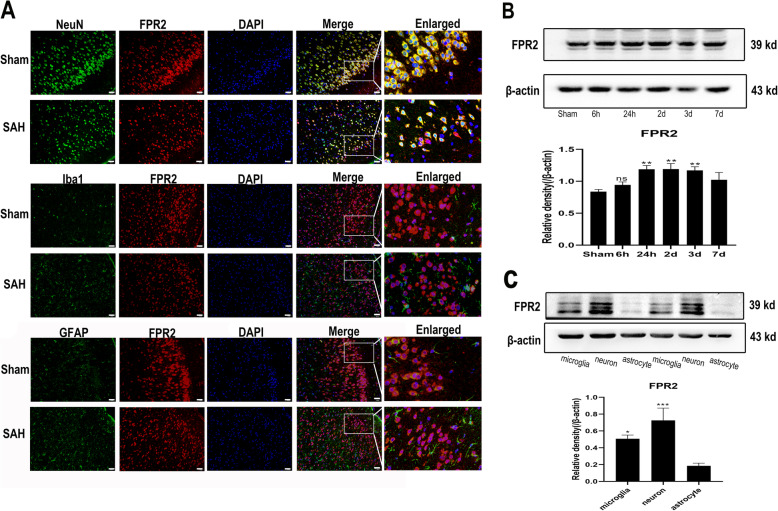
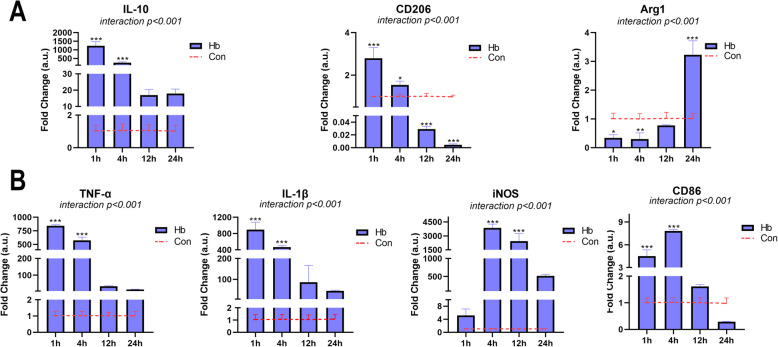
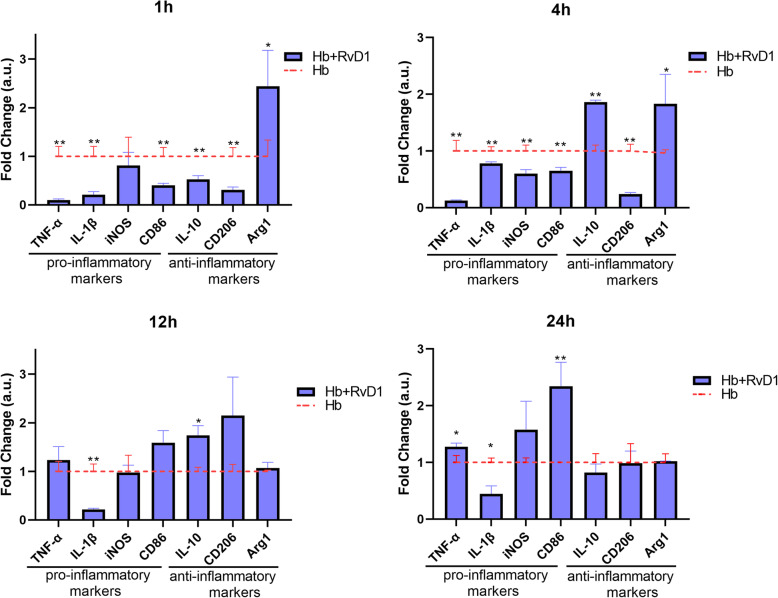
We used an in vivo model of endovascular perforation and an in vitro model of hemoglobin (Hb) exposure as SAH models in the current study. RvD1 was used at a concentration of 25 nM in our experiments. Western blotting, quantitative polymerase chain reaction (qPCR), immunofluorescence, and other chemical-based assays were performed to assess the cellular localizations and time course fluctuations in ALX/FPR2 expression, evaluate the effects of RvD1 on Hb-induced primary microglial activation and neuronal damage, and confirm the role of ALX/FPR2 in the function of RvD1.
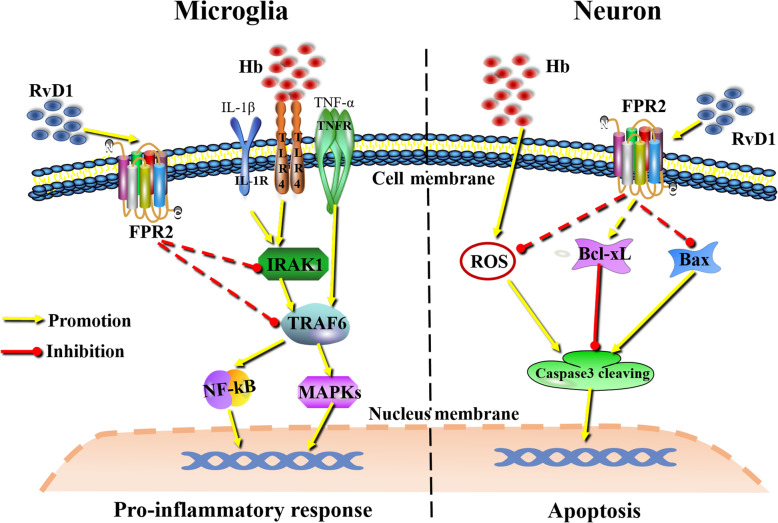
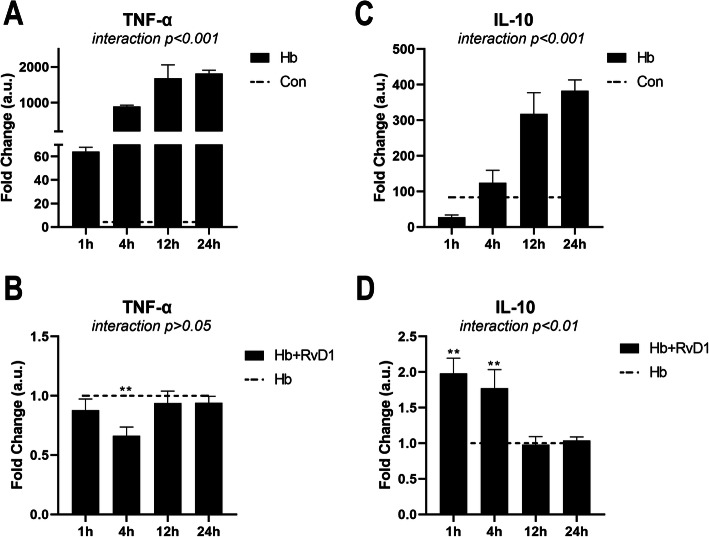
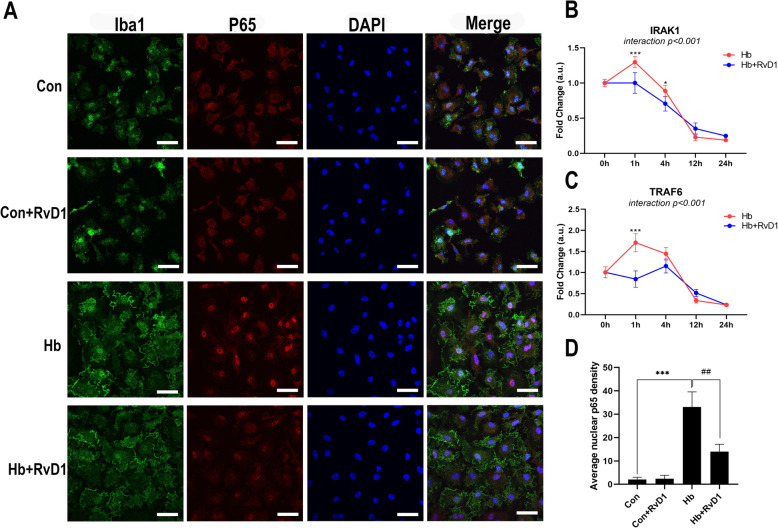
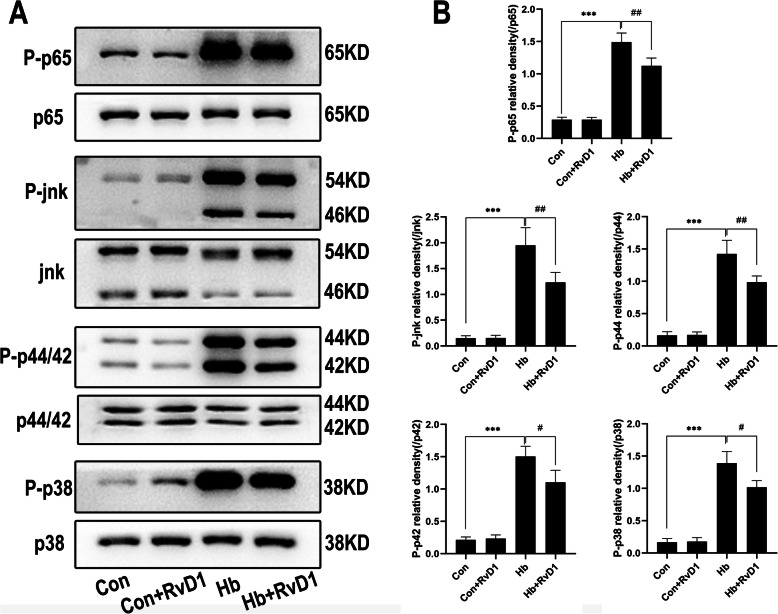
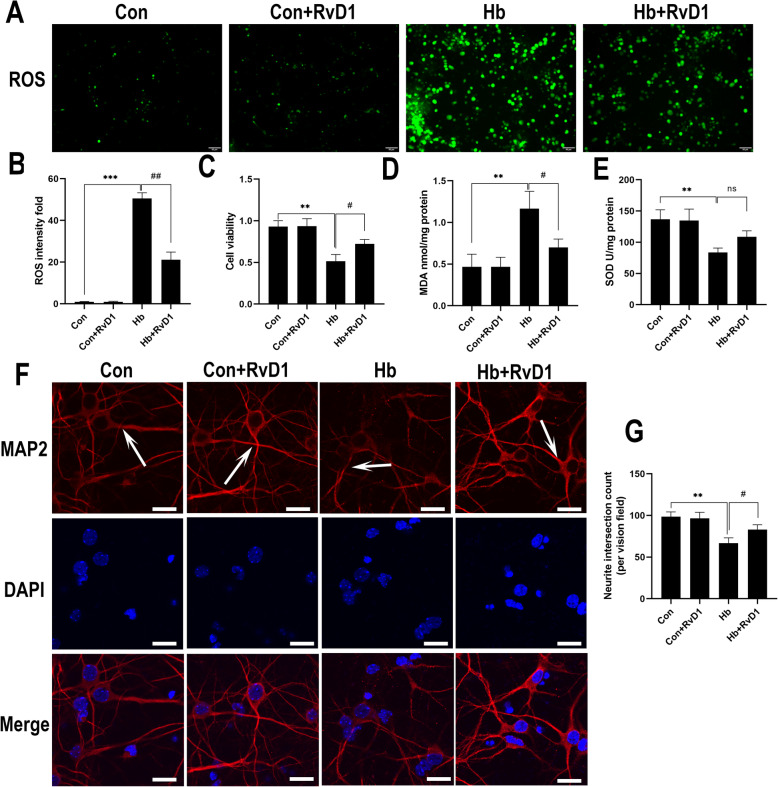
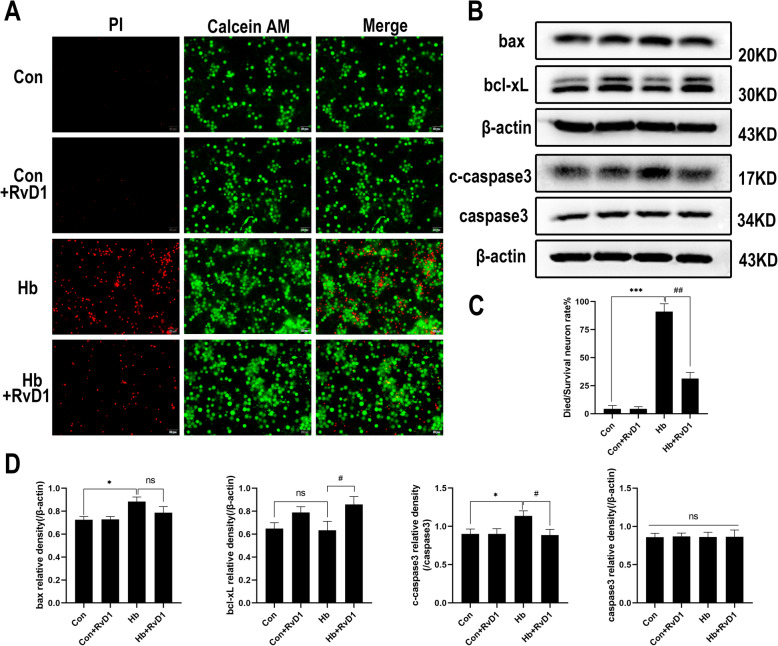
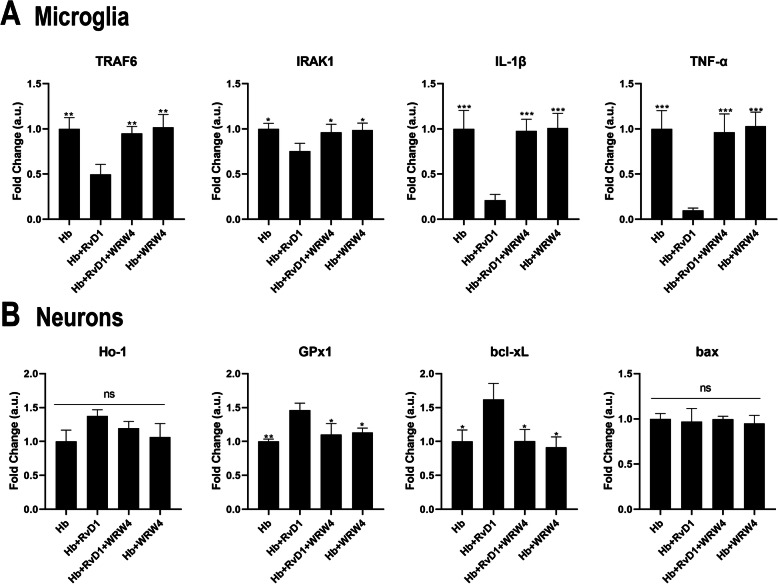
ALX/FPR2 was expressed on both microglia and neurons, but not astrocytes. RvD1 exerted a good inhibitory effect in the microglial pro-inflammatory response induced by Hb, possibly by regulating the IRAK1/TRAF6/NF-κB or MAPK signaling pathways. RvD1 could also potentially attenuate Hb-induced neuronal oxidative damage and apoptosis. Finally, the mRNA expression of IRAK1/TRAF6 in microglia and GPx1/bcl-xL in neurons was reversed by the ALX/FPR2-specific antagonist Trp-Arg-Trp-Trp-Trp-Trp-NH2 (WRW4), indicating that ALX/FPR2 could mediate the neuroprotective effects of RvD1.
The results of the present study indicated that the RvD1-ALX/FPR2 interaction could potentially play dual roles in the CNS, as inhibiting Hb promoted microglial pro-inflammatory polarization and ameliorating Hb induced neuronal oxidant damage and death. These results shed light on a good therapeutic target (ALX/FPR2) and a potential effective drug (RvD1) for the treatment of SAH and other inflammation-associated brain diseases.
早期脑损伤(EBI)被认为是影响蛛网膜下腔出血(SAH)预后的关键因素。EBI涉及多种病理过程,炎症和神经元死亡对这一过程至关重要。在各种疾病中,消退素D1(RvD1)通过与脂氧素A4受体/甲酰肽受体2(ALX/FPR2)相互作用表现出卓越的抗炎特性。然而,其在中枢神经系统(CNS)中的作用仍未得到充分描述。因此,本研究的目的是阐明SAH后RvD1-ALX/FPR2相互作用在脑中的潜在功能。
在本研究中,我们使用血管内穿刺的体内模型和血红蛋白(Hb)暴露的体外模型作为SAH模型。在我们的实验中,RvD1的使用浓度为25 nM。进行蛋白质印迹、定量聚合酶链反应(qPCR)、免疫荧光和其他基于化学的检测,以评估ALX/FPR2表达的细胞定位和时间进程波动,评估RvD1对Hb诱导的原代小胶质细胞活化和神经元损伤的影响,并确认ALX/FPR2在RvD1功能中的作用。
ALX/FPR2在小胶质细胞和神经元上均有表达,但在星形胶质细胞上不表达。RvD1对Hb诱导的小胶质细胞促炎反应具有良好的抑制作用,可能是通过调节IRAK1/TRAF6/NF-κB或MAPK信号通路。RvD1还可能减轻Hb诱导的神经元氧化损伤和凋亡。最后,ALX/FPR2特异性拮抗剂Trp-Arg-Trp-Trp-Trp-Trp-NH2(WRW4)逆转了小胶质细胞中IRAK1/TRAF6和神经元中GPx1/bcl-xL的mRNA表达,表明ALX/FPR2可以介导RvD1的神经保护作用。
本研究结果表明,RvD1-ALX/FPR2相互作用在CNS中可能发挥双重作用,可以抑制Hb促进的小胶质细胞促炎极化,并改善Hb诱导的神经元氧化损伤和死亡。这些结果为治疗SAH和其他炎症相关脑疾病提供了一个良好的治疗靶点(ALX/FPR2)和一种潜在的有效药物(RvD1)。