School of Medicine, University College Dublin, Ireland.
Radiography (Lond). 2021 Feb;27(1):208-214. doi: 10.1016/j.radi.2020.07.017. Epub 2020 Aug 13.
Simulation forms a key element of undergraduate Radiography education as it enables students to develop their clinical skills in a safe environment. In this study, an immersive three-dimensional (3D) virtual radiography simulation tool was piloted in an undergraduate Radiography curriculum and user feedback retrieved.
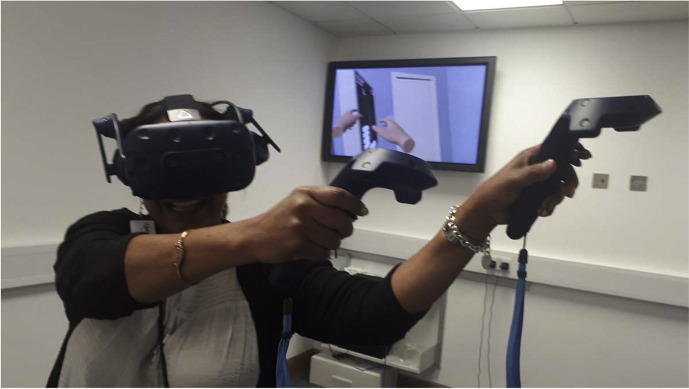
The 3D virtual simulation tool by Virtual Medical Coaching Ltd was introduced to first year radiography students (n = 105). This technology guided students through a comprehensive process of learning anatomy, radiographic positioning and pathology. Students then X-rayed a virtual patient in the VR suite using HTC Vive Pro™ headsets and hand controllers. Instant feedback was provided. An online survey was later disseminated to students to gather user feedback. Thematic and descriptive statistical analyses were applied.
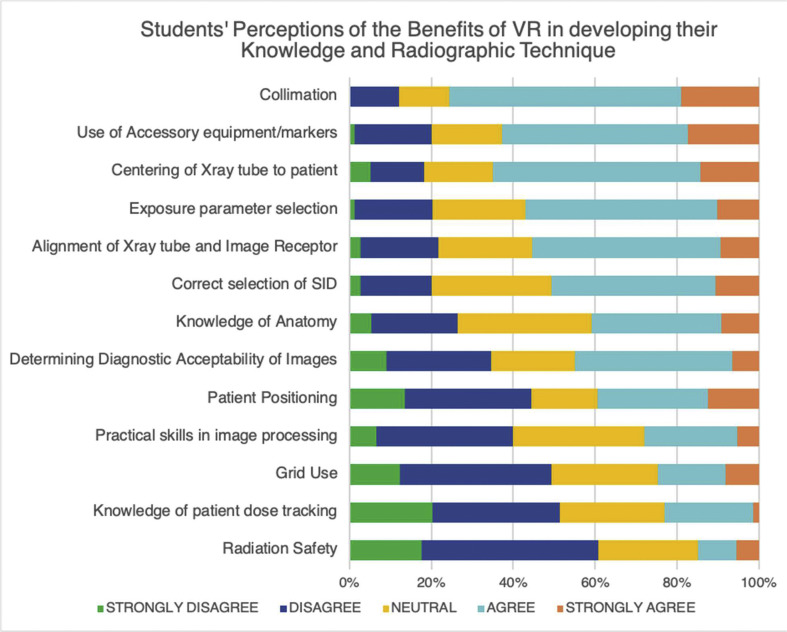
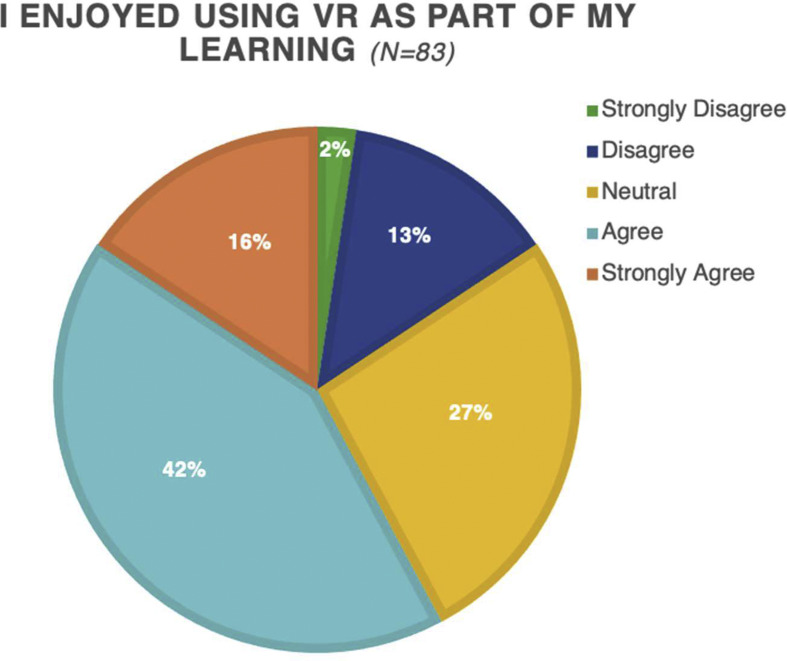
A response rate of 79% (n = 83) was achieved. Most respondents (58%) reported enjoying VR simulation, whilst some felt indifferent towards it (27%). Ninety-four percent would recommend this tool to other students. The mean length of time it took for students to feel comfortable using the technology was 60 min (10-240 min). Most respondents (58%) desired more VR access. Students attributed enhanced confidence in the areas of beam collimation (75%), anatomical marker placement (63%), centring of the X-ray tube (64%) and exposure parameter selection (56%) to their VR practice. Many students (55%) advocated the use of VR in formative or low stakes assessments. Issues flagged included technical glitches, inability to palpate patient and lack of constructive feedback.
Student feedback indicates that 3D virtual radiography simulation is a valuable pedagogical tool in radiography education IMPLICATIONS FOR PRACTICE: 3D immersive VR simulation is perceived by radiography students to be a valuable learning resource. VR needs to be strategically implemented into curricula to maximise its benefits.
模拟是本科放射学教育的一个关键要素,因为它使学生能够在安全的环境中发展他们的临床技能。在这项研究中,一种沉浸式三维(3D)虚拟放射学模拟工具在本科放射学课程中进行了试点,并收集了用户反馈。
向一年级放射学学生(n=105)介绍了由 Virtual Medical Coaching Ltd 开发的 3D 虚拟模拟工具。该技术引导学生全面学习解剖学、放射定位和病理学。然后,学生使用 HTC Vive Pro™头戴式设备和手控器在 VR 套房中对虚拟患者进行 X 光检查。立即提供反馈。之后,向学生分发在线调查以收集用户反馈。应用了主题和描述性统计分析。
达到了 79%(n=83)的回复率。大多数受访者(58%)报告喜欢 VR 模拟,而有些则对此持中立态度(27%)。94%的人会向其他学生推荐该工具。学生感觉使用该技术舒适的平均时间为 60 分钟(10-240 分钟)。大多数受访者(58%)希望有更多的 VR 访问。学生将对射线管准直(75%)、解剖标记放置(63%)、X 射线管居中(64%)和曝光参数选择(56%)等领域的信心增强归因于他们的 VR 实践。许多学生(55%)主张在形成性或低风险评估中使用 VR。提出的问题包括技术故障、无法触诊患者和缺乏建设性反馈。
学生反馈表明,3D 虚拟放射学模拟是放射学教育中的一种有价值的教学工具。需要将 3D 沉浸式 VR 模拟战略性地纳入课程,以最大限度地发挥其优势。
实践意义:虚拟现实模拟被放射学学生认为是一种有价值的学习资源。需要将 VR 有策略地融入课程中,以最大限度地发挥其优势。