Department of Chemistry, University of Connecticut, Storrs, CT 06269, USA.
LifeSensors Inc., 271 Great Valley Parkway, Suite 100, Malvern, PA 19355, USA.
Sensors (Basel). 2020 Aug 12;20(16):4514. doi: 10.3390/s20164514.
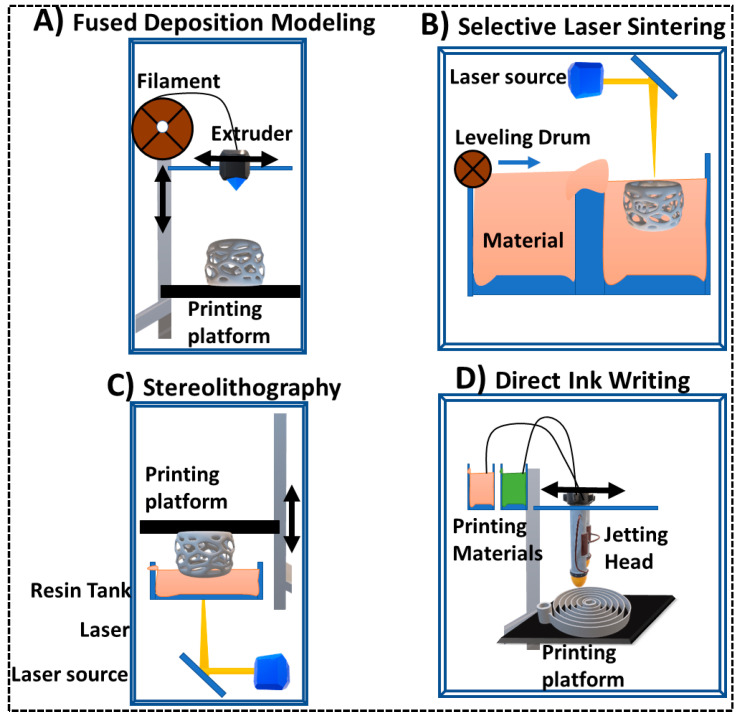
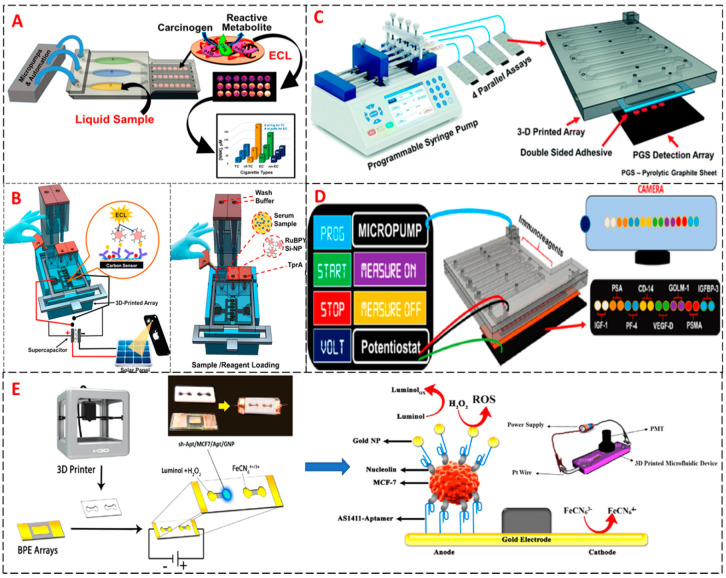
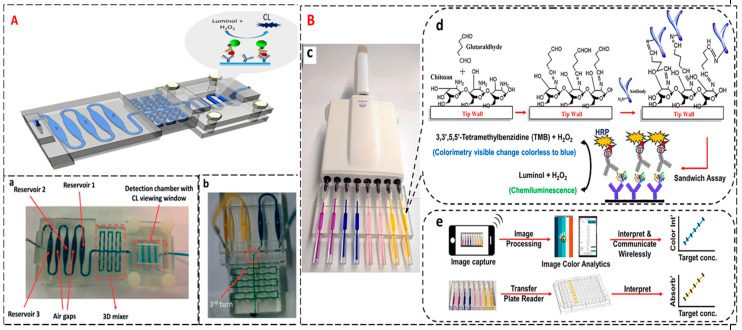
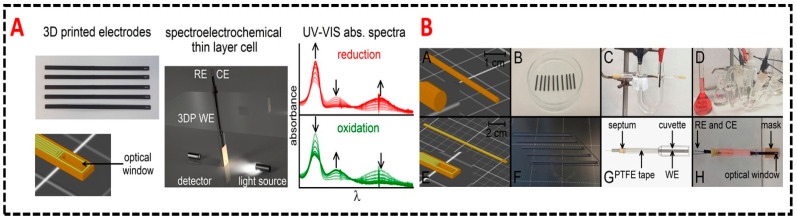
Detecting cancer at an early stage of disease progression promises better treatment outcomes and longer lifespans for cancer survivors. Research has been directed towards the development of accessible and highly sensitive cancer diagnostic tools, many of which rely on protein biomarkers and biomarker panels which are overexpressed in body fluids and associated with different types of cancer. Protein biomarker detection for point-of-care (POC) use requires the development of sensitive, noninvasive liquid biopsy cancer diagnostics that overcome the limitations and low sensitivities associated with current dependence upon imaging and invasive biopsies. Among many endeavors to produce user-friendly, semi-automated, and sensitive protein biomarker sensors, 3D printing is rapidly becoming an important contemporary tool for achieving these goals. Supported by the widely available selection of affordable desktop 3D printers and diverse printing options, 3D printing is becoming a standard tool for developing low-cost immunosensors that can also be used to make final commercial products. In the last few years, 3D printing platforms have been used to produce complex sensor devices with high resolution, tailored towards researchers' and clinicians' needs and limited only by their imagination. Unlike traditional subtractive manufacturing, 3D printing, also known as , has drastically reduced the time of sensor and sensor array development while offering excellent sensitivity at a fraction of the cost of conventional technologies such as photolithography. In this review, we offer a comprehensive description of 3D printing techniques commonly used to develop immunosensors, arrays, and microfluidic arrays. In addition, recent applications utilizing 3D printing in immunosensors integrated with different signal transduction strategies are described. These applications include electrochemical, chemiluminescent (CL), and electrochemiluminescent (ECL) 3D-printed immunosensors. Finally, we discuss current challenges and limitations associated with available 3D printing technology and future directions of this field.
在疾病进展的早期阶段发现癌症有望为癌症幸存者带来更好的治疗效果和更长的寿命。研究一直致力于开发易于使用且高度敏感的癌症诊断工具,其中许多工具依赖于在体液中过表达并与不同类型癌症相关的蛋白质生物标志物和生物标志物组合。用于即时护理(POC)用途的蛋白质生物标志物检测需要开发敏感、非侵入性的液体活检癌症诊断,以克服当前对成像和侵入性活检的依赖所带来的限制和低灵敏度。在许多致力于生产用户友好、半自动和敏感的蛋白质生物标志物传感器的努力中,3D 打印正在迅速成为实现这些目标的重要当代工具。得益于广泛可用的各种价格实惠的桌面 3D 打印机和多样化的打印选项,3D 打印正在成为开发低成本免疫传感器的标准工具,也可用于制造最终的商业产品。在过去几年中,3D 打印平台已被用于生产具有高分辨率的复杂传感器设备,这些设备可根据研究人员和临床医生的需求进行定制,并且仅受其想象力的限制。与传统的减法制造不同,3D 打印也称为,极大地缩短了传感器和传感器阵列的开发时间,同时以传统技术(如光刻)成本的一小部分提供了出色的灵敏度。在这篇综述中,我们全面描述了常用于开发免疫传感器、阵列和微流控阵列的 3D 打印技术。此外,还描述了最近利用与不同信号转导策略集成的 3D 打印在免疫传感器中的应用。这些应用包括电化学、化学发光(CL)和电化学发光(ECL)3D 打印免疫传感器。最后,我们讨论了与现有 3D 打印技术相关的当前挑战和局限性以及该领域的未来方向。