Department of Computer Science, Rice University, Houston, TX, USA.
Department of Computer Science, Florida State University, Tallahassee, FL, USA.
Genome Biol. 2020 Aug 17;21(1):208. doi: 10.1186/s13059-020-02119-8.
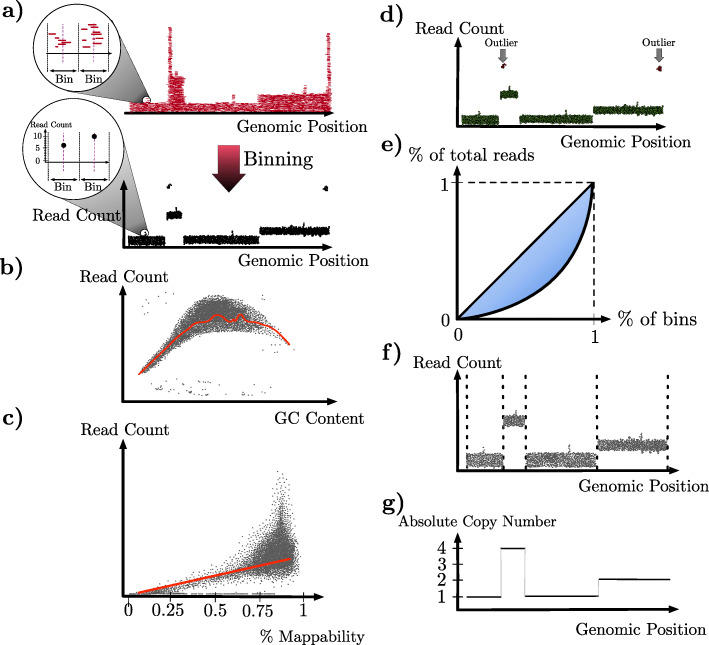
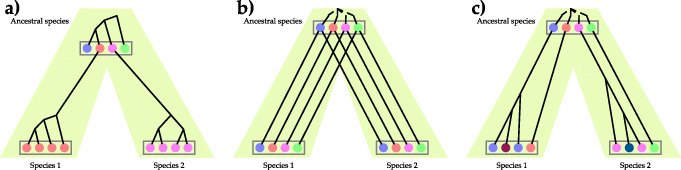
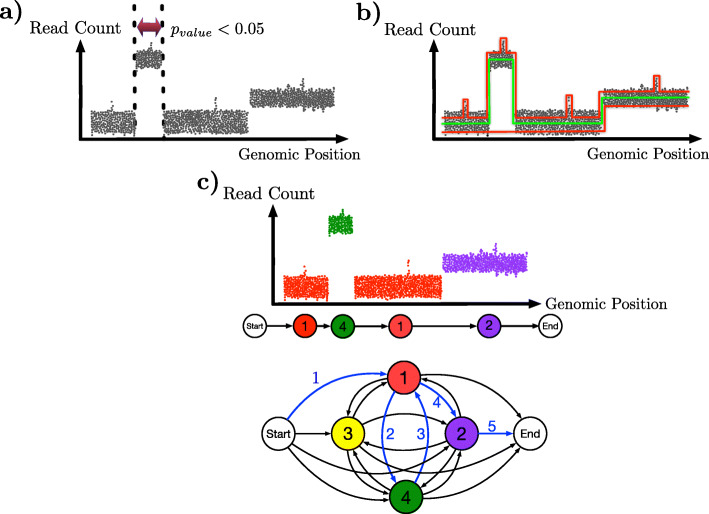
Copy number aberrations (CNAs), which are pathogenic copy number variations (CNVs), play an important role in the initiation and progression of cancer. Single-cell DNA-sequencing (scDNAseq) technologies produce data that is ideal for inferring CNAs. In this review, we review eight methods that have been developed for detecting CNAs in scDNAseq data, and categorize them according to the steps of a seven-step pipeline that they employ. Furthermore, we review models and methods for evolutionary analyses of CNAs from scDNAseq data and highlight advances and future research directions for computational methods for CNA detection from scDNAseq data.
拷贝数异常(CNAs),即致病性拷贝数变异(CNVs),在癌症的发生和发展中起着重要作用。单细胞 DNA 测序(scDNAseq)技术产生的数据非常适合推断 CNAs。在这篇综述中,我们回顾了在 scDNAseq 数据中检测 CNAs 的八种方法,并根据它们所采用的七步流程的步骤对其进行分类。此外,我们还回顾了 scDNAseq 数据中 CNAs 的进化分析模型和方法,并强调了 scDNAseq 数据中 CNA 检测的计算方法的进展和未来研究方向。