Clark Sierra N, Alli Abosede S, Brauer Michael, Ezzati Majid, Baumgartner Jill, Toledano Mireille B, Hughes Allison F, Nimo James, Bedford Moses Josephine, Terkpertey Solomon, Vallarino Jose, Agyei-Mensah Samuel, Agyemang Ernest, Nathvani Ricky, Muller Emily, Bennett James, Wang Jiayuan, Beddows Andrew, Kelly Frank, Barratt Benjamin, Beevers Sean, Arku Raphael E
Department of Epidemiology and Biostatistics, Imperial College London, London, UK.
MRC Center for Environment and Health, Imperial College London, London, UK.
BMJ Open. 2020 Aug 20;10(8):e035798. doi: 10.1136/bmjopen-2019-035798.
Air and noise pollution are emerging environmental health hazards in African cities, with potentially complex spatial and temporal patterns. Limited local data are a barrier to the formulation and evaluation of policies to reduce air and noise pollution.
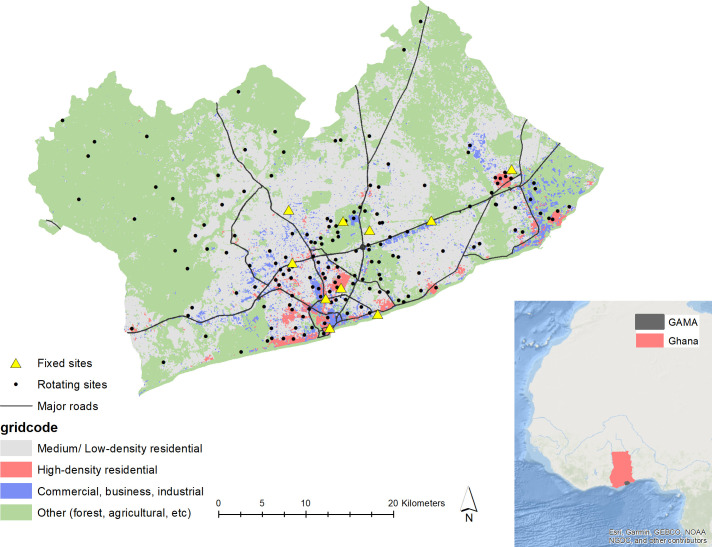
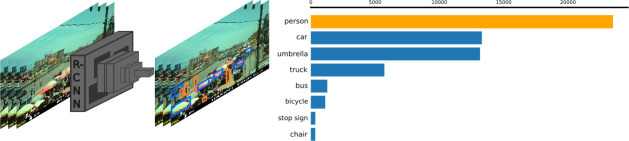
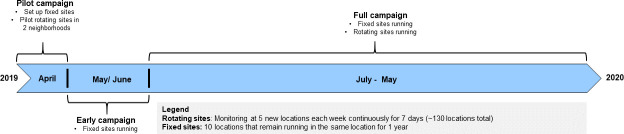
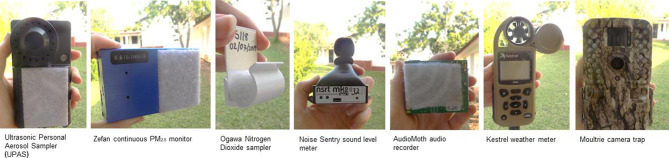
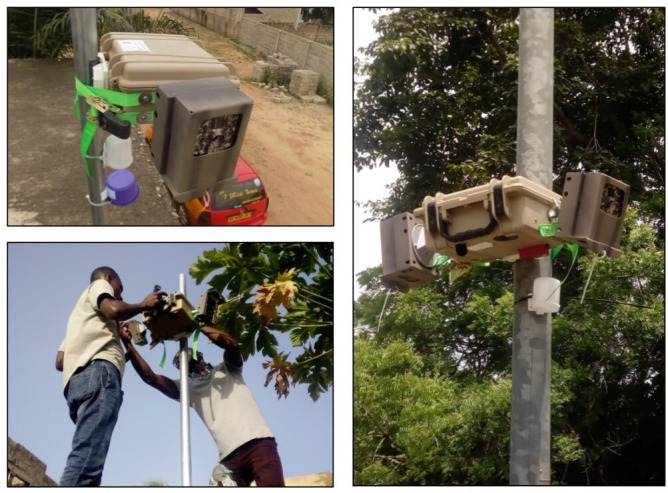
We designed a year-long measurement campaign to characterise air and noise pollution and their sources at high-resolution within the Greater Accra Metropolitan Area (GAMA), Ghana. Our design uses a combination of fixed (year-long, n=10) and rotating (week-long, n =~130) sites, selected to represent a range of land uses and source influences (eg, background, road traffic, commercial, industrial and residential areas, and various neighbourhood socioeconomic classes). We will collect data on fine particulate matter (PM), nitrogen oxides (NO), weather variables, sound (noise level and audio) along with street-level time-lapse images. We deploy low-cost, low-power, lightweight monitoring devices that are robust, socially unobtrusive, and able to function in Sub-Saharan African (SSA) climate. We will use state-of-the-art methods, including spatial statistics, deep/machine learning, and processed-based emissions modelling, to capture highly resolved temporal and spatial variations in pollution levels across the GAMA and to identify their potential sources. This protocol can serve as a prototype for other SSA cities.
This environmental study was deemed exempt from full ethics review at Imperial College London and the University of Massachusetts Amherst; it was approved by the University of Ghana Ethics Committee (ECH 149/18-19). This protocol is designed to be implementable in SSA cities to map environmental pollution to inform urban planning decisions to reduce health harming exposures to air and noise pollution. It will be disseminated through local stakeholder engagement (public and private sectors), peer-reviewed publications, contribution to policy documents, media, and conference presentations.
空气和噪音污染正成为非洲城市新出现的环境卫生危害,其时空模式可能较为复杂。当地数据有限是制定和评估减少空气和噪音污染政策的障碍。
我们设计了一项为期一年的测量活动,以高分辨率表征加纳大阿克拉都会区(GAMA)内的空气和噪音污染及其来源。我们的设计采用了固定站点(为期一年,n = 10)和旋转站点(为期一周,n =~130)相结合的方式,这些站点的选择旨在代表一系列土地用途和源影响(例如,背景、道路交通、商业、工业和居民区,以及不同的社区社会经济阶层)。我们将收集细颗粒物(PM)、氮氧化物(NO)、天气变量、声音(噪音水平和音频)以及街道级延时图像的数据。我们部署了低成本、低功耗、轻便的监测设备,这些设备坚固耐用、对社会干扰小,并且能够在撒哈拉以南非洲(SSA)的气候条件下运行。我们将使用包括空间统计、深度/机器学习和基于过程的排放建模在内的先进方法,来捕捉GAMA地区污染水平的高分辨率时空变化,并确定其潜在来源。该方案可作为其他SSA城市的原型。
这项环境研究在伦敦帝国理工学院和马萨诸塞大学阿默斯特分校被视为无需进行全面伦理审查;它获得了加纳大学伦理委员会(ECH 149/18 - 19)的批准。该方案旨在可在SSA城市实施,以绘制环境污染图,为城市规划决策提供信息,以减少对空气和噪音污染的健康危害暴露。它将通过当地利益相关者参与(公共和私营部门)、同行评审出版物、对政策文件的贡献、媒体以及会议报告进行传播。