• 文献检索
  • 文档翻译
  • 深度研究
  • 学术资讯
  • Suppr Zotero 插件Zotero 插件
  • 邀请有礼
  • 套餐&价格
  • 历史记录
应用&插件
Suppr Zotero 插件Zotero 插件浏览器插件Mac 客户端Windows 客户端微信小程序
定价
高级版会员购买积分包购买API积分包
服务
文献检索文档翻译深度研究API 文档MCP 服务
关于我们
关于 Suppr公司介绍联系我们用户协议隐私条款
关注我们

Suppr 超能文献

核心技术专利:CN118964589B侵权必究
粤ICP备2023148730 号-1Suppr @ 2026

文献检索

告别复杂PubMed语法,用中文像聊天一样搜索,搜遍4000万医学文献。AI智能推荐,让科研检索更轻松。

立即免费搜索

文件翻译

保留排版,准确专业,支持PDF/Word/PPT等文件格式,支持 12+语言互译。

免费翻译文档

深度研究

AI帮你快速写综述,25分钟生成高质量综述,智能提取关键信息,辅助科研写作。

立即免费体验

儿童和成人肿瘤坏死因子受体相关周期性综合征(TRAPS)患者发病时的临床特征和基因特征:来自 AIDA 网络的 80 例系列病例。

Clinical Features at Onset and Genetic Characterization of Pediatric and Adult Patients with TNF- Receptor-Associated Periodic Syndrome (TRAPS): A Series of 80 Cases from the AIDA Network.

机构信息

Clinical Pediatrics, Department of Molecular Medicine and Development, University of Siena, Siena, Italy.

Research Center of Systemic Autoinflammatory Diseases and Behçet's Disease Clinic, Department of Medical Sciences, Surgery and Neurosciences, University of Siena, Siena, Italy.

出版信息

Mediators Inflamm. 2020 Aug 7;2020:8562485. doi: 10.1155/2020/8562485. eCollection 2020.

DOI:10.1155/2020/8562485
PMID:32831641
原文链接:https://pmc.ncbi.nlm.nih.gov/articles/PMC7428902/
Abstract

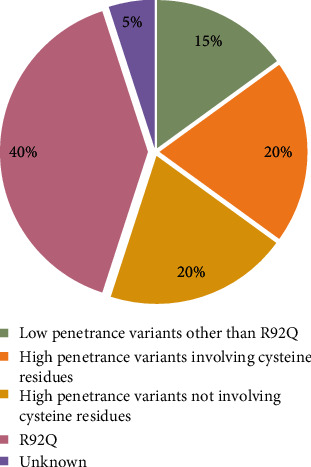
This study explores demographic, clinical, and therapeutic features of tumor necrosis factor receptor-associated periodic syndrome (TRAPS) in a cohort of 80 patients recruited from 19 Italian referral Centers. Patients' data were collected retrospectively and then analyzed according to age groups (disease onset before or after 16 years) and genotype (high penetrance (HP) and low penetrance (LP) gene variants). Pediatric- and adult-onset were reported, respectively, in 44 and 36 patients; HP and LP variants were found, respectively, in 32 and 44 cases. A positive family history for recurrent fever was reported more frequently in the pediatric group than in the adult group ( < 0.05). With reference to clinical features during attacks, pericarditis and myalgia were reported more frequently in the context of adult-onset disease than in the pediatric age (with < 0.01 and < 0.05, respectively), while abdominal pain was present in 84% of children and in 25% of adults ( < 0.01). Abdominal pain was significantly associated also to the presence of HP mutations ( < 0.01), while oral aphthosis was more frequently found in the LP variant group ( < 0.05). Systemic amyloidosis occurred in 25% of subjects carrying HP variants. As concerns laboratory features, HP mutations were significantly associated to higher ESR values ( < 0.01) and to the persistence of steadily elevated inflammatory markers during asymptomatic periods ( < 0.05). The presence of mutations involving a cysteine residue, abdominal pain, and lymphadenopathy during flares significantly correlated with the risk of developing amyloidosis and renal impairment. Conversely, the administration of colchicine negatively correlated to the development of pathologic proteinuria ( < 0.05). Both NSAIDs and colchicine were used as monotherapy more frequently in the LP group compared to the HP group ( < 0.01). Biologic agents were prescribed to 49 (61%) patients; R92Q subjects were more frequently on NSAIDs monotherapy than other patients ( < 0.01); nevertheless, they required biologic therapy in 53.1% of cases. At disease onset, the latest classification criteria for TRAPS were fulfilled by 64/80 (80%) patients (clinical plus genetic items) and 46/80 (57.5%) patients (clinical items only). No statistically significant differences were found in the sensitivity of the classification criteria according to age at onset and according to genotype ( < 0.05). This study describes one of the widest cohorts of TRAPS patients in the literature, suggesting that the clinical expression of this syndrome is more influenced by the penetrance of the mutation rather than by the age at onset itself. Given the high phenotypic heterogeneity of the disease, a definite diagnosis should rely on both accurate working clinical assessment and complementary genotype.

摘要

这项研究探讨了 80 名患者的肿瘤坏死因子受体相关周期性综合征(TRAPS)的人口统计学、临床和治疗特征,这些患者是从 19 个意大利转诊中心招募的。患者的数据是回顾性收集的,然后根据年龄组(疾病在 16 岁之前或之后发作)和基因型(高穿透性(HP)和低穿透性(LP)基因变异)进行分析。分别报告了儿科和成人发病的患者,分别为 44 例和 36 例;分别发现了 HP 和 LP 变体。儿科组比成年组更频繁地报告有家族性复发性发热病史(<0.05)。关于发作期间的临床特征,心包炎和肌痛在成年发病时比儿科年龄更频繁地发生(分别为<0.01 和<0.05),而腹痛在 84%的儿童和 25%的成人中存在(<0.01)。腹痛也与 HP 突变的存在显著相关(<0.01),而 LP 变体组中更常发现口腔阿弗他溃疡(<0.05)。25%携带 HP 变体的受试者发生系统性淀粉样变性。关于实验室特征,HP 突变与更高的 ESR 值显著相关(<0.01),并与无症状期间持续升高的炎症标志物相关(<0.05)。在发作期间存在涉及半胱氨酸残基的突变、腹痛和淋巴结病与发生淀粉样变性和肾功能损害的风险显著相关。相反,秋水仙碱的使用与病理性蛋白尿的发展呈负相关(<0.05)。非甾体抗炎药和秋水仙碱在 LP 组中比 HP 组更常被用作单一疗法(<0.01)。生物制剂被开给 49 名(61%)患者;R92Q 患者比其他患者更常接受 NSAIDs 单一疗法(<0.01);然而,他们在 53.1%的情况下需要生物治疗。在疾病发作时,64/80(80%)名患者(临床加遗传项目)和 46/80(57.5%)名患者(仅临床项目)符合 TRAPS 的最新分类标准。根据发病年龄和基因型,分类标准的敏感性没有统计学差异(<0.05)。这项研究描述了文献中 TRAPS 患者中最广泛的队列之一,表明该综合征的临床表现受突变的穿透性影响更大,而不是发病年龄本身。鉴于疾病的表型异质性很高,明确的诊断应依赖于准确的临床评估和补充的基因型。
https://cdn.ncbi.nlm.nih.gov/pmc/blobs/d018/7428902/0cd02b84d16b/MI2020-8562485.001.jpg

相似文献

1
Clinical Features at Onset and Genetic Characterization of Pediatric and Adult Patients with TNF- Receptor-Associated Periodic Syndrome (TRAPS): A Series of 80 Cases from the AIDA Network.儿童和成人肿瘤坏死因子受体相关周期性综合征(TRAPS)患者发病时的临床特征和基因特征:来自 AIDA 网络的 80 例系列病例。
Mediators Inflamm. 2020 Aug 7;2020:8562485. doi: 10.1155/2020/8562485. eCollection 2020.
2
Long-term clinical profile of children with the low-penetrance R92Q mutation of the TNFRSF1A gene.肿瘤坏死因子受体超家族成员1A基因(TNFRSF1A)低 penetrance R92Q 突变儿童的长期临床特征
Arthritis Rheum. 2011 Apr;63(4):1141-50. doi: 10.1002/art.30237.
3
The expanding spectrum of low-penetrance TNFRSF1A gene variants in adults presenting with recurrent inflammatory attacks: clinical manifestations and long-term follow-up.低外显率 TNFRSF1A 基因变异在反复发作炎症性发作的成年患者中的扩展谱:临床表现和长期随访。
Semin Arthritis Rheum. 2014 Jun;43(6):818-23. doi: 10.1016/j.semarthrit.2013.12.002. Epub 2013 Dec 12.
4
Idiopathic recurrent pericarditis refractory to colchicine treatment can reveal tumor necrosis factor receptor-associated periodic syndrome.特发性复发性心包炎对秋水仙碱治疗无效,可引发肿瘤坏死因子受体相关周期性综合征。
Int J Immunopathol Pharmacol. 2009 Oct-Dec;22(4):1051-8. doi: 10.1177/039463200902200421.
5
The TNF receptor-associated periodic syndrome (TRAPS): emerging concepts of an autoinflammatory disorder.肿瘤坏死因子受体相关周期性综合征(TRAPS):自身炎症性疾病的新观念
Medicine (Baltimore). 2002 Sep;81(5):349-68. doi: 10.1097/00005792-200209000-00002.
6
The tumor-necrosis-factor receptor-associated periodic syndrome: new mutations in TNFRSF1A, ancestral origins, genotype-phenotype studies, and evidence for further genetic heterogeneity of periodic fevers.肿瘤坏死因子受体相关周期性综合征:TNFRSF1A基因的新突变、起源、基因型-表型研究以及周期性发热存在进一步基因异质性的证据
Am J Hum Genet. 2001 Aug;69(2):301-14. doi: 10.1086/321976. Epub 2001 Jul 6.
7
Disease Phenotype and Outcome Depending on the Age at Disease Onset in Patients Carrying the R92Q Low-Penetrance Variant in Gene.携带该基因R92Q低外显率变异的患者,疾病表型和结局取决于疾病发病年龄。
Front Immunol. 2017 Mar 27;8:299. doi: 10.3389/fimmu.2017.00299. eCollection 2017.
8
Familial clustering of recurrent pericarditis may disclose tumour necrosis factor receptor-associated periodic syndrome.复发性心包炎的家族聚集性可能揭示肿瘤坏死因子受体相关周期性综合征。
Clin Exp Rheumatol. 2010 May-Jun;28(3):405-7. Epub 2010 Jun 23.
9
Phenotypic variability in two patients with tumor necrosis factor receptor associated periodic fever syndrome emphasizes a rare manifestation: Immunoglobulin A nephropathy.两名肿瘤坏死因子受体相关周期性发热综合征患者的表型变异性凸显了一种罕见表现:免疫球蛋白A肾病。
Eur J Med Genet. 2020 Apr;63(4):103780. doi: 10.1016/j.ejmg.2019.103780. Epub 2019 Oct 3.
10
Efficacy of anakinra in an adult patient with recurrent pericarditis and cardiac tamponade as initial manifestations of tumor necrosis factor receptor-associated periodic syndrome due to the R92Q TNFRSF1A variant.阿那白滞素对一名成年患者的疗效,该患者因R92Q TNFRSF1A变体导致肿瘤坏死因子受体相关周期性综合征,以复发性心包炎和心脏压塞为初始表现。
Int J Rheum Dis. 2017 Apr;20(4):510-514. doi: 10.1111/1756-185X.13029. Epub 2016 Dec 19.

引用本文的文献

1
Tumor Necrosis Factor Receptor-Associated Periodic Syndrome: Genetics, Autoinflammation, and Recurrent Pericarditis.肿瘤坏死因子受体相关周期性综合征:遗传学、自身炎症与复发性心包炎
JACC Case Rep. 2025 Apr 16;30(8):103206. doi: 10.1016/j.jaccas.2024.103206. Epub 2025 Feb 12.
2
A rare missense p.C125Y mutation in the gene identified in a Chinese family with tumor necrosis factor receptor-associated periodic fever syndrome.在中国一个患有肿瘤坏死因子受体相关周期性发热综合征的家族中鉴定出该基因存在一种罕见的错义p.C125Y突变。
Front Genet. 2024 Jun 24;15:1413641. doi: 10.3389/fgene.2024.1413641. eCollection 2024.
3
Cardiovascular involvement in children with COVID-19 temporally related multisystem inflammatory syndrome (MIS-C): can cardiac magnetic resonance arrive to the heart of the problem?

本文引用的文献

1
p.RQ92 mutation associated with amyloidosis.p.RQ92 突变与淀粉样变性相关。
Reumatol Clin (Engl Ed). 2021 Jan;17(1):46-48. doi: 10.1016/j.reuma.2019.07.006. Epub 2019 Aug 14.
2
Clinical characteristics and genetic analyses of 187 patients with undefined autoinflammatory diseases.187 例未明原因的自身炎症性疾病患者的临床特征和遗传学分析。
Ann Rheum Dis. 2019 Oct;78(10):1405-1411. doi: 10.1136/annrheumdis-2018-214472. Epub 2019 Jul 5.
3
Classification criteria for autoinflammatory recurrent fevers.自身炎症性反复发作性发热的分类标准。
儿童 COVID-19 相关多系统炎症综合征(MIS-C)中的心血管受累:心脏磁共振能否直击问题核心?
Ital J Pediatr. 2024 May 3;50(1):91. doi: 10.1186/s13052-024-01658-1.
4
Tumor necrosis factor receptor-associated cycle syndrome: a case report and literature review.肿瘤坏死因子受体相关周期综合征:一例报告及文献复习
Front Pediatr. 2023 Dec 13;11:1296487. doi: 10.3389/fped.2023.1296487. eCollection 2023.
5
Knowledge and Current Practices in Monogenic Uveitis: An International Survey by IUSG and AIDA Network.单基因葡萄膜炎的知识与当前实践:国际葡萄膜炎研究组(IUSG)和自身免疫性葡萄膜炎诊断和管理国际协作组(AIDA)网络的一项国际调查
Ophthalmol Ther. 2024 Jan;13(1):127-147. doi: 10.1007/s40123-023-00839-1. Epub 2023 Nov 4.
6
Identification by Exome Sequencing of Predisposing Variants in Familial Cases of Autoinflammatory Recurrent Fevers.外显子组测序鉴定家族性自身炎症性复发性发热病例中的易感变异
Genes (Basel). 2023 Jun 21;14(7):1310. doi: 10.3390/genes14071310.
7
Dermatologic Manifestations of Noninflammasome-Mediated Autoinflammatory Diseases.非炎性小体介导的自身炎症性疾病的皮肤表现
JID Innov. 2022 Dec 16;3(2):100176. doi: 10.1016/j.xjidi.2022.100176. eCollection 2023 Mar.
8
Autoinflammatory manifestations in adult patients.成人患者的自身炎症表现。
Clin Exp Immunol. 2022 Dec 31;210(3):295-308. doi: 10.1093/cei/uxac098.
9
IL-1 and autoinflammatory disease: biology, pathogenesis and therapeutic targeting.白细胞介素-1 与自体炎症性疾病:生物学、发病机制与治疗靶点
Nat Rev Rheumatol. 2022 Aug;18(8):448-463. doi: 10.1038/s41584-022-00797-1. Epub 2022 Jun 21.
10
Immunomodulating Therapies in Acute Myocarditis and Recurrent/Acute Pericarditis.急性心肌炎和复发性/急性心包炎的免疫调节治疗
Front Med (Lausanne). 2022 Mar 7;9:838564. doi: 10.3389/fmed.2022.838564. eCollection 2022.
Ann Rheum Dis. 2019 Aug;78(8):1025-1032. doi: 10.1136/annrheumdis-2019-215048. Epub 2019 Apr 24.
4
New workflow for classification of genetic variants' pathogenicity applied to hereditary recurrent fevers by the International Study Group for Systemic Autoinflammatory Diseases (INSAID).遗传性复发性发热疾病国际研究组(INSAID)应用于遗传复发性发热疾病的新的遗传变异致病性分类工作流程。
J Med Genet. 2018 Aug;55(8):530-537. doi: 10.1136/jmedgenet-2017-105216. Epub 2018 Mar 29.
5
A web-based collection of genotype-phenotype associations in hereditary recurrent fevers from the Eurofever registry.一个基于网络的遗传性复发性发热基因-表型关联数据库,来源于 Eurofever 注册中心。
Orphanet J Rare Dis. 2017 Oct 18;12(1):167. doi: 10.1186/s13023-017-0720-3.
6
Disease Phenotype and Outcome Depending on the Age at Disease Onset in Patients Carrying the R92Q Low-Penetrance Variant in Gene.携带该基因R92Q低外显率变异的患者,疾病表型和结局取决于疾病发病年龄。
Front Immunol. 2017 Mar 27;8:299. doi: 10.3389/fimmu.2017.00299. eCollection 2017.
7
Development of the autoinflammatory disease damage index (ADDI).自身炎症性疾病损伤指数(ADDI)的制定。
Ann Rheum Dis. 2017 May;76(5):821-830. doi: 10.1136/annrheumdis-2016-210092. Epub 2016 Nov 3.
8
International Retrospective Chart Review of Treatment Patterns in Severe Familial Mediterranean Fever, Tumor Necrosis Factor Receptor-Associated Periodic Syndrome, and Mevalonate Kinase Deficiency/Hyperimmunoglobulinemia D Syndrome.严重家族性地中海热、肿瘤坏死因子受体相关周期性综合征及甲羟戊酸激酶缺乏/高免疫球蛋白D综合征治疗模式的国际回顾性图表审查
Arthritis Care Res (Hoboken). 2017 Apr;69(4):578-586. doi: 10.1002/acr.23120. Epub 2017 Mar 3.
9
Adult autoinflammatory disease frequency and our diagnostic experience in an adult autoinflammatory clinic.成人自身炎症性疾病的发病率以及我们在成人自身炎症性疾病门诊的诊断经验。
Semin Arthritis Rheum. 2016 Apr;45(5):633-7. doi: 10.1016/j.semarthrit.2015.10.012. Epub 2015 Oct 29.
10
Clinical and genetic characterization of the autoinflammatory diseases diagnosed in an adult reference center.在成人参考中心诊断的自身炎症性疾病的临床和遗传特征。
Autoimmun Rev. 2016 Jan;15(1):9-15. doi: 10.1016/j.autrev.2015.08.008. Epub 2015 Aug 21.