Gruneck Lucsame, Kullawong Niwed, Kespechara Kongkiat, Popluechai Siam
School of Science, Mae Fah Luang University, Muang, Chiang Rai, Thailand.
Gut Microbiome Research Group, Mae Fah Luang University, Muang, Chiang Rai, Thailand.
PeerJ. 2020 Aug 3;8:e9622. doi: 10.7717/peerj.9622. eCollection 2020.
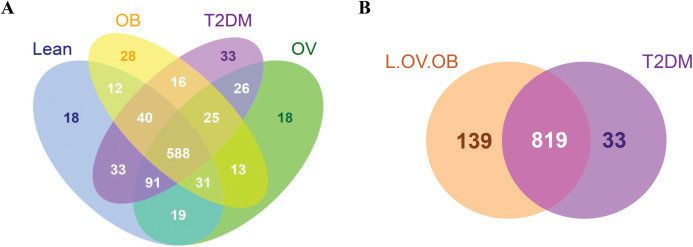
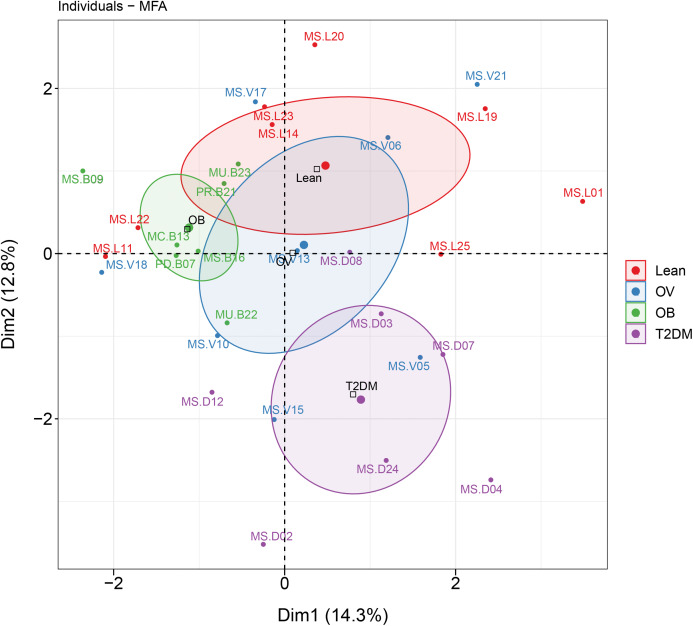
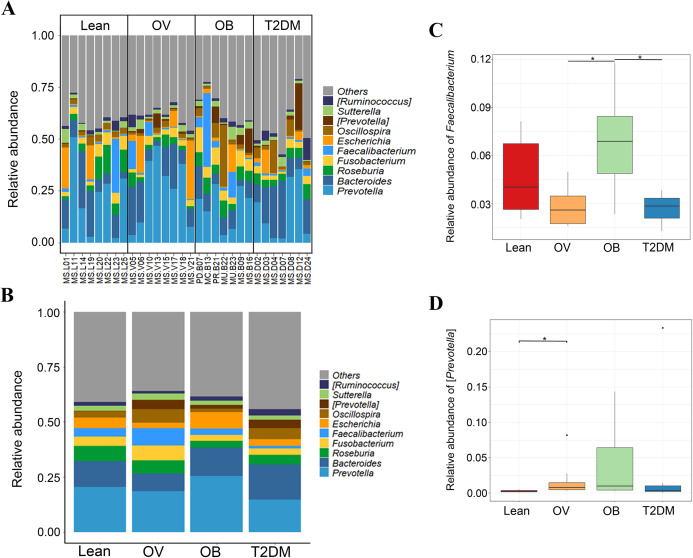
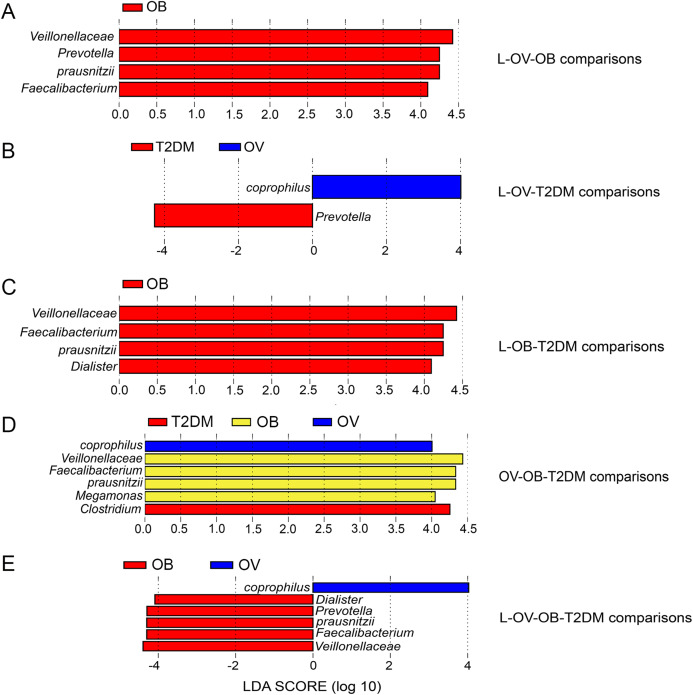
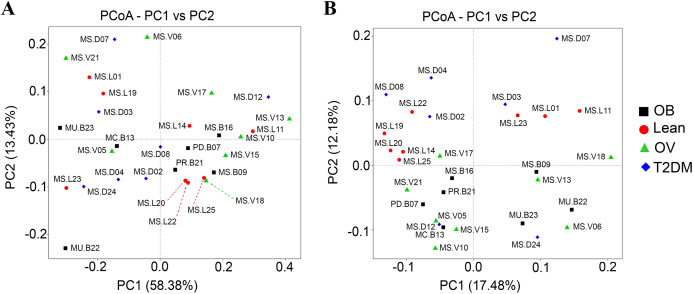
Obesity and type 2 diabetes mellitus (T2DM) have become major public health issues globally. Recent research indicates that intestinal microbiota play roles in metabolic disorders. Though there are numerous studies focusing on gut microbiota of health and obesity states, those are primarily focused on Western countries. Comparatively, only a few investigations exist on gut microbiota of people from Asian countries. In this study, the fecal microbiota of 30 adult volunteers living in Chiang Rai Province, Thailand were examined using next-generation sequencing (NGS) in association with blood profiles and dietary habits. Subjects were categorized by body mass index (BMI) and health status as follows; lean (L) = 8, overweight (OV) = 8, obese (OB) = 7 and diagnosed T2DM = 7. Members of T2DM group showed differences in dietary consumption and fasting glucose level compared to BMI groups. A low level of high-density cholesterol (HDL) was observed in the OB group. Principal coordinate analysis (PCoA) revealed that microbial communities of T2DM subjects were clearly distinct from those of OB. An analogous pattern was additionally illustrated by multiple factor analysis (MFA) based on dietary habits, blood profiles, and fecal gut microbiota in BMI and T2DM groups. In all four groups, and were the predominant phyla. Abundance of , a butyrate-producing bacterium, was significantly higher in OB than that in other groups. This study is the first to examine the gut microbiota of adult Thais in association with dietary intake and blood profiles and will provide the platform for future investigations.
肥胖和2型糖尿病(T2DM)已成为全球主要的公共卫生问题。最近的研究表明,肠道微生物群在代谢紊乱中发挥作用。尽管有许多研究关注健康和肥胖状态下的肠道微生物群,但这些研究主要集中在西方国家。相比之下,对亚洲国家人群肠道微生物群的研究较少。在本研究中,我们使用下一代测序(NGS)技术,结合血液指标和饮食习惯,对居住在泰国清莱府的30名成年志愿者的粪便微生物群进行了检测。受试者根据体重指数(BMI)和健康状况分为以下几类:瘦(L)组8人,超重(OV)组8人,肥胖(OB)组7人,确诊为T2DM组7人。与BMI组相比,T2DM组的饮食摄入量和空腹血糖水平存在差异。在OB组中观察到高密度胆固醇(HDL)水平较低。主坐标分析(PCoA)显示,T2DM受试者的微生物群落与OB组明显不同。基于BMI和T2DM组的饮食习惯、血液指标和粪便肠道微生物群的多因素分析(MFA)也显示了类似的模式。在所有四组中, 和 是主要的门类。产丁酸的 菌在OB组中的丰度显著高于其他组。本研究首次对成年泰国人的肠道微生物群与饮食摄入和血液指标进行了研究,将为未来的研究提供平台。