Department of Sports and Health Sciences, Faculty of Sports Science, Kasetsart University, Kamphaeng Saen Campus, Nakhon Pathom, Thailand.
Division of Nutrition and Biochemical Medicine, Department of Medicine, Faculty of Medicine, Ramathibodi Hospital, Mahidol University, Bangkok, Thailand.
PLoS One. 2023 Jul 14;18(7):e0288286. doi: 10.1371/journal.pone.0288286. eCollection 2023.
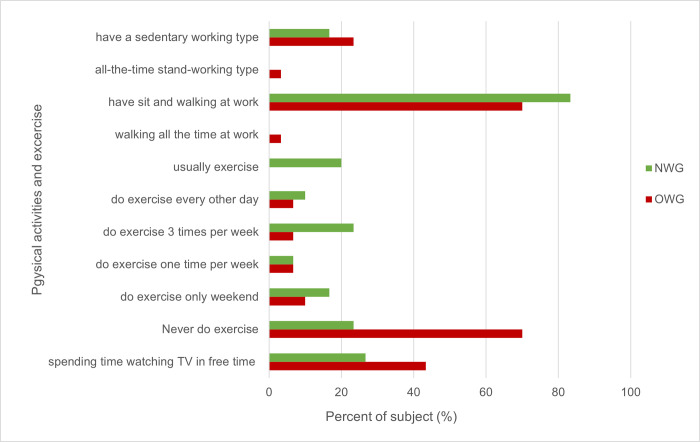
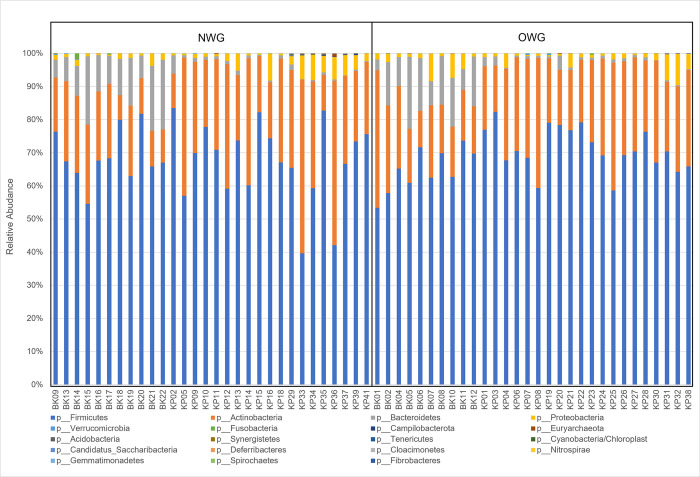
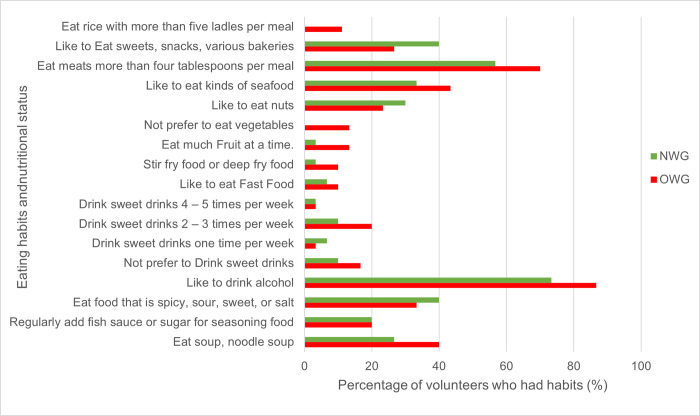
Obesity among young adults, especially those living in developing countries is increasing. A high body mass index (BMI) is one of the major causes of several diseases worldwide, constituting an important risk factor for non-communicable diseases (NCDs). Investigations describing the relationship between BMI, clinical and gut microbiota characteristics and lifestyle factors of overweight young adults, especially from Southeast Asian countries are limited. Metabolic and inflammatory biomarkers, fecal microbiota profiles and lifestyle factors were compared between overweight Thai young adults (n = 30, mean age 33 ± 9.48) and those with normal weight (n = 30, mean age 27 ±7.50). This study was registered with the Thai Clinical Trials Registry (TCTR20220204007). Health status including body composition, fasting glucose and insulin, lipid profiles, liver and kidney function, inflammatory biomarkers, blood pressure and fecal microbiota using 16S rRNA gene sequencing data was determined. Dietary intake was assessed using a 3-day dietary record and a food frequency questionnaire (FFQ), with physical activity levels compared using the international physical activity questionnaire (IPAQ). The overweight group had significantly higher BMI, waist-hip ratio, body fat mass, % body fat, skeletal mass, triglyceride level, C-reactive protein, insulin and blood pressure, with lower levels of high-density lipoprotein cholesterol (HDL-C) and blood urea nitrogen compared to the normal weight group. Significant differences in fecal microbiota composition at the family and genus levels were observed between the two groups. In our clinical setting, we also observed that unhealthy diets with high consumption of food rich in fat and sugar, processed meat and alcohol, and physical inactivity were associated with an increased prevalence of overweight in Thai young adults. Results provided the big picture of health and lifestyle characteristics of overweight young Thai people. Young adults should be encouraged to engage in health-promoting activities that maintain healthy bodyweight.
年轻人,尤其是发展中国家的年轻人,肥胖问题日益严重。高身体质量指数(BMI)是全球多种疾病的主要原因之一,也是非传染性疾病(NCD)的重要危险因素。描述超重年轻成年人(尤其是来自东南亚国家的)的 BMI、临床和肠道微生物群特征以及生活方式因素之间关系的研究有限。本研究比较了超重泰国年轻成年人(n=30,平均年龄 33±9.48)和体重正常者(n=30,平均年龄 27±7.50)的代谢和炎症生物标志物、粪便微生物群谱和生活方式因素。本研究已在泰国临床试验注册中心(TCTR20220204007)注册。使用 16S rRNA 基因测序数据确定了健康状况,包括身体成分、空腹血糖和胰岛素、血脂谱、肝肾功能、炎症生物标志物、血压和粪便微生物群。使用 3 天饮食记录和食物频率问卷(FFQ)评估饮食摄入量,使用国际体力活动问卷(IPAQ)比较体力活动水平。超重组的 BMI、腰臀比、体脂肪量、体脂肪百分比、瘦体重、甘油三酯水平、C 反应蛋白、胰岛素和血压显著较高,高密度脂蛋白胆固醇(HDL-C)和血尿素氮水平显著较低。两组间粪便微生物群组成在科和属水平上均有显著差异。在我们的临床环境中,我们还观察到,不健康的饮食,高消费富含脂肪和糖的食物、加工肉类和酒精,以及缺乏身体活动,与泰国年轻成年人超重的流行率增加有关。结果提供了超重泰国年轻成年人健康和生活方式特征的全貌。应鼓励年轻人参与促进健康的活动,以保持健康的体重。