Department of Neurology, University Hospital, Zielona Góra, Poland.
Department of Radiology, University Hospital, Zielona Góra, Poland.
Acta Neurol Belg. 2021 Feb;121(1):47-53. doi: 10.1007/s13760-020-01431-1. Epub 2020 Aug 24.
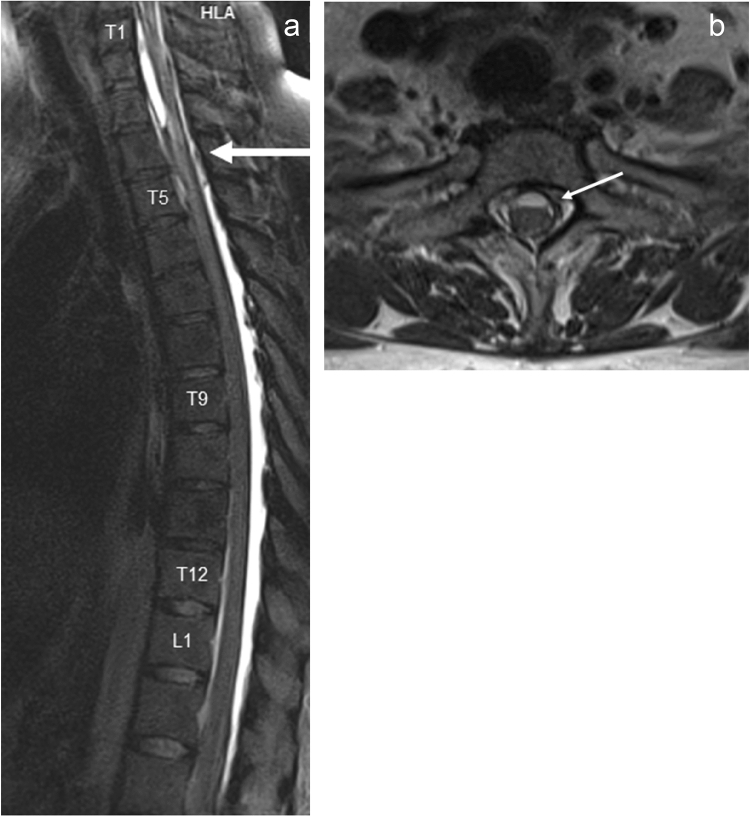
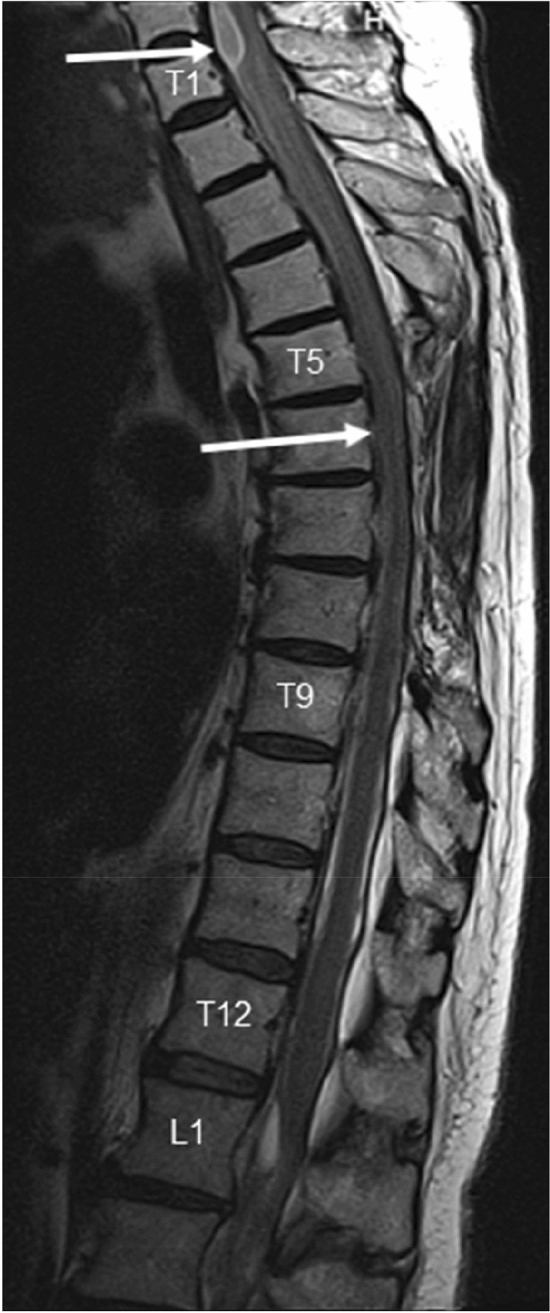
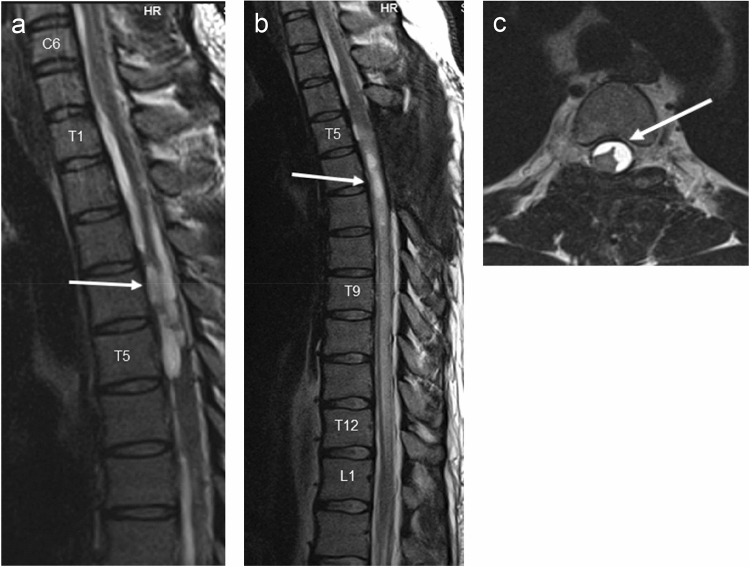
Spinal adhesive arachnoiditis is a rare pathology involving pia mater of the spinal cord and nerve roots. It can potentially lead to disability-many patients end up wheelchair-bound due to subsequent paraparesis. It is an infrequent but possible cause of lower extremities weakness in patients with a history of spinal surgery, epidural anaesthesia, myelography or spinal tumors. Three patients, one male and two females, admitted to our unit due to paraparesis presented at least one of the above mentioned risk factors. Each of them had a severe course of illness-progressive paresis of lower extremities. All above cases were diagnosed with spinal adhesive arachnoiditis confirmed with Magnetic Resonance Imaging (MRI) scan-the most sensitive and specific diagnostic tool. Despite conservative treatment and intensive rehabilitation none of the presented patients preserved the ability to mobilise independently. Considering spinal adhesive arachnoiditis in patients with paraparesis and history of typical risk factors should be included in clinical diagnostic procedure.
脊髓蛛网膜炎是一种罕见的脊髓软膜和神经根疾病。它可能导致残疾——许多患者因随后的截瘫而最终需要坐轮椅。在有脊髓手术、硬膜外麻醉、脊髓造影或脊髓肿瘤病史的患者中,它是下肢无力的一个不常见但可能的原因。由于截瘫而被收入我院的三名患者,其中一名男性和两名女性,至少存在上述一种危险因素。他们每个人的病情都很严重——下肢进行性瘫痪。所有上述病例均通过磁共振成像(MRI)扫描确诊为脊髓蛛网膜炎,MRI 是最敏感和最特异的诊断工具。尽管进行了保守治疗和强化康复,没有一个患者保留了独立活动的能力。对于有截瘫和典型危险因素病史的患者,应考虑脊髓蛛网膜炎,并将其纳入临床诊断程序。