Ibrahim Abdullahi Umar, Al-Turjman Fadi, Sa'id Zubaida, Ozsoz Mehmet
Department of Biomedical Engineering, Near East University, Nicosia, 10 Mersin, Turkey.
Department of Artificial Intelligence, Near East University, Nicosia, 10 Mersin, Turkey.
Multimed Tools Appl. 2022;81(24):35143-35171. doi: 10.1007/s11042-020-09010-5. Epub 2020 Jun 8.
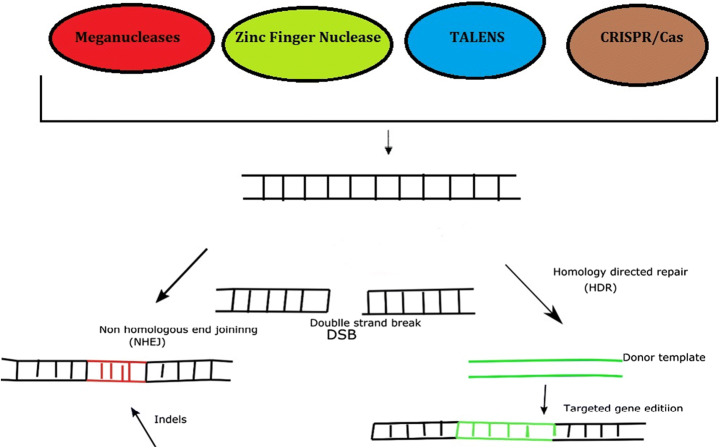
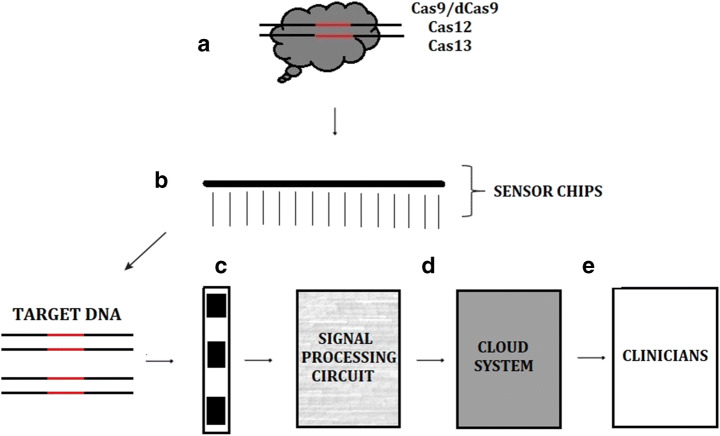
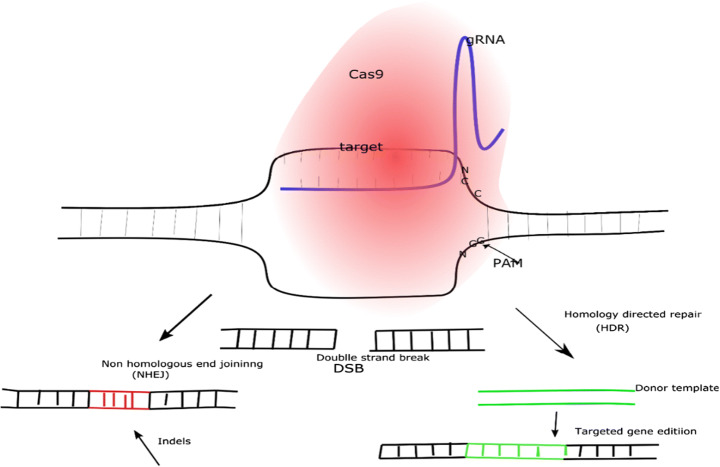
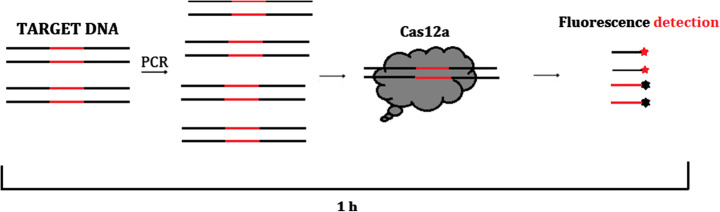
Biosensors-based devices are transforming medical diagnosis of diseases and monitoring of patient signals. The development of smart and automated molecular diagnostic tools equipped with biomedical big data analysis, cloud computing and medical artificial intelligence can be an ideal approach for the detection and monitoring of diseases, precise therapy, and storage of data over the cloud for supportive decisions. This review focused on the use of machine learning approaches for the development of futuristic CRISPR-biosensors based on microchips and the use of Internet of Things for wireless transmission of signals over the cloud for support decision making. The present review also discussed the discovery of CRISPR, its usage as a gene editing tool, and the CRISPR-based biosensors with high sensitivity of Attomolar (10 ), Femtomolar (10 ) and Picomolar (10 ) in comparison to conventional biosensors with sensitivity of nanomolar 10 and micromolar 10 . Additionally, the review also outlines limitations and open research issues in the current state of CRISPR-based biosensing applications.
基于生物传感器的设备正在改变疾病的医学诊断和患者信号监测。配备生物医学大数据分析、云计算和医学人工智能的智能自动化分子诊断工具的开发,可能是疾病检测与监测、精准治疗以及通过云存储数据以支持决策的理想方法。本综述重点关注机器学习方法在基于微芯片的未来CRISPR生物传感器开发中的应用,以及物联网在通过云进行信号无线传输以支持决策方面的应用。本综述还讨论了CRISPR的发现、其作为基因编辑工具的用途,以及与灵敏度为纳摩尔(10⁻⁹)和微摩尔(10⁻⁶)的传统生物传感器相比,具有阿摩尔(10⁻¹⁸)、飞摩尔(10⁻¹⁵)和皮摩尔(10⁻¹²)高灵敏度的基于CRISPR的生物传感器。此外,该综述还概述了基于CRISPR的生物传感应用当前状态下的局限性和开放研究问题。