Motoki Kosuke, Suzuki Shinsuke
Department of Food Management, School of Food, Agricultural and Environmental Sciences, Miyagi University, Sendai, Japan.
Institute of Development, Aging and Cancer, Tohoku University, Sendai, Japan.
Front Behav Neurosci. 2020 Jul 24;14:131. doi: 10.3389/fnbeh.2020.00131. eCollection 2020.
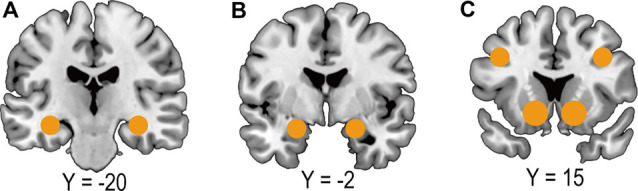
Subjective values for food rewards guide our dietary choices. There is growing evidence that value signals are constructed in the brain by integrating multiple types of information about flavor, taste, and nutritional attributes of the foods. However, much less is known about the influence of food-extrinsic factors such as labels, brands, prices, and packaging designs. In this mini-review article, we outline recent findings in decision neuroscience, consumer psychology, and food science about the effect of extrinsic factors on food value computations in the human brain. To date, studies have demonstrated that, while the integrated value signal is encoded in the ventromedial prefrontal cortex, information on the extrinsic factors of the food is encoded in diverse brain regions previously implicated in a wide range of functions: cognitive control, memory, emotion and reward processing. We suggest that a comprehensive understanding of food valuation requires elucidation of the mechanisms behind integrating extrinsic factors in the brain to compute an overall subjective value signal.
食物奖励的主观价值引导着我们的饮食选择。越来越多的证据表明,大脑通过整合有关食物的风味、味道和营养属性的多种信息来构建价值信号。然而,对于诸如标签、品牌、价格和包装设计等食物外在因素的影响,我们所知甚少。在这篇小型综述文章中,我们概述了决策神经科学、消费者心理学和食品科学领域关于外在因素对人类大脑中食物价值计算影响的最新研究发现。迄今为止,研究表明,虽然整合后的价值信号在腹内侧前额叶皮层中编码,但有关食物外在因素的信息则在先前涉及广泛功能的不同脑区中编码:认知控制、记忆、情感和奖励处理。我们认为,要全面理解食物估值,需要阐明大脑中整合外在因素以计算整体主观价值信号背后的机制。