• 文献检索
  • 文档翻译
  • 深度研究
  • 学术资讯
  • Suppr Zotero 插件Zotero 插件
  • 邀请有礼
  • 套餐&价格
  • 历史记录
应用&插件
Suppr Zotero 插件Zotero 插件浏览器插件Mac 客户端Windows 客户端微信小程序
定价
高级版会员购买积分包购买API积分包
服务
文献检索文档翻译深度研究API 文档MCP 服务
关于我们
关于 Suppr公司介绍联系我们用户协议隐私条款
关注我们

Suppr 超能文献

核心技术专利:CN118964589B侵权必究
粤ICP备2023148730 号-1Suppr @ 2026

文献检索

告别复杂PubMed语法,用中文像聊天一样搜索,搜遍4000万医学文献。AI智能推荐,让科研检索更轻松。

立即免费搜索

文件翻译

保留排版,准确专业,支持PDF/Word/PPT等文件格式,支持 12+语言互译。

免费翻译文档

深度研究

AI帮你快速写综述,25分钟生成高质量综述,智能提取关键信息,辅助科研写作。

立即免费体验

通过引发人群行为反应构建的新冠疫情流行模型。

Epidemic model of COVID-19 outbreak by inducing behavioural response in population.

作者信息

Saha Sangeeta, Samanta G P, Nieto Juan J

机构信息

Department of Mathematics, Indian Institute of Engineering Science and Technology, Shibpur, Howrah, 711103 India.

Instituto de Matematicas, Universidade de Santiago de Compostela, 15782 Santiago de Compostela, Spain.

出版信息

Nonlinear Dyn. 2020;102(1):455-487. doi: 10.1007/s11071-020-05896-w. Epub 2020 Aug 26.

DOI:10.1007/s11071-020-05896-w
PMID:32863581
原文链接:https://pmc.ncbi.nlm.nih.gov/articles/PMC7447616/
Abstract

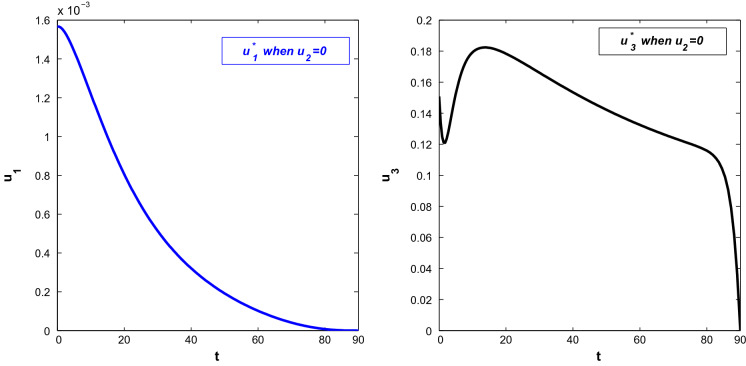
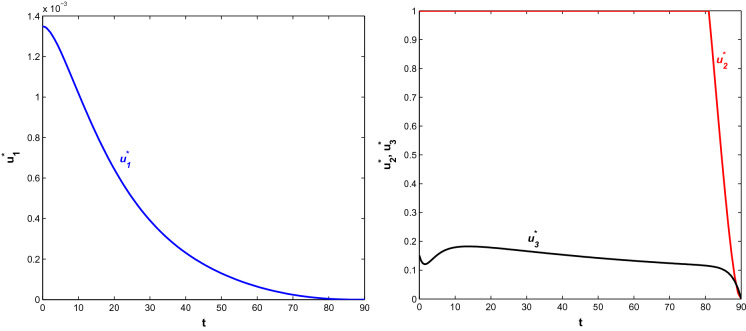
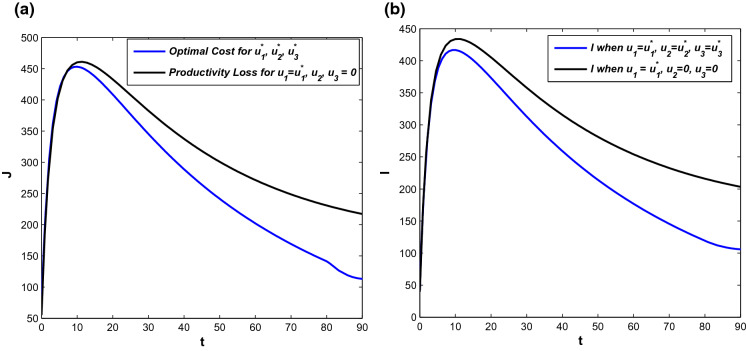
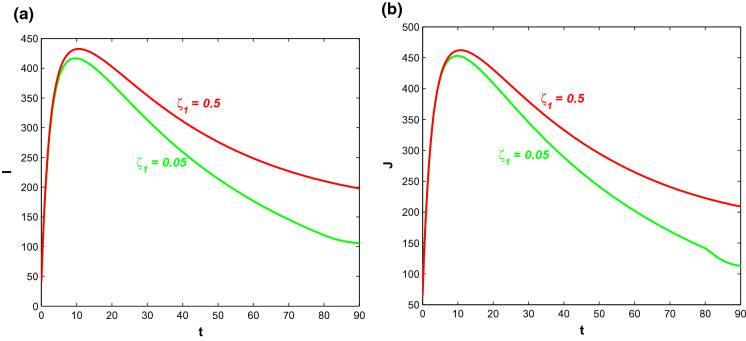
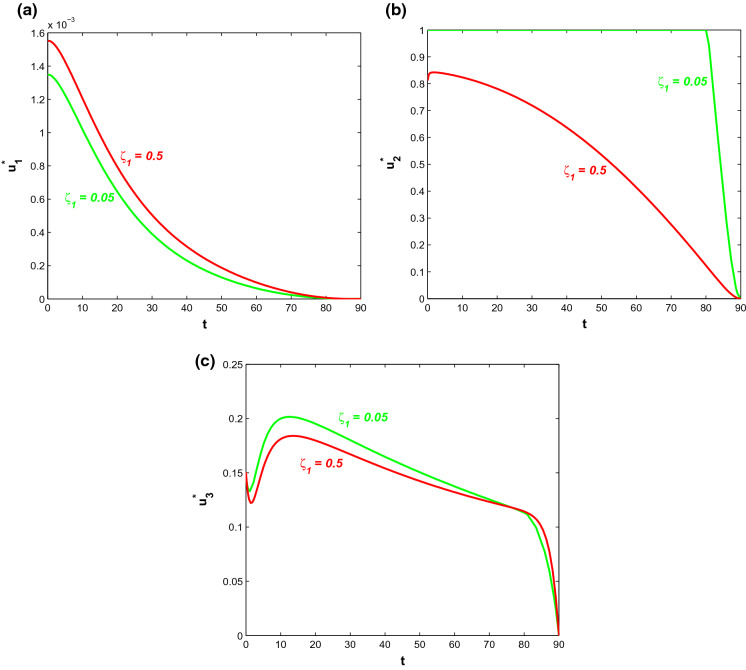
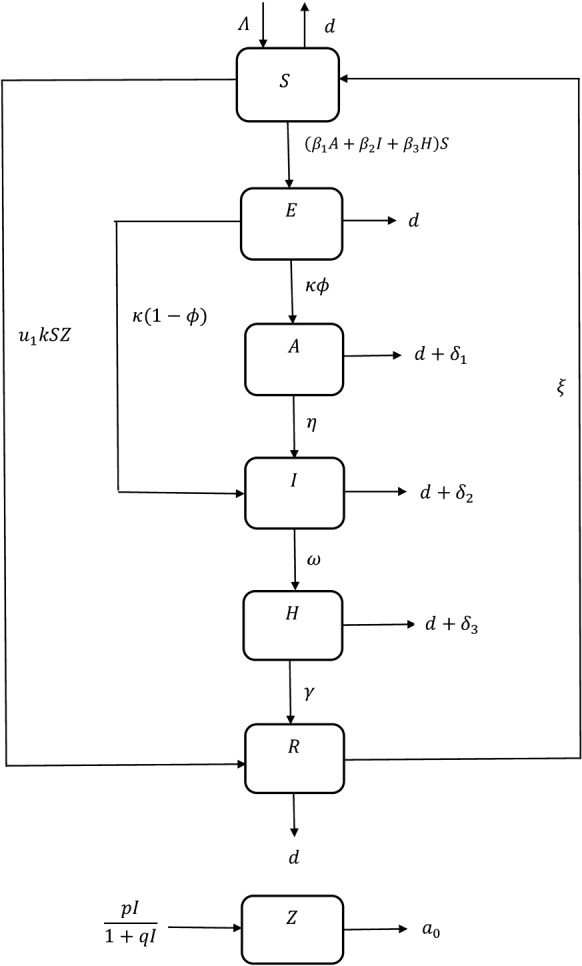
COVID-19 has spread around the world since December 2019, creating one of the greatest pandemics ever witnessed. According to the current reports, this is a situation when people need to be more careful and take the precaution measures more seriously, unless the condition may become even worse. Maintaining social distances and proper hygiene, staying at isolation or adopting the self-quarantine method are some of the common practices that people should use to avoid the infection. And the growing information regarding COVID-19 and its symptoms help the people to take proper precautions. In this present study, we consider an SEIRS epidemiological model on COVID-19 transmission which accounts for the effect of an individual's behavioural response due to the information regarding proper precautions. Our results indicate that if people respond to the growing information regarding awareness at a higher rate and start to take the protective measures, then the infected population decreases significantly. The disease fatality can be controlled only if a large proportion of individuals become immune, either by natural immunity or by a proper vaccine. In order to apply the latter option, we need to wait until a safe and proper vaccine is developed and it is a time-taking process. Hence, in the latter part of the work, an optimal control problem is considered by implementing control strategies to reduce the disease burden. Numerical figures show that the control denoting behavioural response works with higher intensity immediately after implementation and then gradually decreases with time. Further, the control policy denoting hospitalisation of infected individuals works with its maximum intensity for quite a long time period following a sudden decrease. As, the implementation of the control strategies reduce the infected population and increase the recovered population, so, it may help to reduce the disease transmission at this current epidemic situation.

摘要

自2019年12月以来,新冠病毒已在全球传播,造成了有史以来最严重的大流行之一。根据目前的报告,在这种情况下,人们需要更加小心,更认真地采取预防措施,否则情况可能会变得更糟。保持社交距离和良好的卫生习惯、居家隔离或采取自我隔离方法是人们应采用的一些常见做法,以避免感染。关于新冠病毒及其症状的信息不断增加,有助于人们采取适当的预防措施。在本研究中,我们考虑了一个关于新冠病毒传播的SEIRS流行病学模型,该模型考虑了由于有关适当预防措施的信息而导致的个体行为反应的影响。我们的结果表明,如果人们以更高的速度对不断增加的有关意识的信息做出反应,并开始采取保护措施,那么感染人群将显著减少。只有当很大一部分人通过自然免疫或适当的疫苗获得免疫时,疾病死亡率才能得到控制。为了采用后一种选择,我们需要等到开发出安全、合适的疫苗,而这是一个耗时的过程。因此,在工作的后半部分,我们通过实施控制策略来减轻疾病负担,考虑了一个最优控制问题。数值结果表明,表示行为反应的控制措施在实施后立即具有较高的强度,然后随着时间的推移逐渐减弱。此外,表示感染个体住院治疗的控制策略在突然下降后很长一段时间内都具有最大强度。由于控制策略的实施减少了感染人群,增加了康复人群,因此,它可能有助于在当前疫情形势下减少疾病传播。
https://cdn.ncbi.nlm.nih.gov/pmc/blobs/93e0/7447616/f28e551a340e/11071_2020_5896_Fig22_HTML.jpg
https://cdn.ncbi.nlm.nih.gov/pmc/blobs/93e0/7447616/d44b6764a006/11071_2020_5896_Fig1_HTML.jpg
https://cdn.ncbi.nlm.nih.gov/pmc/blobs/93e0/7447616/b63c25d91e10/11071_2020_5896_Fig2_HTML.jpg
https://cdn.ncbi.nlm.nih.gov/pmc/blobs/93e0/7447616/9b0f653d15fe/11071_2020_5896_Fig3_HTML.jpg
https://cdn.ncbi.nlm.nih.gov/pmc/blobs/93e0/7447616/1c8e775dd9ed/11071_2020_5896_Fig4_HTML.jpg
https://cdn.ncbi.nlm.nih.gov/pmc/blobs/93e0/7447616/4c94e7733c23/11071_2020_5896_Fig5_HTML.jpg
https://cdn.ncbi.nlm.nih.gov/pmc/blobs/93e0/7447616/f7fd16db67cc/11071_2020_5896_Fig6_HTML.jpg
https://cdn.ncbi.nlm.nih.gov/pmc/blobs/93e0/7447616/abecd574303c/11071_2020_5896_Fig7_HTML.jpg
https://cdn.ncbi.nlm.nih.gov/pmc/blobs/93e0/7447616/770db9d97ea1/11071_2020_5896_Fig8_HTML.jpg
https://cdn.ncbi.nlm.nih.gov/pmc/blobs/93e0/7447616/3f9fc26b5b32/11071_2020_5896_Fig9_HTML.jpg
https://cdn.ncbi.nlm.nih.gov/pmc/blobs/93e0/7447616/6361d01a89ac/11071_2020_5896_Fig10_HTML.jpg
https://cdn.ncbi.nlm.nih.gov/pmc/blobs/93e0/7447616/f7b6db53ba23/11071_2020_5896_Fig11_HTML.jpg
https://cdn.ncbi.nlm.nih.gov/pmc/blobs/93e0/7447616/d8e98046feb8/11071_2020_5896_Fig12_HTML.jpg
https://cdn.ncbi.nlm.nih.gov/pmc/blobs/93e0/7447616/788e98c4c0a7/11071_2020_5896_Fig13_HTML.jpg
https://cdn.ncbi.nlm.nih.gov/pmc/blobs/93e0/7447616/31a252cd0089/11071_2020_5896_Fig14_HTML.jpg
https://cdn.ncbi.nlm.nih.gov/pmc/blobs/93e0/7447616/d2f5361d1b07/11071_2020_5896_Fig15_HTML.jpg
https://cdn.ncbi.nlm.nih.gov/pmc/blobs/93e0/7447616/73669afee46f/11071_2020_5896_Fig16_HTML.jpg
https://cdn.ncbi.nlm.nih.gov/pmc/blobs/93e0/7447616/73b6e27dd4a2/11071_2020_5896_Fig17_HTML.jpg
https://cdn.ncbi.nlm.nih.gov/pmc/blobs/93e0/7447616/e3c3cdaee090/11071_2020_5896_Fig18_HTML.jpg
https://cdn.ncbi.nlm.nih.gov/pmc/blobs/93e0/7447616/d03f5b0ed3fc/11071_2020_5896_Fig19_HTML.jpg
https://cdn.ncbi.nlm.nih.gov/pmc/blobs/93e0/7447616/7f69ce1db62d/11071_2020_5896_Fig20_HTML.jpg
https://cdn.ncbi.nlm.nih.gov/pmc/blobs/93e0/7447616/10289fdcd042/11071_2020_5896_Fig21_HTML.jpg
https://cdn.ncbi.nlm.nih.gov/pmc/blobs/93e0/7447616/f28e551a340e/11071_2020_5896_Fig22_HTML.jpg
https://cdn.ncbi.nlm.nih.gov/pmc/blobs/93e0/7447616/d44b6764a006/11071_2020_5896_Fig1_HTML.jpg
https://cdn.ncbi.nlm.nih.gov/pmc/blobs/93e0/7447616/b63c25d91e10/11071_2020_5896_Fig2_HTML.jpg
https://cdn.ncbi.nlm.nih.gov/pmc/blobs/93e0/7447616/9b0f653d15fe/11071_2020_5896_Fig3_HTML.jpg
https://cdn.ncbi.nlm.nih.gov/pmc/blobs/93e0/7447616/1c8e775dd9ed/11071_2020_5896_Fig4_HTML.jpg
https://cdn.ncbi.nlm.nih.gov/pmc/blobs/93e0/7447616/4c94e7733c23/11071_2020_5896_Fig5_HTML.jpg
https://cdn.ncbi.nlm.nih.gov/pmc/blobs/93e0/7447616/f7fd16db67cc/11071_2020_5896_Fig6_HTML.jpg
https://cdn.ncbi.nlm.nih.gov/pmc/blobs/93e0/7447616/abecd574303c/11071_2020_5896_Fig7_HTML.jpg
https://cdn.ncbi.nlm.nih.gov/pmc/blobs/93e0/7447616/770db9d97ea1/11071_2020_5896_Fig8_HTML.jpg
https://cdn.ncbi.nlm.nih.gov/pmc/blobs/93e0/7447616/3f9fc26b5b32/11071_2020_5896_Fig9_HTML.jpg
https://cdn.ncbi.nlm.nih.gov/pmc/blobs/93e0/7447616/6361d01a89ac/11071_2020_5896_Fig10_HTML.jpg
https://cdn.ncbi.nlm.nih.gov/pmc/blobs/93e0/7447616/f7b6db53ba23/11071_2020_5896_Fig11_HTML.jpg
https://cdn.ncbi.nlm.nih.gov/pmc/blobs/93e0/7447616/d8e98046feb8/11071_2020_5896_Fig12_HTML.jpg
https://cdn.ncbi.nlm.nih.gov/pmc/blobs/93e0/7447616/788e98c4c0a7/11071_2020_5896_Fig13_HTML.jpg
https://cdn.ncbi.nlm.nih.gov/pmc/blobs/93e0/7447616/31a252cd0089/11071_2020_5896_Fig14_HTML.jpg
https://cdn.ncbi.nlm.nih.gov/pmc/blobs/93e0/7447616/d2f5361d1b07/11071_2020_5896_Fig15_HTML.jpg
https://cdn.ncbi.nlm.nih.gov/pmc/blobs/93e0/7447616/73669afee46f/11071_2020_5896_Fig16_HTML.jpg
https://cdn.ncbi.nlm.nih.gov/pmc/blobs/93e0/7447616/73b6e27dd4a2/11071_2020_5896_Fig17_HTML.jpg
https://cdn.ncbi.nlm.nih.gov/pmc/blobs/93e0/7447616/e3c3cdaee090/11071_2020_5896_Fig18_HTML.jpg
https://cdn.ncbi.nlm.nih.gov/pmc/blobs/93e0/7447616/d03f5b0ed3fc/11071_2020_5896_Fig19_HTML.jpg
https://cdn.ncbi.nlm.nih.gov/pmc/blobs/93e0/7447616/7f69ce1db62d/11071_2020_5896_Fig20_HTML.jpg
https://cdn.ncbi.nlm.nih.gov/pmc/blobs/93e0/7447616/10289fdcd042/11071_2020_5896_Fig21_HTML.jpg
https://cdn.ncbi.nlm.nih.gov/pmc/blobs/93e0/7447616/f28e551a340e/11071_2020_5896_Fig22_HTML.jpg

相似文献

1
Epidemic model of COVID-19 outbreak by inducing behavioural response in population.通过引发人群行为反应构建的新冠疫情流行模型。
Nonlinear Dyn. 2020;102(1):455-487. doi: 10.1007/s11071-020-05896-w. Epub 2020 Aug 26.
2
Modelling the role of optimal social distancing on disease prevalence of COVID-19 epidemic.模拟最佳社交距离对新冠疫情疾病流行率的作用。
Int J Dyn Control. 2021;9(3):1053-1077. doi: 10.1007/s40435-020-00721-z. Epub 2020 Nov 9.
3
Tuberculosis结核病
4
Letter to the Editor: THE IMPACT OF THE COVID-19 PANDEMIC ON SCHIZOPHRENIA PATIENTS.致编辑的信:COVID-19 大流行对精神分裂症患者的影响。
Turk Psikiyatri Derg. 2021 Fall;32(3):219-221. doi: 10.5080/u26175.
5
Impacts of reopening strategies for COVID-19 epidemic: a modeling study in Piedmont region.新冠肺炎疫情重启策略的影响:皮埃蒙特大区的建模研究。
BMC Infect Dis. 2020 Oct 28;20(1):798. doi: 10.1186/s12879-020-05490-w.
6
A Reminder of Skin Cancer During the COVID-19 Pandemic.新冠疫情期间对皮肤癌的提醒。
Acta Dermatovenerol Croat. 2021 Apr;291(1):58.
7
Modeling and tracking Covid-19 cases using Big Data analytics on HPCC system platformm.在惠普高性能计算集群(HPCC)系统平台上使用大数据分析对新冠病毒疾病(Covid-19)病例进行建模和追踪。
J Big Data. 2021;8(1):33. doi: 10.1186/s40537-021-00423-z. Epub 2021 Feb 15.
8
An evaluation of COVID-19 transmission control in Wenzhou using a modified SEIR model.温州 COVID-19 传播控制的评价:使用改进的 SEIR 模型。
Epidemiol Infect. 2021 Jan 8;149:e2. doi: 10.1017/S0950268820003064.
9
A versatile web app for identifying the drivers of COVID-19 epidemics.一个功能多样的网络应用程序,用于识别 COVID-19 疫情的驱动因素。
J Transl Med. 2021 Mar 16;19(1):109. doi: 10.1186/s12967-021-02736-2.
10
Spring in London with Covid-19: a personal view.伦敦新冠疫情下的春天:个人视角
Med Leg J. 2020 Jul;88(2):57-64. doi: 10.1177/0025817220923692. Epub 2020 Jun 9.

引用本文的文献

1
On optimal control at the onset of a new viral outbreak.关于新病毒爆发初期的最优控制
Infect Dis Model. 2024 May 15;9(4):995-1006. doi: 10.1016/j.idm.2024.05.006. eCollection 2024 Dec.
2
Heterogeneous risk attitudes and waves of infection.异质风险态度与感染浪潮。
PLoS One. 2024 Apr 9;19(4):e0299813. doi: 10.1371/journal.pone.0299813. eCollection 2024.
3
Fractional epidemic model of coronavirus disease with vaccination and crowding effects.带接种和拥挤效应的冠状病毒病分数阶模型。

本文引用的文献

1
Modeling the Epidemic Trend of the 2019 Novel Coronavirus Outbreak in China.中国2019新型冠状病毒疫情流行趋势建模
Innovation (Camb). 2020 Nov 25;1(3):100048. doi: 10.1016/j.xinn.2020.100048. Epub 2020 Sep 28.
2
Mathematical modeling of COVID-19 transmission dynamics with a case study of Wuhan.基于武汉案例研究的新冠病毒传播动力学数学建模
Chaos Solitons Fractals. 2020 Jun;135:109846. doi: 10.1016/j.chaos.2020.109846. Epub 2020 Apr 27.
3
Estimating clinical severity of COVID-19 from the transmission dynamics in Wuhan, China.
Sci Rep. 2024 Apr 8;14(1):8157. doi: 10.1038/s41598-024-58192-7.
4
The relationship between compartment models and their stochastic counterparts: A comparative study with examples of the COVID-19 epidemic modeling.compartment模型与其随机对应模型之间的关系:以COVID-19疫情建模为例的比较研究
J Biomed Res. 2024 Mar 5;38(2):175-188. doi: 10.7555/JBR.37.20230137.
5
Security or severity? A research of COVID-19 pandemic control policy based on nonlinear programming approach.安全还是严峻性?基于非线性规划方法的新冠疫情防控政策研究
Heliyon. 2023 Nov 7;9(11):e21080. doi: 10.1016/j.heliyon.2023.e21080. eCollection 2023 Nov.
6
Production-sharing of critical resources with dynamic demand under pandemic situation: The COVID-19 pandemic.疫情下动态需求关键资源的生产共享:新冠疫情
Omega. 2023 Oct;120:102909. doi: 10.1016/j.omega.2023.102909. Epub 2023 Jun 4.
7
Modeling the competitive transmission of the Omicron strain and Delta strain of COVID-19.新冠病毒奥密克戎毒株与德尔塔毒株的竞争性传播建模
J Math Anal Appl. 2023 Oct 15;526(2):127283. doi: 10.1016/j.jmaa.2023.127283. Epub 2023 Mar 31.
8
Bi-objective optimization of a stochastic resilient vaccine distribution network in the context of the COVID-19 pandemic.新冠疫情背景下随机弹性疫苗配送网络的双目标优化
Omega. 2022 Dec;113:102725. doi: 10.1016/j.omega.2022.102725. Epub 2022 Jul 28.
9
Transmission parameters of coronavirus disease 2019 in South Asian countries.2019年冠状病毒病在南亚国家的传播参数
Osong Public Health Res Perspect. 2022 Jun;13(3):191-202. doi: 10.24171/j.phrp.2021.0234. Epub 2022 Jun 23.
10
A linear dynamical perspective on epidemiology: interplay between early COVID-19 outbreak and human mobility.流行病学的线性动力学视角:新冠疫情早期爆发与人员流动之间的相互作用
Nonlinear Dyn. 2022;109(2):1233-1252. doi: 10.1007/s11071-022-07469-5. Epub 2022 May 5.
从中国武汉的传播动态估计 COVID-19 的临床严重程度。
Nat Med. 2020 Apr;26(4):506-510. doi: 10.1038/s41591-020-0822-7. Epub 2020 Mar 19.
4
Substantial undocumented infection facilitates the rapid dissemination of novel coronavirus (SARS-CoV-2).大量未记录的感染使新型冠状病毒(SARS-CoV-2)迅速传播。
Science. 2020 May 1;368(6490):489-493. doi: 10.1126/science.abb3221. Epub 2020 Mar 16.
5
The species Severe acute respiratory syndrome-related coronavirus: classifying 2019-nCoV and naming it SARS-CoV-2.严重急性呼吸综合征相关冠状病毒:将 2019-nCoV 进行分类并命名为 SARS-CoV-2。
Nat Microbiol. 2020 Apr;5(4):536-544. doi: 10.1038/s41564-020-0695-z. Epub 2020 Mar 2.
6
Clinical course and outcomes of critically ill patients with SARS-CoV-2 pneumonia in Wuhan, China: a single-centered, retrospective, observational study.中国武汉严重 COVID-19 患者的临床病程和结局:一项单中心、回顾性、观察性研究。
Lancet Respir Med. 2020 May;8(5):475-481. doi: 10.1016/S2213-2600(20)30079-5. Epub 2020 Feb 24.
7
An updated estimation of the risk of transmission of the novel coronavirus (2019-nCov).新型冠状病毒(2019-nCov)传播风险的最新评估。
Infect Dis Model. 2020 Feb 11;5:248-255. doi: 10.1016/j.idm.2020.02.001. eCollection 2020.
8
Effectiveness of airport screening at detecting travellers infected with novel coronavirus (2019-nCoV).机场筛查对检测新型冠状病毒(2019-nCoV)感染旅行者的有效性。
Euro Surveill. 2020 Feb;25(5). doi: 10.2807/1560-7917.ES.2020.25.5.2000080.
9
Estimation of the Transmission Risk of the 2019-nCoV and Its Implication for Public Health Interventions.2019新型冠状病毒传播风险评估及其对公共卫生干预措施的启示
J Clin Med. 2020 Feb 7;9(2):462. doi: 10.3390/jcm9020462.
10
Nowcasting and forecasting the potential domestic and international spread of the 2019-nCoV outbreak originating in Wuhan, China: a modelling study.实时预测和预报源自中国武汉的 2019-nCoV 疫情在国内和国际的潜在传播:一项建模研究。
Lancet. 2020 Feb 29;395(10225):689-697. doi: 10.1016/S0140-6736(20)30260-9. Epub 2020 Jan 31.