Zobel J Patrick, Bokareva Olga S, Zimmer Peter, Wölper Christoph, Bauer Matthias, González Leticia
Institute of Theoretical Chemistry, Faculty of Chemistry, University of Vienna, Währingerstraße 19, 1090 Vienna, Austria.
Institute of Physics, Rostock University, Albert Einstein Straße 23-24, 18059 Rostock, Germany.
Inorg Chem. 2020 Oct 19;59(20):14666-14678. doi: 10.1021/acs.inorgchem.0c02147. Epub 2020 Sep 1.
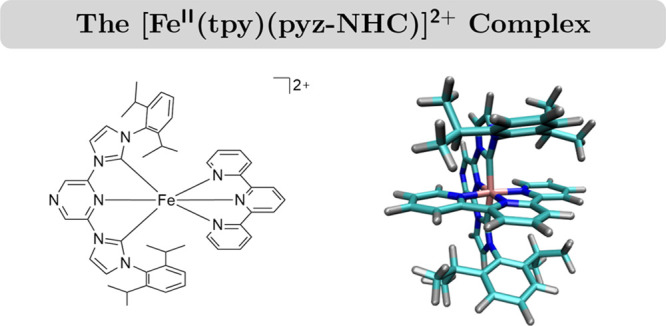
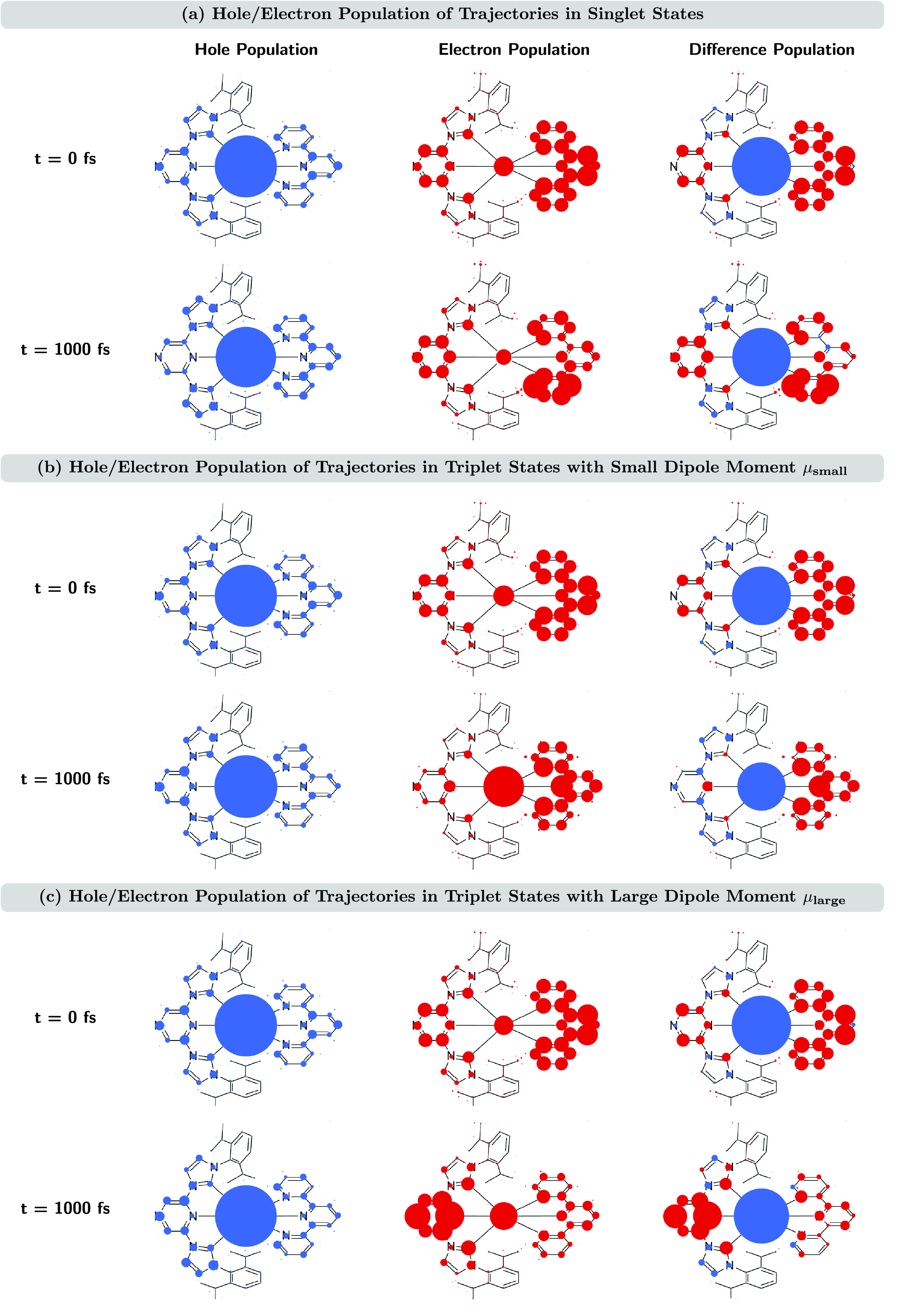
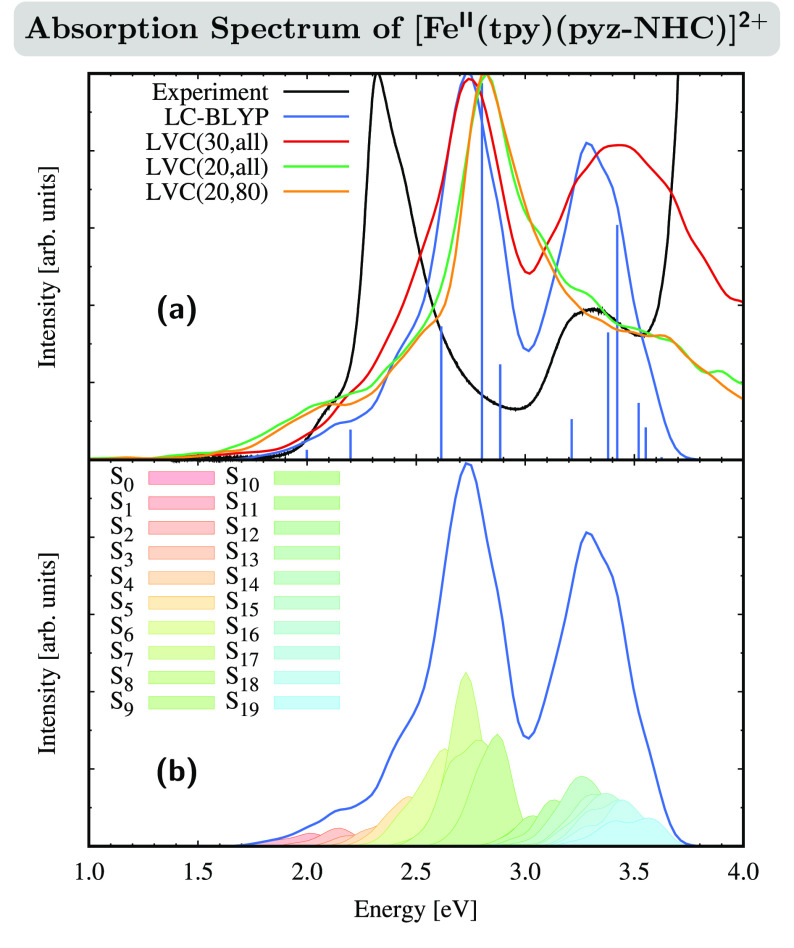
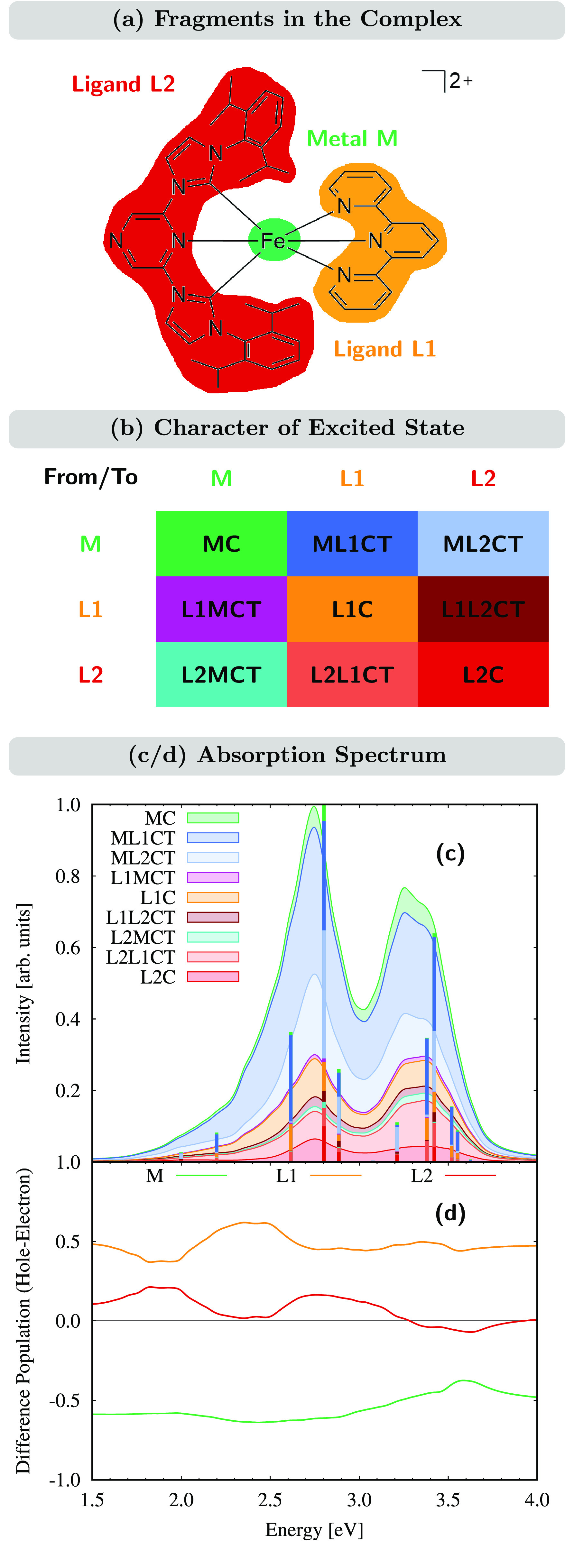
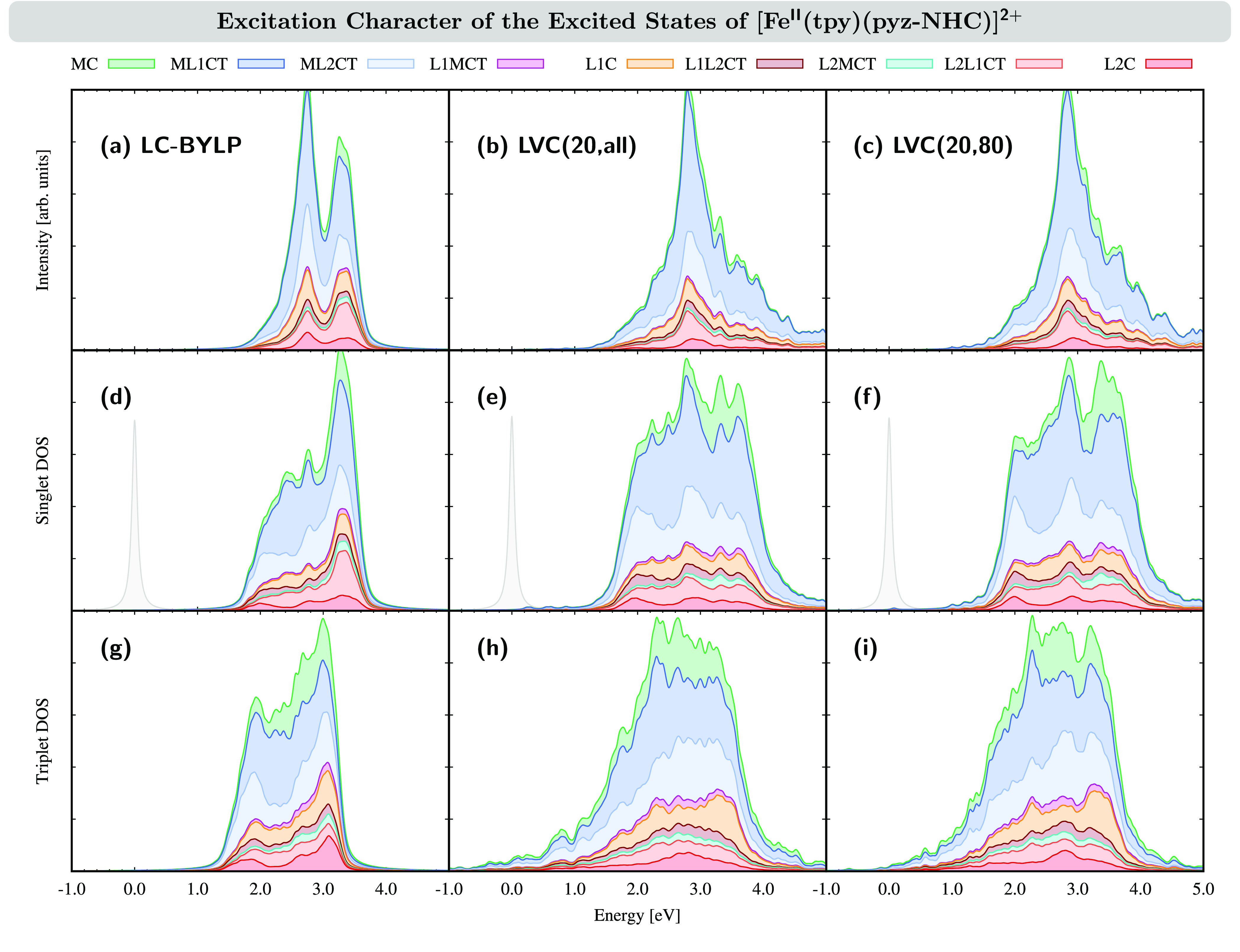
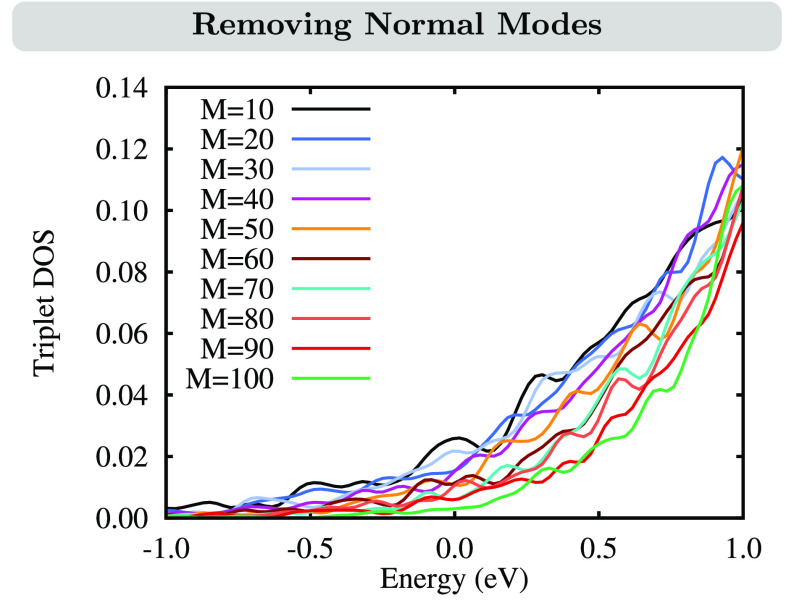
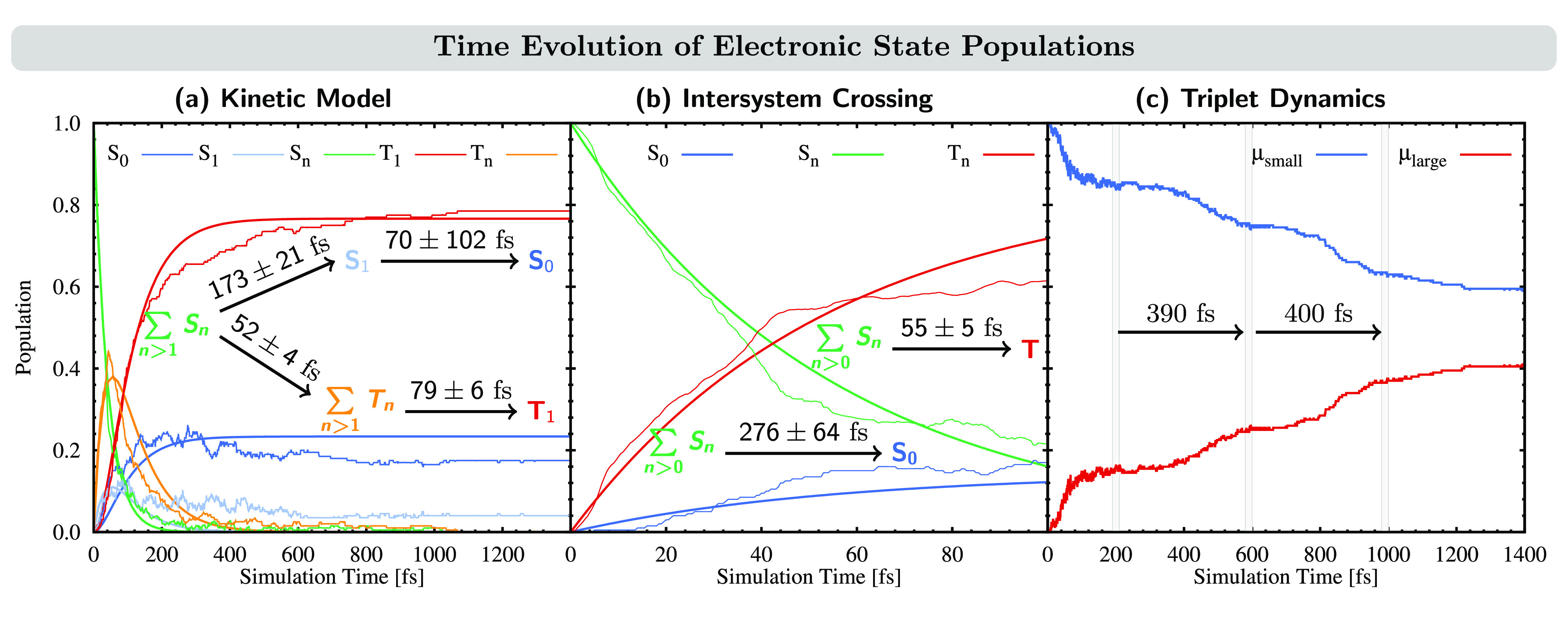
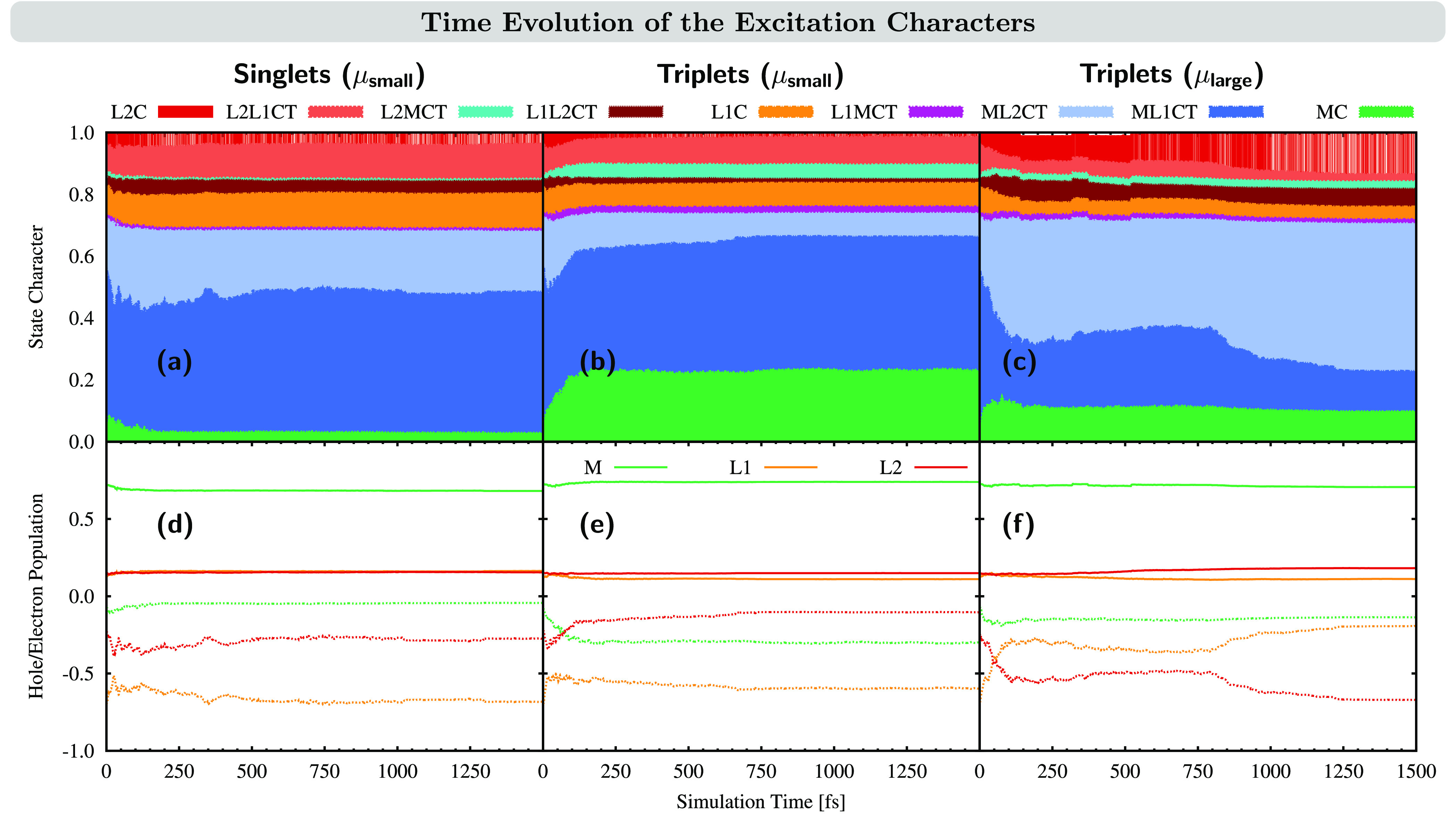
The electronic excited states of the iron(II) complex [Fe(tpy)(pyz-NHC)] [tpy = 2,2':6',2″-terpyridine; pyz-NHC = 1,1'-bis(2,6-diisopropylphenyl)pyrazinyldiimidazolium-2,2'-diylidene] and their relaxation pathways have been theoretically investigated. To this purpose, trajectory surface-hopping simulations within a linear vibronic coupling model including a 244-dimensional potential energy surface (PES) with 20 singlet and 20 triplet coupled states have been used. The simulations show that, after excitation to the lowest-energy absorption band of predominant metal-to-ligand charge-transfer character involving the tpy ligand, almost 80% of the population undergoes intersystem crossing to the triplet manifold in about 50 fs, while the remaining 20% decays through internal conversion to the electronic ground state in about 300 fs. The population transferred to the triplet states is found to deactivate into two different regions of the PESs, one where the static dipole moment is small and shows increased metal-centered character and another with a large static dipole moment, where the electron density is transferred from the tpy to pyz-NHC ligand. Coherent oscillations of 400 fs are observed between these two sets of triplet populations, until the mixture equilibrates to a ratio of 60:40. Finally, the importance of selecting suitable normal modes is highlighted-a choice that can be far from straightforward in transition-metal complexes with hundreds of degrees of freedom.
对铁(II)配合物[Fe(tpy)(pyz-NHC)][tpy = 2,2':6',2″-三联吡啶;pyz-NHC = 1,1'-双(2,6-二异丙基苯基)吡嗪二咪唑鎓-2,2'-二亚基]的电子激发态及其弛豫途径进行了理论研究。为此,在包括具有20个单重态和20个三重态耦合态的244维势能面(PES)的线性振子耦合模型内进行了轨迹表面跳跃模拟。模拟结果表明,在激发到涉及tpy配体的具有主要金属到配体电荷转移特征的最低能量吸收带后,近80%的粒子数在约50飞秒内经历系间窜越到三重态,而其余20%在约300飞秒内通过内转换衰减到电子基态。转移到三重态的粒子数被发现失活进入PES的两个不同区域,一个区域的静态偶极矩小且显示出增加的以金属为中心的特征,另一个区域的静态偶极矩大,电子密度从tpy转移到pyz-NHC配体。在这两组三重态粒子数之间观察到400飞秒的相干振荡,直到混合物达到60:40的平衡比例。最后,强调了选择合适的简正模式的重要性——在具有数百个自由度的过渡金属配合物中,这种选择远非易事。