Max-Planck Research Group "Mechanisms of Normative Change," Max-Planck-Institute for Research on Collective Goods, 53113 Bonn, Germany
Max-Planck Research Group "Mechanisms of Normative Change," Max-Planck-Institute for Research on Collective Goods, 53113 Bonn, Germany.
Proc Natl Acad Sci U S A. 2020 Sep 15;117(37):22800-22804. doi: 10.1073/pnas.2007977117. Epub 2020 Sep 1.
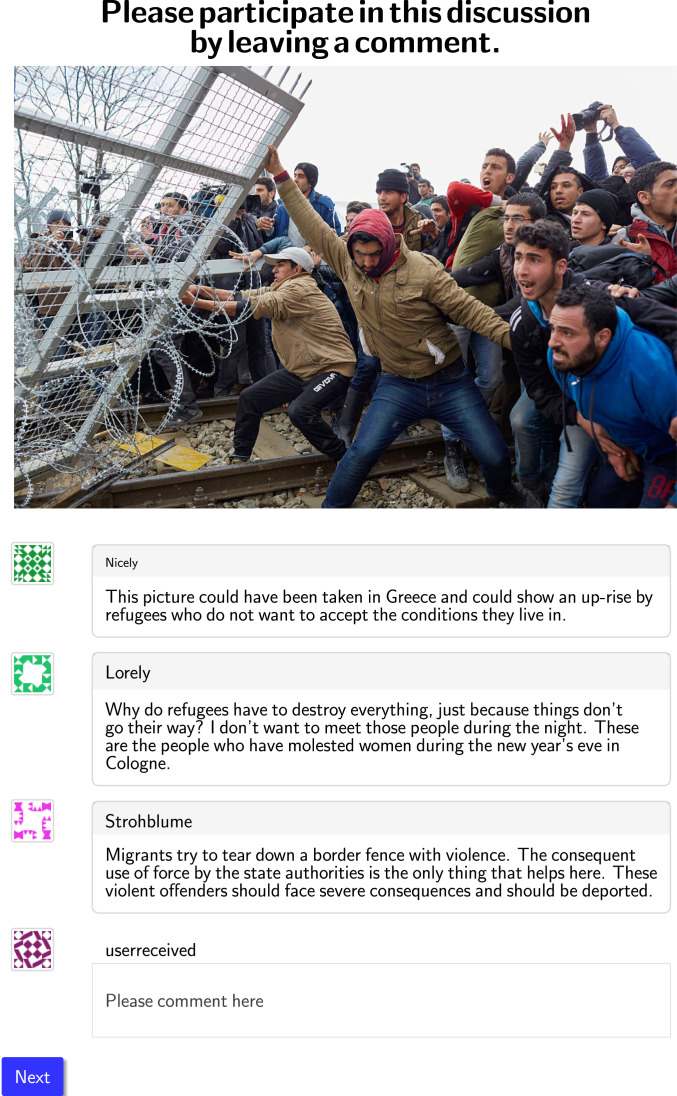
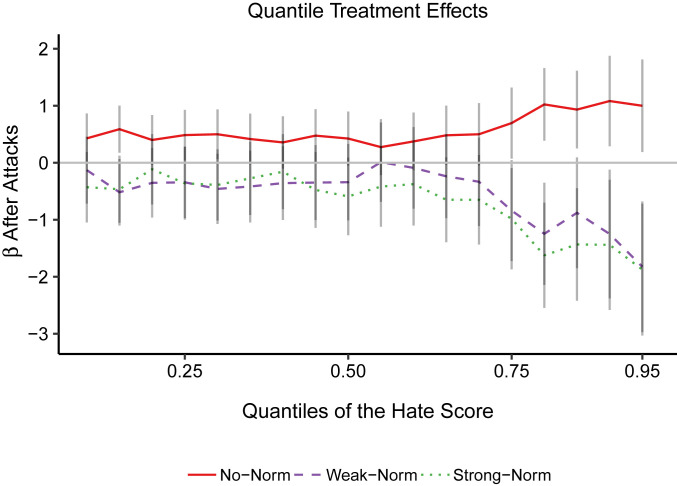
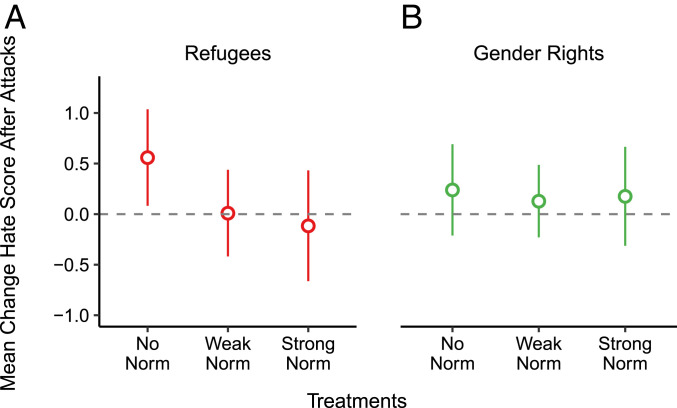
Terrorist attacks often fuel online hate and increase the expression of xenophobic and antiminority messages. Previous research has focused on the impact of terrorist attacks on prejudiced attitudes toward groups linked to the perpetrators as the cause of this increase. We argue that social norms can contain the expression of prejudice after the attacks. We report the results of a combination of a natural and a laboratory-in-the-field (lab-in-the-field) experiment in which we exploit data collected about the occurrence of two consecutive Islamist terrorist attacks in Germany, the Würzburg and Ansbach attacks, in July 2016. The experiment compares the effect of the terrorist attacks in hate speech toward refugees in contexts where a descriptive norm against the use of hate speech is evidently in place to contexts in which the norm is ambiguous because participants observe antiminority comments. Hate toward refugees, but not toward other minority groups, increased as a result of the attacks only in the absence of a strong norm. These results imply that attitudinal changes due to terrorist attacks are more likely to be voiced if norms erode.
恐怖袭击事件经常在网络上煽动仇恨,增加仇外和反少数群体的信息表达。之前的研究主要集中在恐怖袭击对与袭击者有关的群体的偏见态度的影响上,认为这是这种增长的原因。我们认为,社会规范可以在袭击后遏制偏见的表达。我们报告了一项自然实验和一项现场实验室(实验室现场)实验的结果,该实验利用了 2016 年 7 月德国两次连续发生的伊斯兰恐怖袭击事件(维尔茨堡和安斯巴赫袭击事件)的数据。该实验比较了恐怖袭击事件对难民的仇恨言论的影响,在一种情况下,使用仇恨言论的描述性规范显然存在,而在另一种情况下,规范是模棱两可的,因为参与者观察到反少数群体的评论。只有在没有强有力的规范的情况下,仇恨难民的言论才会因为袭击而增加,而不是针对其他少数群体。这些结果意味着,如果规范受到侵蚀,恐怖袭击造成的态度变化更有可能被表达出来。