Division of Palliative Care, University of Toronto, Toronto, Ontario, Canada.
Division of Supportive & Palliative Care, William Osler Health System, Toronto, Ontario, Canada.
Int Wound J. 2020 Oct;17(5):1508-1516. doi: 10.1111/iwj.13484. Epub 2020 Sep 2.
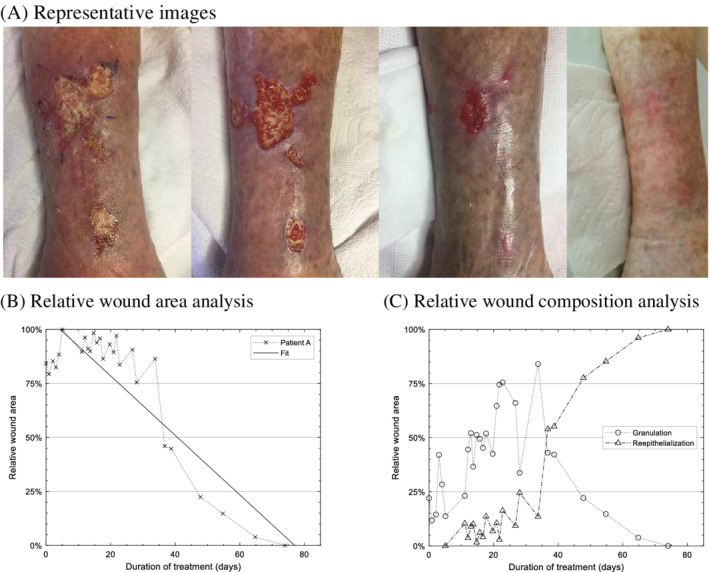
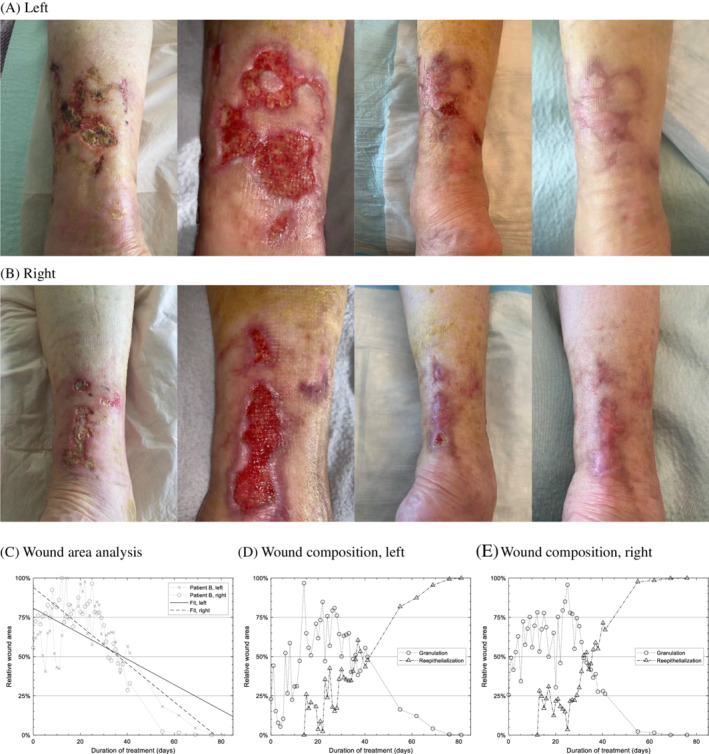
Non-Uremic Calciphylaxis (NUC) is a rare condition that often manifests as intractable and painful integumentary wounds, afflicting patients with a high burden of co-morbidity. The Endocannabinoid System (ECS) is a ubiquitous signalling system that is theorised to be dysregulated within wound beds and associated peri-wound tissues. Preclinical research has shown that the dominant chemical classes derived from the cannabis plant, cannabinoids, terpenes, and flavonoids, interact with the integumentary ECS to promote wound closure and analgesia. This is a prospective open label cohort study involving two elderly Caucasian females with recalcitrant NUC leg ulcers of greater than 6 months duration. Topical Cannabis-Based Medicines (TCBM) composed of cannabinoids, terpenes, and flavonoids were applied daily to both the wound bed and peri-wound tissues until complete wound closure was achieved. Wounds were photographed regularly, and the digital images were subjected to planimetric analysis to objectively quantify the degree of granulation and epithelization. Analgesic utilisation, as a surrogate/proxy for pain scores, was also tracked. The cohort had a mean M3 multimorbidity index score of 3.31. Complete wound closure was achieved in a mean of 76.3 days. Additionally, no analgesics were required after a mean of 63 days. The treatments were well tolerated with no adverse reactions. The positive results demonstrated in very challenging wounds such as NUC, among highly complex patients, suggest that TCBM may have an even broader role within integumentary and wound management. This treatment paradigm warrants being trialled in other wound types and classes, and ultimately should be subjected to randomised controlled trials.
非尿毒症性钙化防御(NUC)是一种罕见的疾病,常表现为难以治愈和疼痛的皮肤伤口,给患有多种合并症的患者带来沉重负担。内源性大麻素系统(ECS)是一种普遍存在的信号系统,据推测其在伤口床和相关的围伤口组织中失调。临床前研究表明,源自大麻植物的主要化学物质类别,大麻素、萜烯和类黄酮,与皮肤的 ECS 相互作用,促进伤口闭合和镇痛。这是一项前瞻性开放标签队列研究,涉及两名患有难治性 NUC 腿部溃疡超过 6 个月的老年白种女性。含有大麻素、萜烯和类黄酮的局部大麻素药物(TCBM)每天应用于伤口床和围伤口组织,直至完全愈合。定期拍摄伤口照片,并对数字图像进行平面分析,以客观地量化肉芽和上皮化的程度。还跟踪了镇痛药物的使用情况,作为疼痛评分的替代/代理指标。该队列的平均 M3 多合并症指数评分为 3.31。平均 76.3 天即可完全愈合伤口。此外,平均 63 天后无需使用任何镇痛药。治疗耐受良好,无不良反应。在 NUC 等非常具有挑战性的伤口中以及在高度复杂的患者中取得的积极结果表明,TCBM 可能在皮肤和伤口管理中具有更广泛的作用。这种治疗模式值得在其他伤口类型和类别中进行试验,最终应进行随机对照试验。