Turner Thomas J, Zourray Clara, Schorge Stephanie, Lignani Gabriele
Department of Clinical and Experimental Epilepsy, UCL Queen Square Institute of Neurology, London, UK.
Department of Pharmacology, UCL School of Pharmacy, London, UK.
J Neurochem. 2021 Apr;157(2):229-262. doi: 10.1111/jnc.15168. Epub 2020 Sep 28.
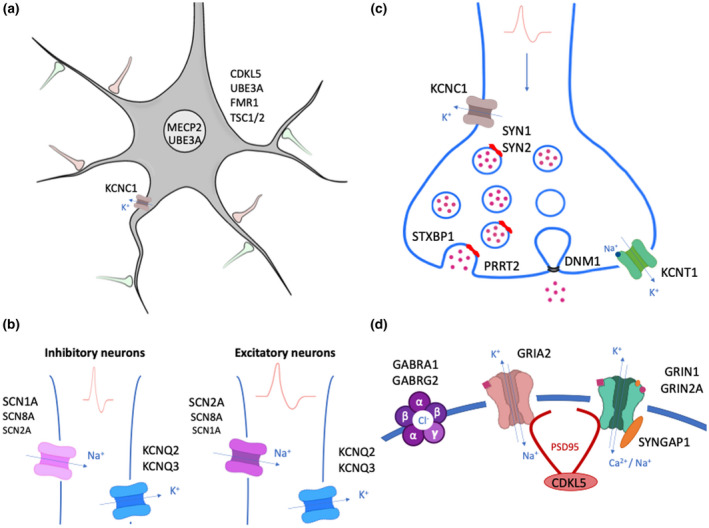
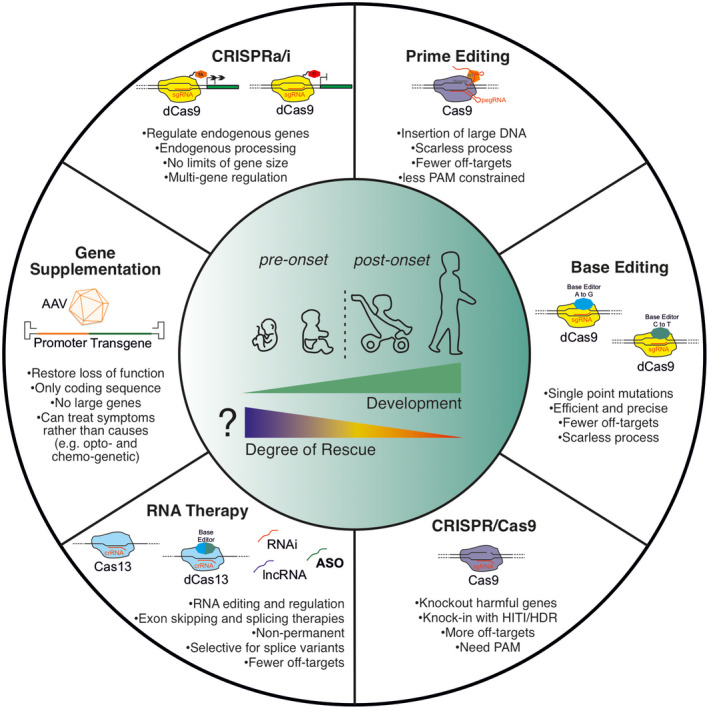
Neurodevelopmental disorders can be caused by mutations in neuronal genes fundamental to brain development. These disorders have severe symptoms ranging from intellectually disability, social and cognitive impairments, and a subset are strongly linked with epilepsy. In this review, we focus on those neurodevelopmental disorders that are frequently characterized by the presence of epilepsy (NDD + E). We loosely group the genes linked to NDD + E with different neuronal functions: transcriptional regulation, intrinsic excitability and synaptic transmission. All these genes have in common a pivotal role in defining the brain architecture and function during early development, and when their function is altered, symptoms can present in the first stages of human life. The relationship with epilepsy is complex. In some NDD + E, epilepsy is a comorbidity and in others seizures appear to be the main cause of the pathology, suggesting that either structural changes (NDD) or neuronal communication (E) can lead to these disorders. Furthermore, grouping the genes that cause NDD + E, we review the uses and limitations of current models of the different disorders, and how different gene therapy strategies are being developed to treat them. We highlight where gene replacement may not be a treatment option, and where innovative therapeutic tools, such as CRISPR-based gene editing, and new avenues of delivery are required. In general this group of genetically defined disorders, supported increasing knowledge of the mechanisms leading to neurological dysfunction serve as an excellent collection for illustrating the translational potential of gene therapy, including newly emerging tools.
神经发育障碍可能由对大脑发育至关重要的神经元基因突变引起。这些疾病具有严重的症状,包括智力残疾、社交和认知障碍,并且其中一部分与癫痫密切相关。在本综述中,我们聚焦于那些常以癫痫存在为特征的神经发育障碍(神经发育障碍伴癫痫,NDD + E)。我们大致将与NDD + E相关的基因按照不同的神经元功能进行分组:转录调控、内在兴奋性和突触传递。所有这些基因在早期发育过程中对定义大脑结构和功能都起着关键作用,当其功能改变时,症状可能在人类生命的最初阶段出现。与癫痫的关系很复杂。在一些NDD + E中,癫痫是一种合并症,而在另一些情况中,癫痫发作似乎是病理的主要原因,这表明结构变化(NDD)或神经元通讯(E)都可能导致这些疾病。此外,通过对导致NDD + E的基因进行分组,我们回顾了当前不同疾病模型的用途和局限性,以及正在如何开发不同的基因治疗策略来治疗它们。我们强调了在哪些情况下基因替代可能不是一种治疗选择,以及在哪些情况下需要创新的治疗工具,如基于CRISPR的基因编辑和新的递送途径。总体而言,这组由基因定义的疾病,随着对导致神经功能障碍机制的认识不断增加,成为了展示基因治疗转化潜力(包括新出现的工具)的绝佳集合。