Mecatti Giovana Colozza, Sánchez-Vinces Salvador, Fernandes Anna Maria A P, Messias Marcia C F, de Santis Gabrielle K D, Porcari Andreia M, Marson Fernando A L, Carvalho Patrícia de Oliveira
Laboratory of Multidisciplinary Research, São Francisco University, Bragança Paulista, São Paulo 12916-900, Brazil.
Laboratory of Human and Medical Genetics, São Francisco University, Bragança Paulista, São Paulo 12916-900, Brazil.
Metabolites. 2020 Sep 1;10(9):359. doi: 10.3390/metabo10090359.
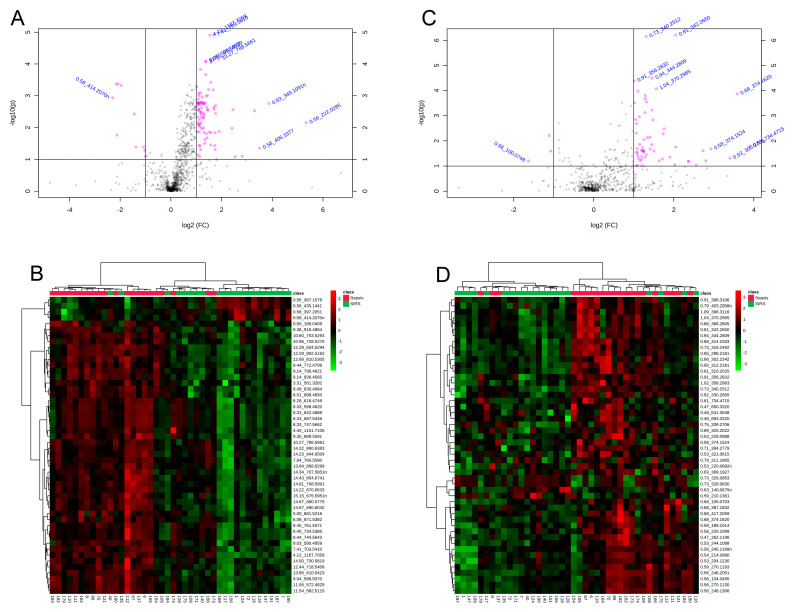
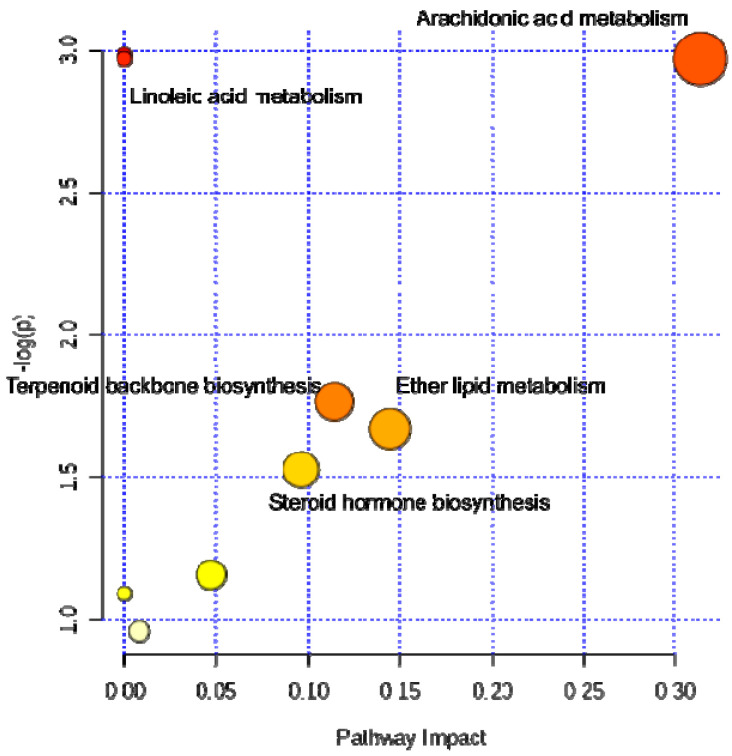
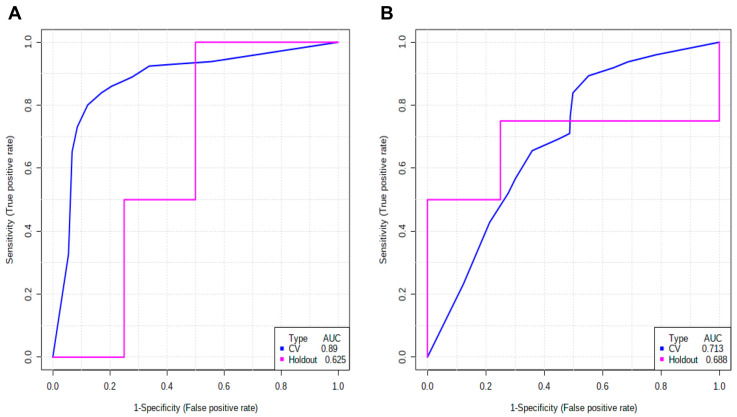
Systemic inflammatory response syndrome (SIRS) and sepsis are two conditions which are difficult to differentiate clinically and which are strongly impacted for prompt intervention. This study identified potential lipid signatures that are able to differentiate SIRS from sepsis and to predict prognosis. Forty-two patients, including 21 patients with sepsis and 21 patients with SIRS, were involved in the study. Liquid chromatography coupled to mass spectrometry and multivariate statistical methods were used to determine lipids present in patient plasma. The obtained lipid signatures revealed 355 features for the negative ion mode and 297 for the positive ion mode, which were relevant for differential diagnosis of sepsis and SIRS. These lipids were also tested as prognosis predictors. Lastly, L-octanoylcarnitine was found to be the most promising lipid signature for both the diagnosis and prognosis of critically ill patients, with accuracies of 75% for both purposes. In short, we presented the determination of lipid signatures as a potential tool for differential diagnosis of sepsis and SIRS and prognosis of these patients.
全身炎症反应综合征(SIRS)和脓毒症是两种在临床上难以区分且急需及时干预的病症。本研究确定了能够区分SIRS与脓毒症并预测预后的潜在脂质特征。该研究纳入了42例患者,其中包括21例脓毒症患者和21例SIRS患者。采用液相色谱-质谱联用技术和多元统计方法来测定患者血浆中的脂质。所获得的脂质特征在负离子模式下显示出355个特征峰,在正离子模式下显示出297个特征峰,这些特征峰与脓毒症和SIRS的鉴别诊断相关。这些脂质也作为预后预测指标进行了测试。最后,发现L-辛酰肉碱是危重症患者诊断和预后最有前景的脂质特征,诊断和预后的准确率均为75%。简而言之,我们提出脂质特征的测定可作为脓毒症和SIRS鉴别诊断及这些患者预后评估的潜在工具。