Xiong Shifa, Zhao Yunxiao, Chen Yicun, Gao Ming, Wu Liwen, Wang Yangdong
State Key Laboratory of Tree Genetics and Breeding Chinese Academy of Forestry Beijing China.
Research Institute of Subtropical Forestry Chinese Academy of Forestry Hangzhou China.
Ecol Evol. 2020 Jul 24;10(16):8949-8958. doi: 10.1002/ece3.6598. eCollection 2020 Aug.
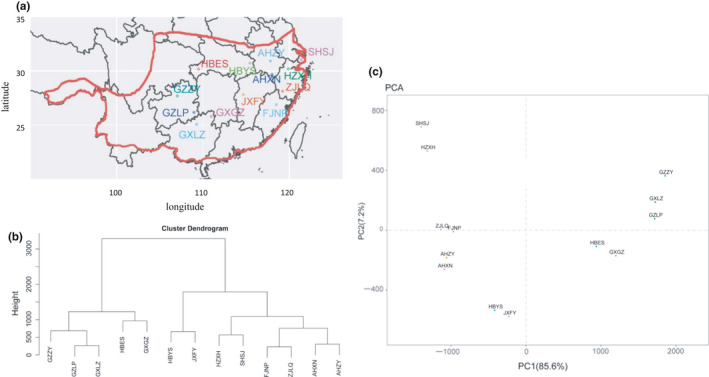
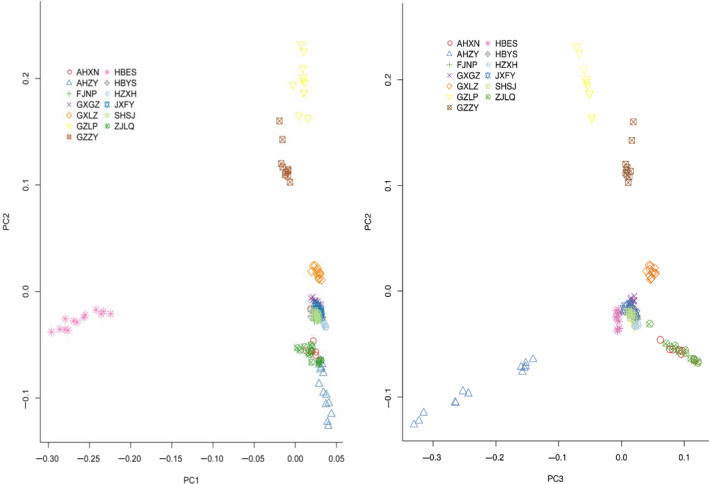
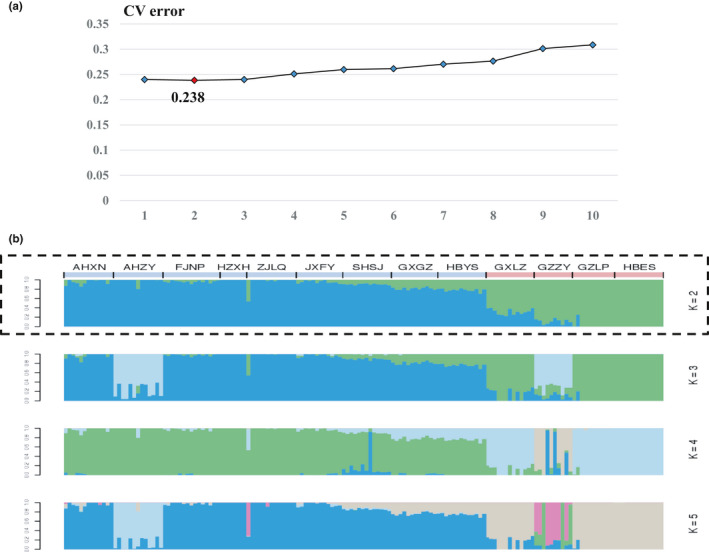
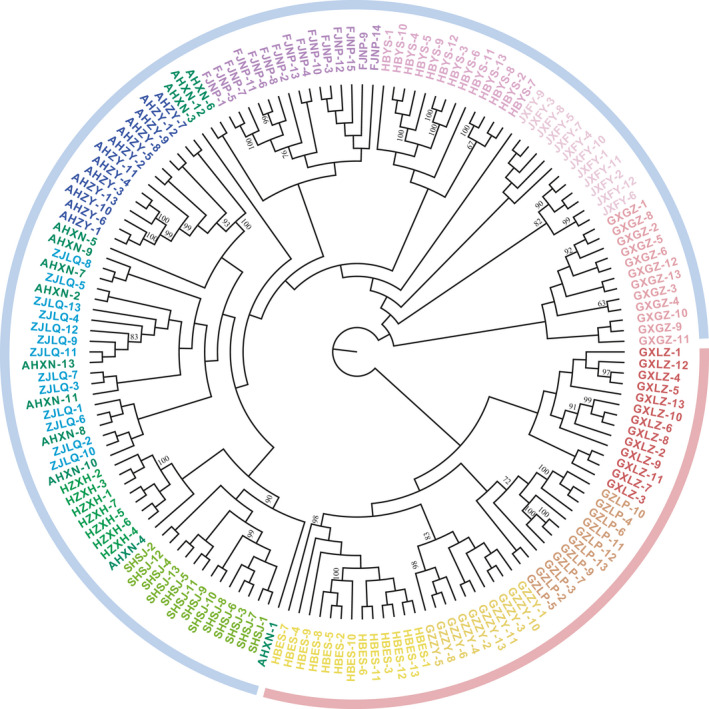
Analysis of genetic diversity and population structure among populations is essential for the conservation and utilization of resources. Here, the genetic diversity and structure of 158 individuals from 13 natural populations of in China were analyzed using genotyping-by-sequencing (GBS). A total of 459,564 high-quality single nucleotide polymorphisms (SNPs) were obtained after filtration for subsequent analysis. Genetic structure analysis revealed that these individuals can be clustered into two groups and the structure can be explained mainly by the geographic barrier, showed gene introgression from coastal to inland areas and high mountains could significantly hinder the mutual introgression of genes. Genetic diversity analysis indicated that the individual differences within groups are greater than the differences between the two groups. These results will help us better understand the genetic backgrounds of .
分析种群间的遗传多样性和种群结构对于资源的保护和利用至关重要。在此,利用简化基因组测序(GBS)对中国13个自然种群的158个个体的遗传多样性和结构进行了分析。经过筛选,共获得459,564个高质量单核苷酸多态性(SNP)用于后续分析。遗传结构分析表明,这些个体可聚类为两组,其结构主要可由地理屏障来解释,显示出从沿海到内陆地区的基因渐渗,且高山会显著阻碍基因的相互渐渗。遗传多样性分析表明,组内个体差异大于两组之间的差异。这些结果将有助于我们更好地了解[物种名称]的遗传背景。