Xiong Shifa, Wang Yangdong, Chen Yicun, Gao Ming, Zhao Yunxiao, Wu Liwen
State Key Laboratory of Tree Genetics and Breeding, Chinese Academy of Forestry, Beijing 100091, China.
Research Institute of Subtropical Forestry, Chinese Academy of Forestry, Hangzhou 311400, China.
Plants (Basel). 2022 Mar 2;11(5):679. doi: 10.3390/plants11050679.
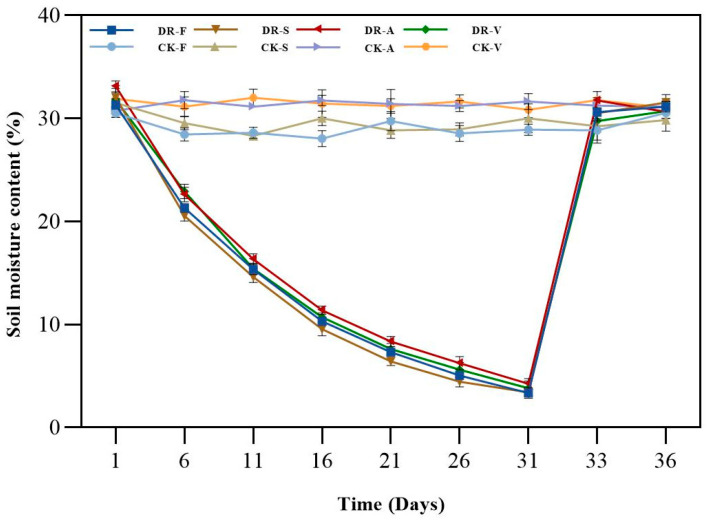
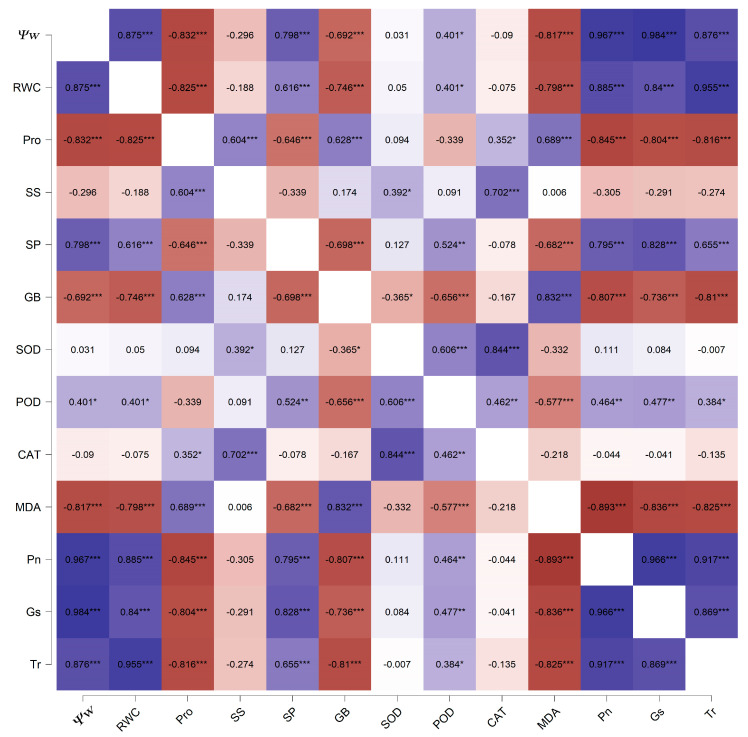
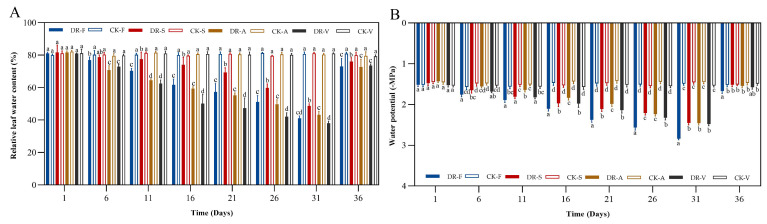
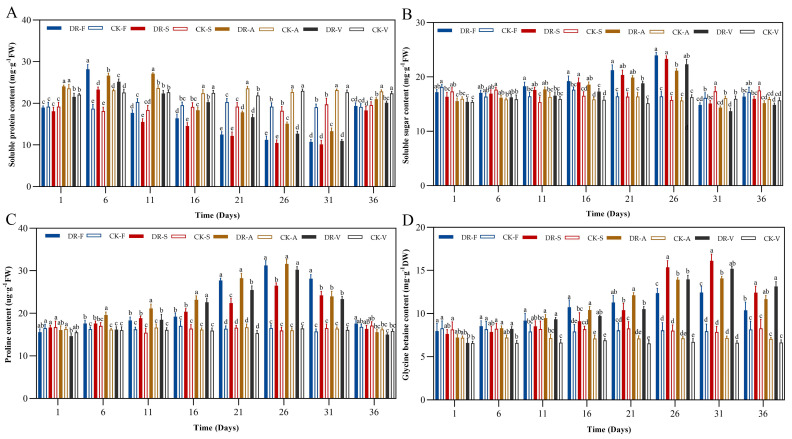
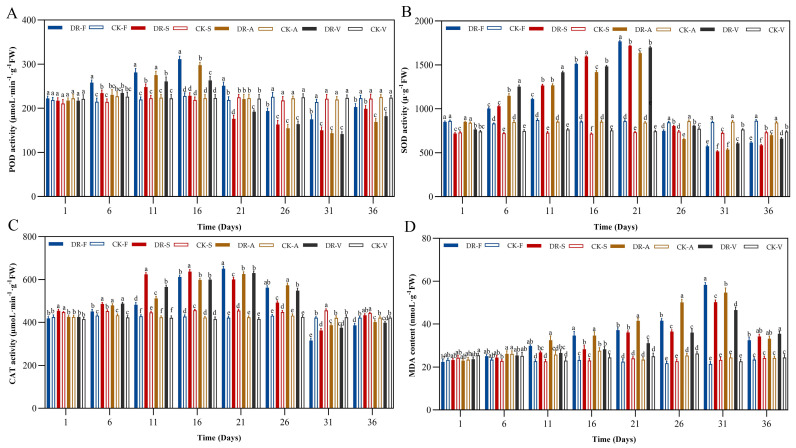
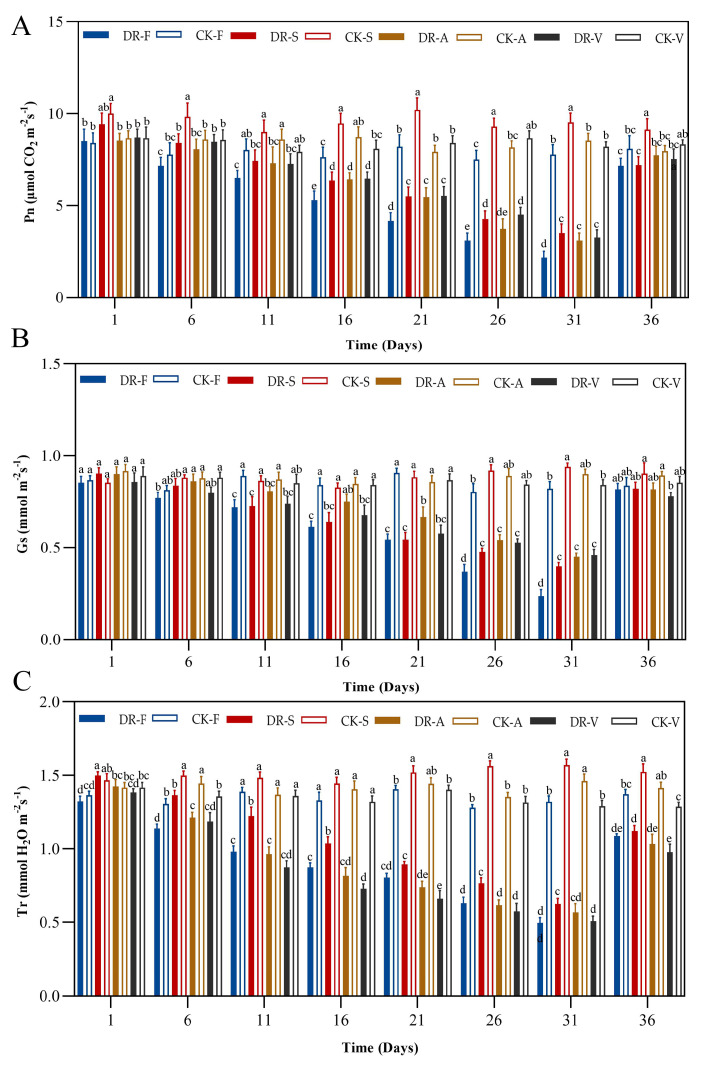
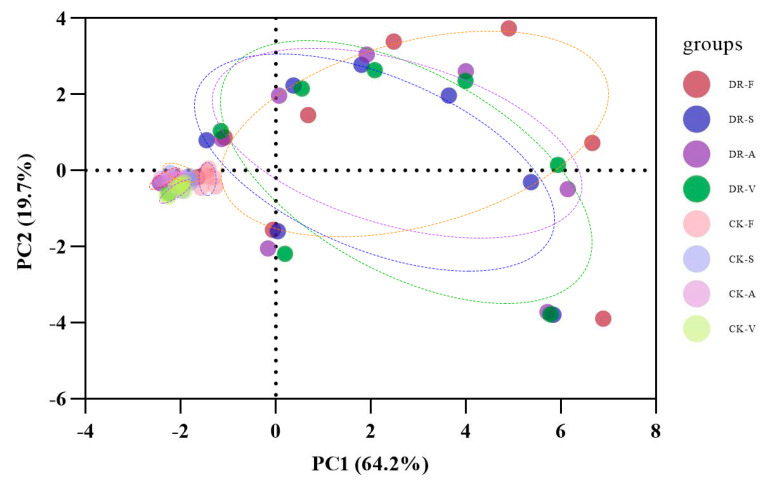
Quercus fabri Hance, Quercus serrata Thunb, Quercus acutissima Carruth, and Quercus variabilis BL are four Chinese oak species commonly used for forestation. To ensure the survival of seedlings, we first need to understand the differences in drought resistance of the four oak species at the seedling stage, and comprehensively evaluate their drought resistance capabilities. The four oak seedlings were divided into drought-rewatering treatment group and well watered samples (control group). For the seedlings of the drought-rewatering treatment group, drought stress lasting 31 days was used, and then re-watering for 5 days. The water parameters, osmotic solutes content, antioxidant enzyme activity and photosynthesis parameters of the seedlings in the two groups were measured every 5 days. Compared with the control group, the relative water content, water potential, net photosynthetic rate, transpiration rate, and stomatal conductance levels of the four oaks all showed a downward trend under continuous drought stress, and showed an upward trend after rehydration. The soluble protein, soluble sugar, proline, peroxidase, superoxide dismutase and catalase content of the four oaks increased first and then decreased under drought stress, and then increased after rehydration. The content of glycine betaine and malondialdehyde continued to increase, and gradually decreased after rehydration. The weight of each index was calculated by principal component analysis, and then the comprehensive evaluation of each index was carried out through the membership function method. The drought resistance levels of the four oak species were as follows: Q. serrata > Q. fabri > Q. variabilis > Q. acutissima.
麻栎、枹栎、锐齿槲栎和栓皮栎是四种常用于造林的中国栎属树种。为确保幼苗存活,我们首先需要了解这四种栎属树种在幼苗期的抗旱性差异,并综合评估它们的抗旱能力。将四种栎属幼苗分为干旱复水处理组和正常浇水样本(对照组)。对于干旱复水处理组的幼苗,采用持续31天的干旱胁迫,然后再浇水5天。每5天测量两组幼苗的水分参数、渗透溶质含量、抗氧化酶活性和光合参数。与对照组相比,在持续干旱胁迫下,四种栎树的相对含水量、水势、净光合速率、蒸腾速率和气孔导度均呈下降趋势,复水后呈上升趋势。四种栎树的可溶性蛋白、可溶性糖、脯氨酸、过氧化物酶、超氧化物歧化酶和过氧化氢酶含量在干旱胁迫下先升高后降低,复水后又升高。甘氨酸甜菜碱和丙二醛含量持续增加,复水后逐渐降低。通过主成分分析计算各指标权重,然后采用隶属函数法对各指标进行综合评价。四种栎属树种的抗旱能力水平如下:枹栎>麻栎>栓皮栎>锐齿槲栎。