Vidakis Nectarios, Petousis Markos, Velidakis Emmanouel, Liebscher Marco, Tzounis Lazaros
Mechanical Engineering Department, Hellenic Mediterranean University, Estavromenos, 71004 Heraklion, Crete, Greece.
Institute of Construction Materials, Technische Universität Dresden, DE-01062 Dresden, Germany.
Biomimetics (Basel). 2020 Sep 2;5(3):42. doi: 10.3390/biomimetics5030042.
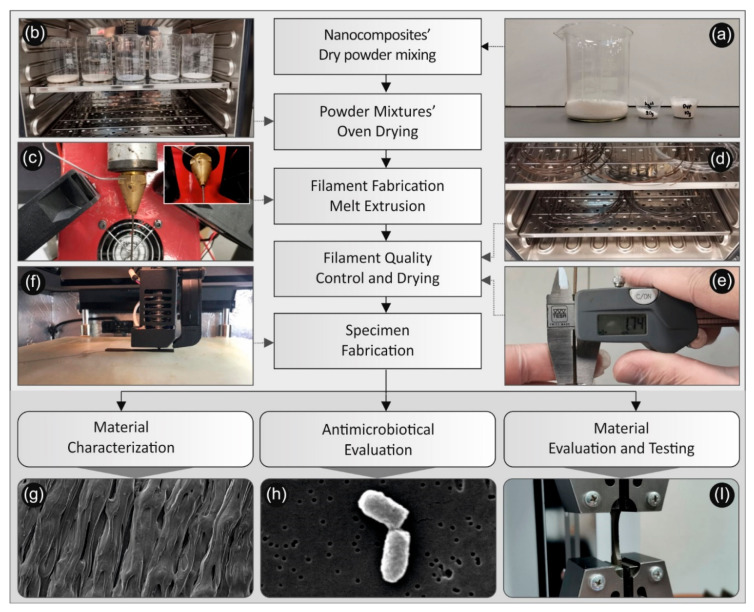
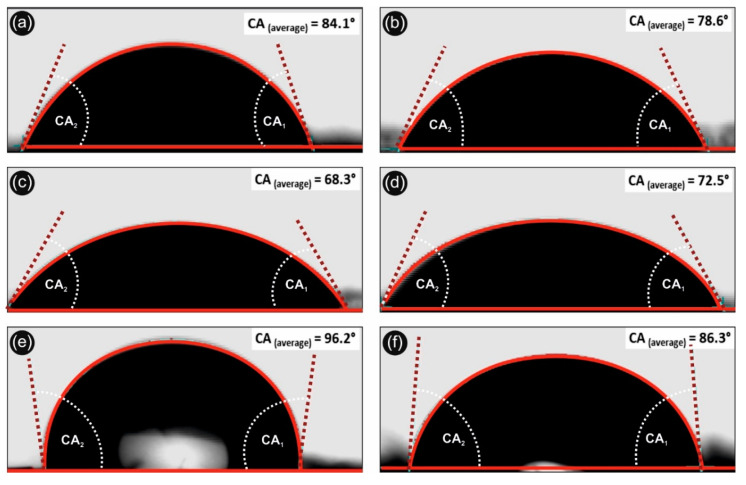
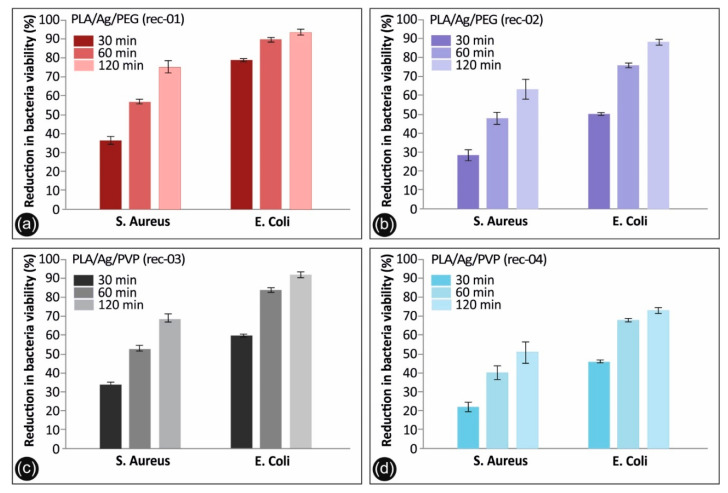
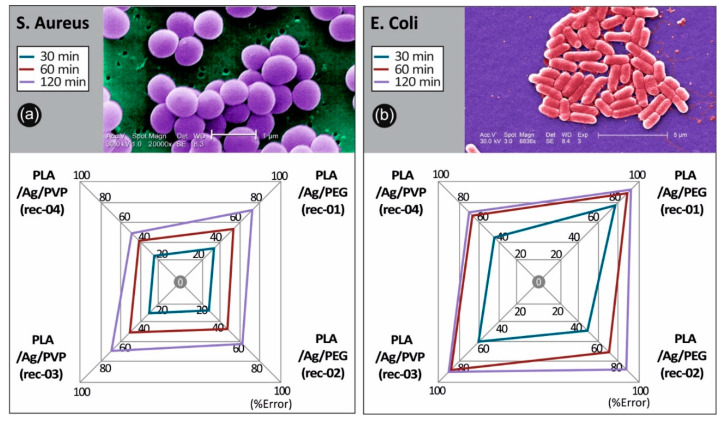
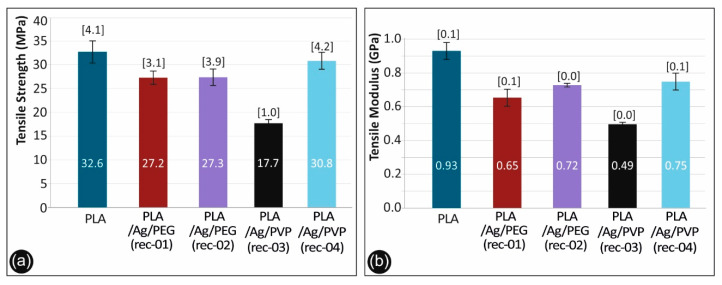
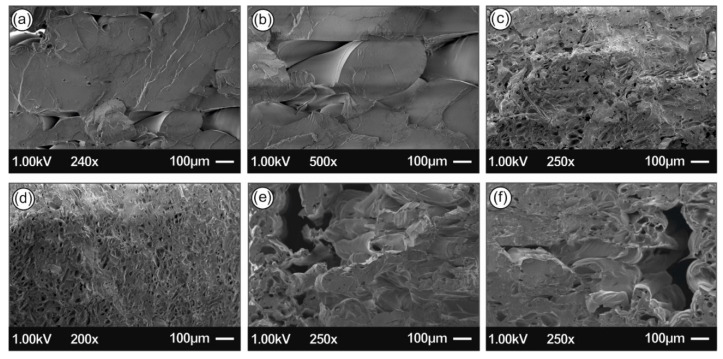
In this study, an industrially scalable method is reported for the fabrication of polylactic acid (PLA)/silver nanoparticle (AgNP) nanocomposite filaments by an in-situ reduction reactive melt mixing method. The PLA/AgNP nanocomposite filaments have been produced initially reducing silver ions (Ag) arising from silver nitrate (AgNO) precursor mixed in the polymer melt to elemental silver (Ag) nanoparticles, utilizing polyethylene glycol (PEG) or polyvinyl pyrrolidone (PVP), respectively, as macromolecular blend compound reducing agents. PEG and PVP were added at various concentrations, to the PLA matrix. The PLA/AgNP filaments have been used to manufacture 3D printed antimicrobial (AM) parts by Fused Filament Fabrication (FFF). The 3D printed PLA/AgNP parts exhibited significant AM properties examined by the reduction in Staphylococcus aureus () and Escherichia coli () bacteria viability (%) experiments at 30, 60, and 120 min duration of contact ( < 0.05; -value (): probability). It could be envisaged that the 3D printed parts manufactured and tested herein mimic nature's mechanism against bacteria and in terms of antimicrobial properties, contact angle for their anti-adhesive behavior and mechanical properties could create new avenues for the next generation of low-cost and on-demand additive manufacturing produced personal protective equipment (PPE) as well as healthcare and nosocomial antimicrobial equipment.
在本研究中,报道了一种工业规模可扩展的方法,用于通过原位还原反应熔融混合法制备聚乳酸(PLA)/银纳米颗粒(AgNP)纳米复合长丝。PLA/AgNP纳米复合长丝最初是通过分别利用聚乙二醇(PEG)或聚乙烯吡咯烷酮(PVP)作为大分子共混物还原剂,将聚合物熔体中混合的硝酸银(AgNO)前驱体产生的银离子(Ag)还原为元素银(Ag)纳米颗粒而制备的。将不同浓度的PEG和PVP添加到PLA基体中。PLA/AgNP长丝已用于通过熔丝制造(FFF)来制造3D打印抗菌(AM)部件。在接触30、60和120分钟的金黄色葡萄球菌()和大肠杆菌()细菌活力(%)实验中,通过细菌活力的降低来检测3D打印的PLA/AgNP部件表现出显著的抗菌性能(<0.05;-值():概率)。可以设想,本文制造和测试的3D打印部件模仿了自然界对抗细菌的机制,就抗菌性能、抗粘附行为的接触角和机械性能而言,可为下一代低成本按需增材制造生产的个人防护装备(PPE)以及医疗保健和医院抗菌设备创造新途径。