Department of Biosystems, KU Leuven, 3000 Leuven, Belgium.
Institute of Molecular Genetics, Russian Academy of Sciences, 119334 Moscow, Russia.
Viruses. 2020 Sep 2;12(9):976. doi: 10.3390/v12090976.
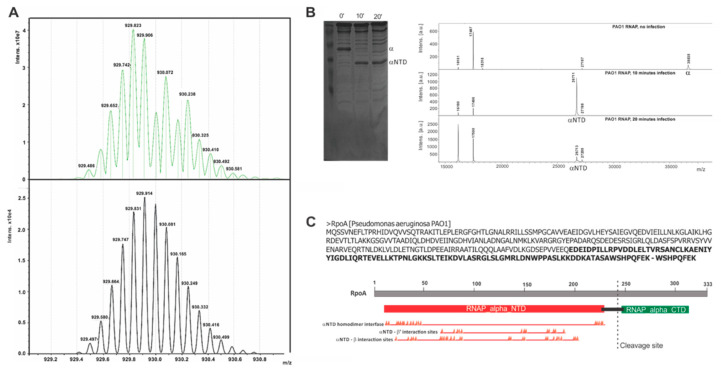
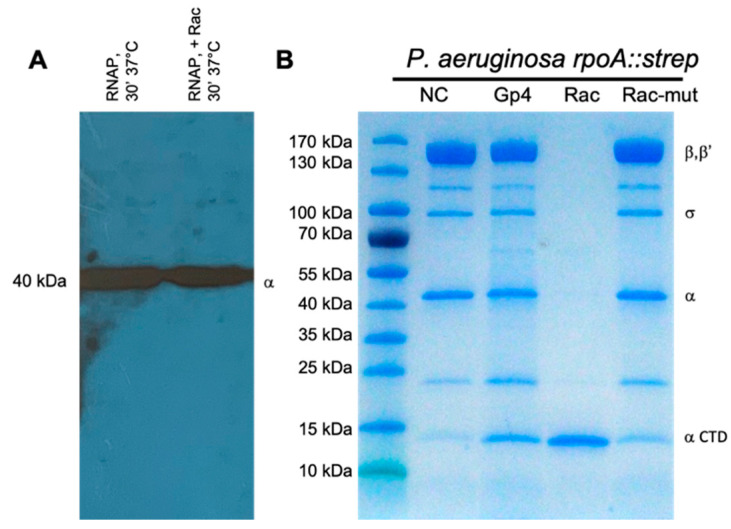
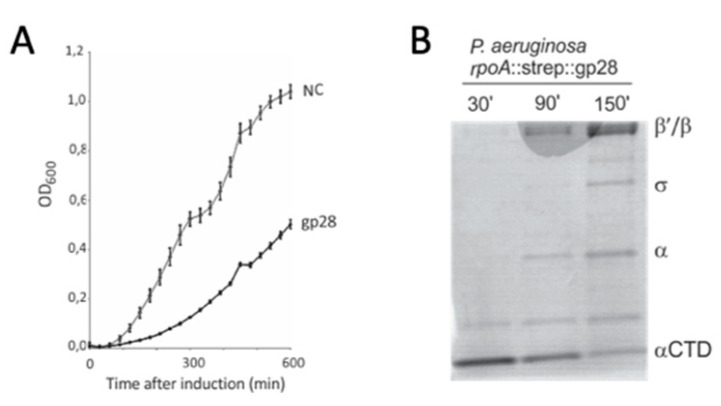
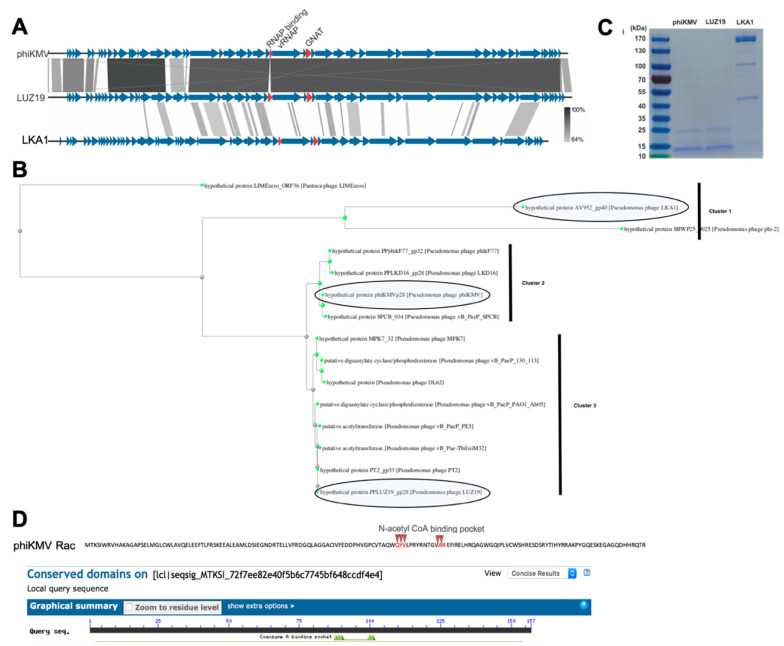
In this study, we describe the biological function of the phage-encoded protein RNA polymerase alpha subunit cleavage protein (Rac), a predicted Gcn5-related acetyltransferase encoded by phiKMV-like viruses. These phages encode a single-subunit RNA polymerase for transcription of their late (structure- and lysis-associated) genes, whereas the bacterial RNA polymerase is used at the earlier stages of infection. Rac mediates the inactivation of bacterial transcription by introducing a specific cleavage in the α subunit of the bacterial RNA polymerase. This cleavage occurs within the flexible linker sequence and disconnects the C-terminal domain, required for transcription initiation from most highly active cellular promoters. To achieve this, Rac likely taps into a novel post-translational modification (PTM) mechanism within the host . From an evolutionary perspective, this novel phage-encoded regulation mechanism confirms the importance of PTMs in the prokaryotic metabolism and represents a new way by which phages can hijack the bacterial host metabolism.
在这项研究中,我们描述了噬菌体编码的 RNA 聚合酶α亚基切割蛋白(Rac)的生物学功能,Rac 是一种由 phiKMV 样病毒编码的预测 Gcn5 相关乙酰转移酶。这些噬菌体编码了一种单亚基 RNA 聚合酶,用于转录它们的晚期(结构和裂解相关)基因,而细菌 RNA 聚合酶则在感染的早期阶段使用。Rac 通过在细菌 RNA 聚合酶的α亚基中引入特定的切割来介导细菌转录的失活。这种切割发生在柔性连接序列内,并切断了 C 末端结构域,C 末端结构域对于大多数高度活跃的细胞启动子的转录起始是必需的。为了实现这一点,Rac 可能利用了宿主细胞中的一种新的翻译后修饰(PTM)机制。从进化的角度来看,这种新的噬菌体编码的调控机制证实了 PTM 在原核代谢中的重要性,并代表了噬菌体可以劫持细菌宿主代谢的一种新途径。