Institute of Molecular Biology and Biotechnology, Bahauddin Zakariya University, Multan, Pakistan.
Sci Rep. 2020 Sep 4;10(1):14667. doi: 10.1038/s41598-020-71346-7.
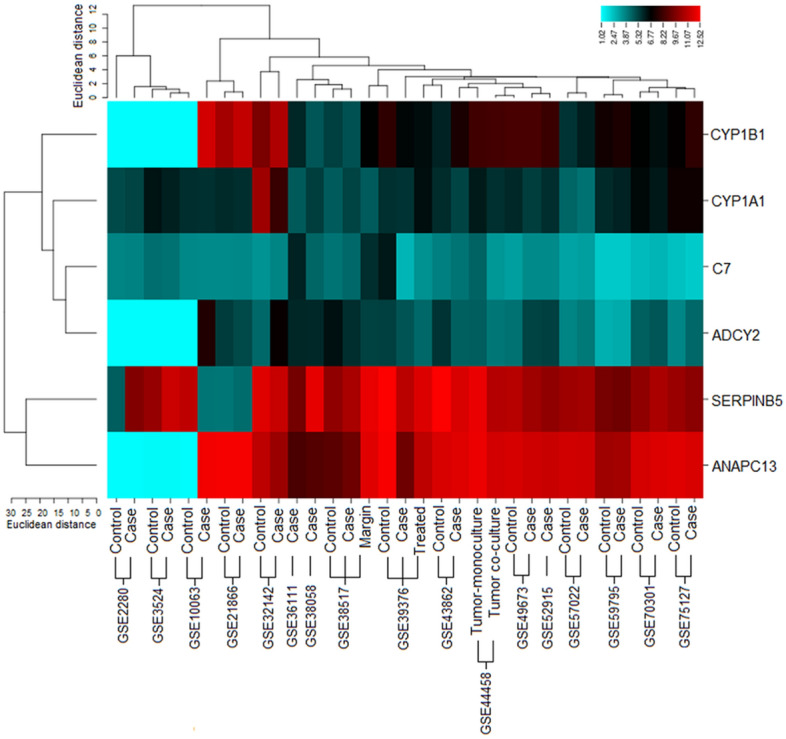
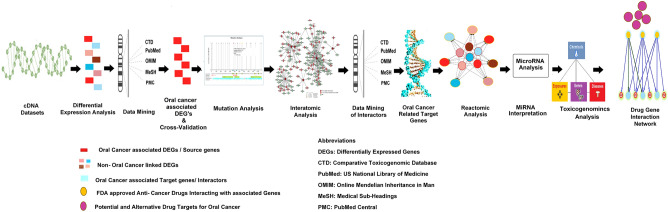
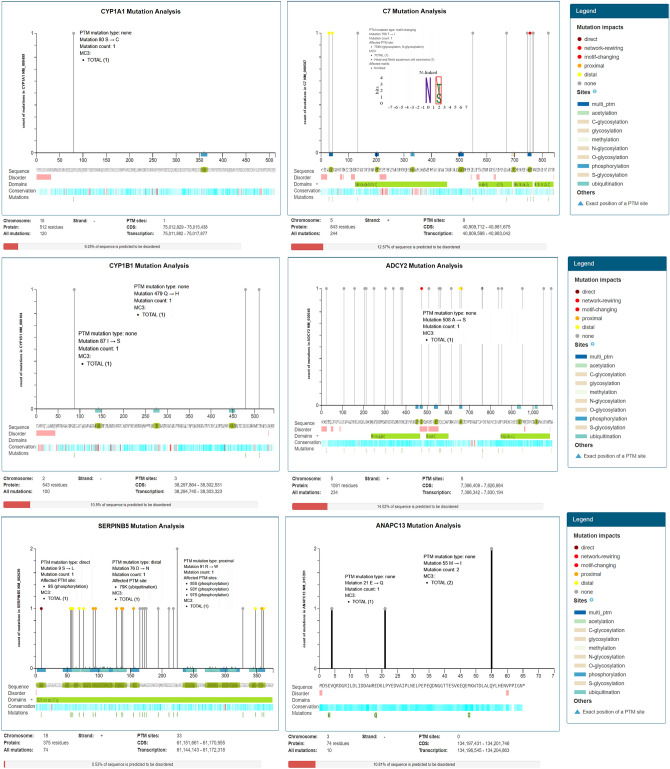
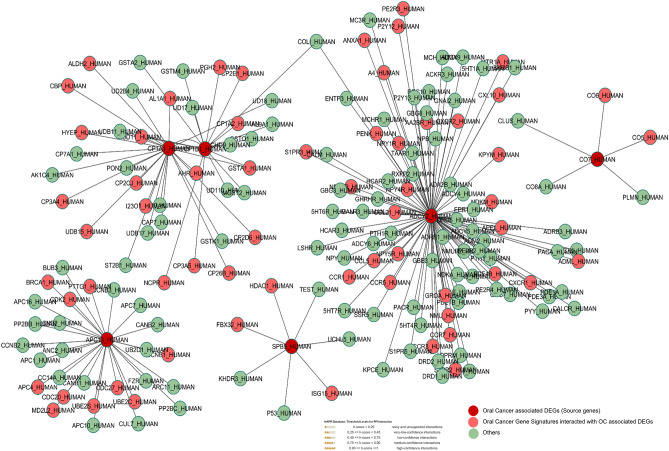
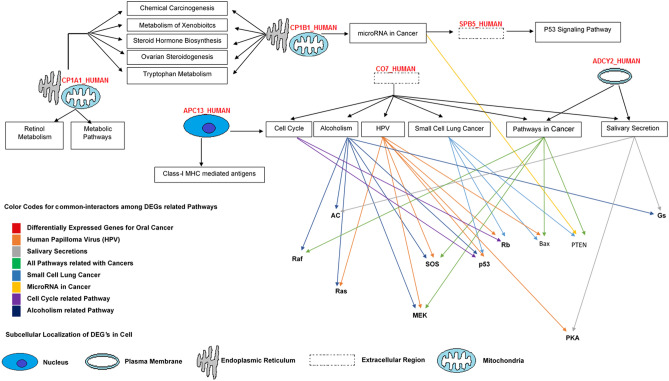
Oral cancer (OC) ranked as eleventh malignancy worldwide, with the increasing incidence among young patients. Limited understanding of complications in cancer progression, its development system, and their interactions are major restrictions towards the progress of optimal and effective treatment strategies. The system-level approach has been designed to explore genetic complexity of the disease and to identify novel oral cancer related genes to detect genomic alterations at molecular level, through cDNA differential analysis. We analyzed 21 oral cancer-related cDNA datasets and listed 30 differentially expressed genes (DEGs). Among 30, we found 6 significant DEGs including CYP1A1, CYP1B1, ADCY2, C7, SERPINB5, and ANAPC13 and studied their functional role in OC. Our genomic and interactive analysis showed significant enrichment of xenobiotics metabolism, p53 signaling pathway and microRNA pathways, towards OC progression and development. We used human proteomic data for post-translational modifications to interpret disease mutations and inter-individual genetic variations. The mutational analysis revealed the sequence predicted disordered region of 14%, 12.5%, 10.5% for ADCY2, CYP1B1, and C7 respectively. The MiRNA target prediction showed functional molecular annotation including specific miRNA-targets hsa-miR-4282, hsa-miR-2052, hsa-miR-216a-3p, for CYP1B1, C7, and ADCY2 respectively associated with oral cancer. We constructed the system level network and found important gene signatures. The drug-gene interaction of OC source genes with seven FDA approved OC drugs help to design or identify new drug target or establishing novel biomedical linkages regarding disease pathophysiology. This investigation demonstrates the importance of system genetics for identifying 6 OC genes (CYP1A1, CYP1B1, ADCY2, C7, SERPINB5, and ANAPC13) as potential drugs targets. Our integrative network-based system-level approach would help to find the genetic variants of OC that can accelerate drug discovery outcomes to develop a better understanding regarding treatment strategies for many cancer types.
口腔癌(OC)在全球范围内排名第十一,年轻患者的发病率不断上升。对癌症进展、其发展系统及其相互作用的复杂性的理解有限,是制定最佳和有效的治疗策略的主要限制。系统水平的方法旨在探索疾病的遗传复杂性,并确定新的口腔癌相关基因,以通过 cDNA 差异分析在分子水平上检测基因组改变。我们分析了 21 个与口腔癌相关的 cDNA 数据集,并列出了 30 个差异表达基因(DEGs)。在 30 个基因中,我们发现了 6 个差异表达基因(DEGs),包括 CYP1A1、CYP1B1、ADCY2、C7、SERPINB5 和 ANAPC13,并研究了它们在 OC 中的功能作用。我们的基因组和相互作用分析显示,外源性代谢物、p53 信号通路和 microRNA 通路的显著富集,促进了 OC 的进展和发展。我们使用人类蛋白质组数据进行翻译后修饰,以解释疾病突变和个体间遗传变异。突变分析显示,ADCY2、CYP1B1 和 C7 的序列预测无序区分别为 14%、12.5%和 10.5%。miRNA 靶标预测显示了功能分子注释,包括 CYP1B1、C7 和 ADCY2 分别与口腔癌相关的特定 miRNA 靶标 hsa-miR-4282、hsa-miR-2052、hsa-miR-216a-3p。我们构建了系统水平的网络,并发现了重要的基因特征。OC 来源基因与 7 种 FDA 批准的 OC 药物的药物-基因相互作用,有助于设计或识别新的药物靶点,或建立与疾病病理生理学有关的新的生物医学联系。这项研究表明,系统遗传学在确定 6 个 OC 基因(CYP1A1、CYP1B1、ADCY2、C7、SERPINB5 和 ANAPC13)作为潜在药物靶点方面具有重要意义。我们基于网络的综合系统水平方法将有助于发现 OC 的遗传变异,从而加速药物发现结果,更好地了解多种癌症类型的治疗策略。