Brain Mapping Unit, Department of Psychiatry, University of Cambridge, Cambridge, CB2 0SZ, UK.
Autism Research Centre, Department of Psychiatry, University of Cambridge, Cambridge, CB2 8AH, UK.
Commun Biol. 2020 Sep 4;3(1):486. doi: 10.1038/s42003-020-01212-9.
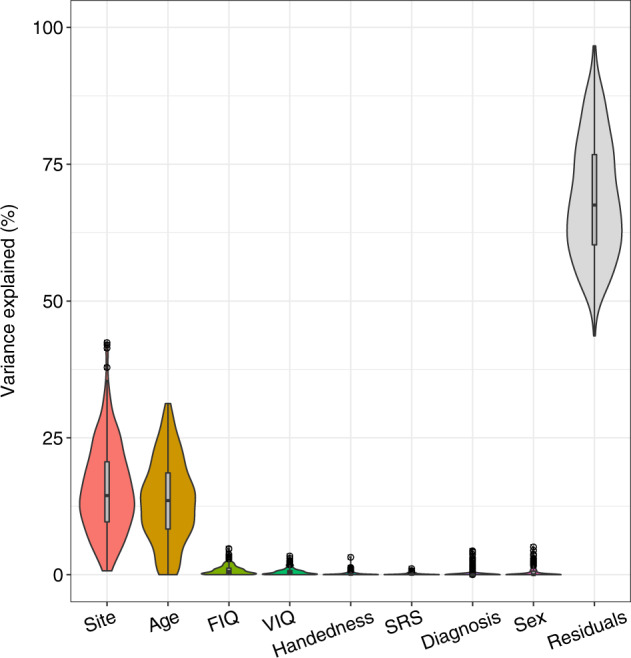
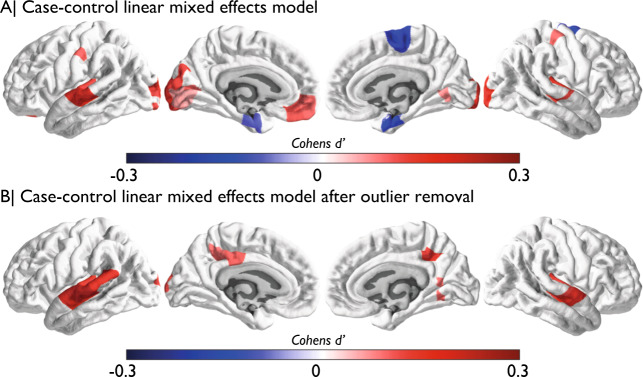
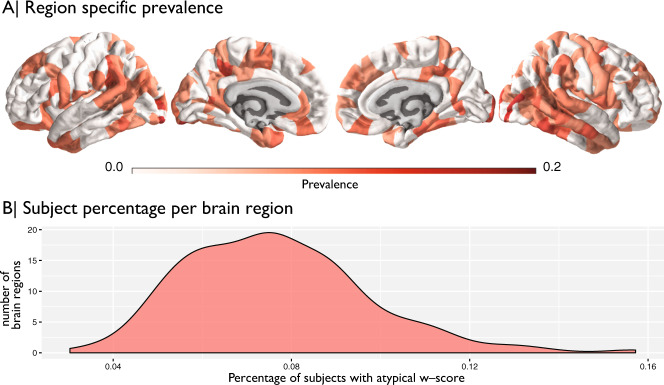
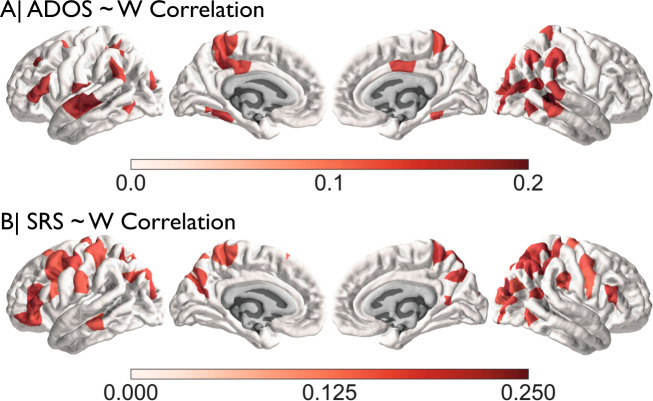
Understanding heterogeneity is an important goal on the path to precision medicine for autism spectrum disorders (ASD). We examined how cortical thickness (CT) in ASD can be parameterized as an individualized metric of atypicality relative to typically-developing (TD) age-related norms. Across a large sample (n = 870 per group) and wide age range (5-40 years), we applied normative modelling resulting in individualized whole-brain maps of age-related CT atypicality in ASD and isolating a small subgroup with highly age-atypical CT. Age-normed CT scores also highlights on-average differentiation, and associations with behavioural symptomatology that is separate from insights gleaned from traditional case-control approaches. This work showcases an individualized approach for understanding ASD heterogeneity that could potentially further prioritize work on a subset of individuals with cortical pathophysiology represented in age-related CT atypicality. Only a small subset of ASD individuals are actually highly atypical relative to age-norms. driving small on-average case-control differences.
理解异质性是实现自闭症谱系障碍(ASD)精准医学的重要目标。我们研究了如何将 ASD 中的皮质厚度(CT)参数化为相对于典型发育(TD)年龄相关标准的异常程度的个体化指标。在一个大样本(每组 n=870)和广泛的年龄范围内(5-40 岁),我们应用了规范建模,从而在 ASD 中生成了个体化的全脑 CT 异常相关年龄图谱,并分离出一小部分 CT 高度异常的亚组。年龄规范化的 CT 评分还突出了平均差异,并与行为症状学相关联,这与从传统病例对照方法中获得的见解不同。这项工作展示了一种用于理解 ASD 异质性的个体化方法,这种方法可能会进一步优先考虑具有皮质病理生理学表现的个体亚组的工作,这些个体在年龄相关 CT 异常方面具有代表性。只有一小部分 ASD 个体实际上与年龄标准相比非常异常,这导致了平均病例对照差异较小。