UCL Cancer Institute, Paul O'Gorman Building, 72 Huntley Street, London WC1E 6DD, UK.
School of Life Sciences, University of Essex, Wivenhoe Park, Colchester CO4 3SQ, UK.
Genes (Basel). 2020 Sep 3;11(9):1043. doi: 10.3390/genes11091043.
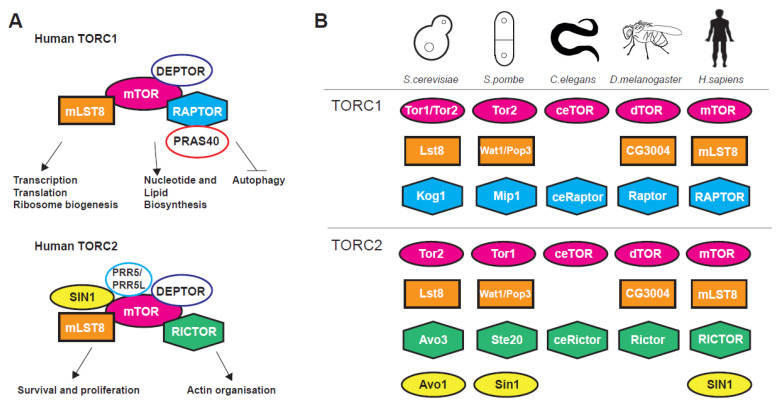
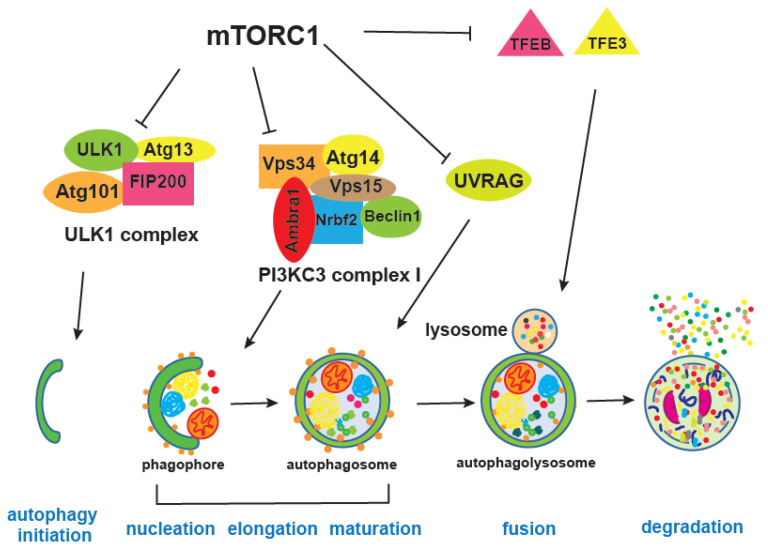
Ageing is a complex trait controlled by genes and the environment. The highly conserved mechanistic target of rapamycin signalling pathway (mTOR) is a major regulator of lifespan in all eukaryotes and is thought to be mediating some of the effects of dietary restriction. mTOR is a rheostat of energy sensing diverse inputs such as amino acids, oxygen, hormones, and stress and regulates lifespan by tuning cellular functions such as gene expression, ribosome biogenesis, proteostasis, and mitochondrial metabolism. Deregulation of the mTOR signalling pathway is implicated in multiple age-related diseases such as cancer, neurodegeneration, and auto-immunity. In this review, we briefly summarise some of the workings of mTOR in lifespan and ageing through the processes of transcription, translation, autophagy, and metabolism. A good understanding of the pathway's outputs and connectivity is paramount towards our ability for genetic and pharmacological interventions for healthy ageing and amelioration of age-related disease.
衰老是一种由基因和环境控制的复杂特征。高度保守的雷帕霉素靶蛋白(mTOR)信号通路是所有真核生物寿命的主要调节剂,被认为介导了饮食限制的一些影响。mTOR 是能量感应的变阻器,它可以感知多种输入,如氨基酸、氧气、激素和应激,并通过调节细胞功能,如基因表达、核糖体生物发生、蛋白质稳态和线粒体代谢,来调节寿命。mTOR 信号通路的失调与多种与年龄相关的疾病有关,如癌症、神经退行性疾病和自身免疫性疾病。在这篇综述中,我们通过转录、翻译、自噬和代谢等过程,简要总结了 mTOR 在寿命和衰老中的一些作用。深入了解该通路的输出和连接对于我们进行基因和药理学干预以实现健康衰老和改善与年龄相关的疾病至关重要。