Bauer K C, Huus K E, Brown E M, Bozorgmehr T, Petersen C, Cirstea M S, Woodward S E, McCoy J, Hun J, Pamplona R, Ayala V, Finlay B B
Michael Smith Laboratories, University of British Columbia, Vancouver, British Columbia, Canada.
Microbiology and Immunology Department, University of British Columbia, Vancouver, British Columbia, Canada.
mSystems. 2020 Sep 8;5(5):e00499-20. doi: 10.1128/mSystems.00499-20.
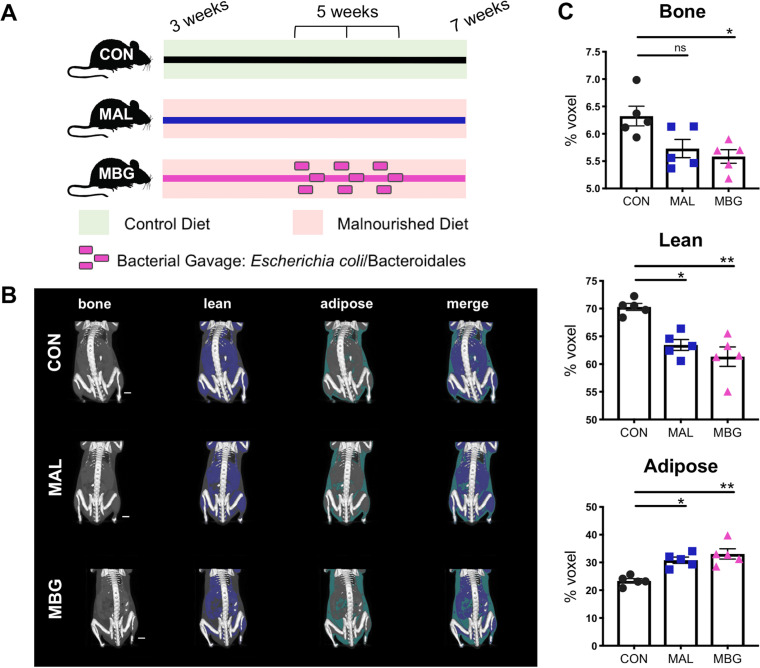
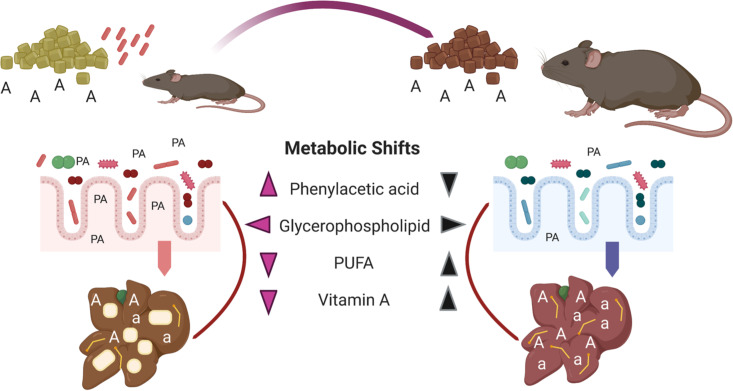
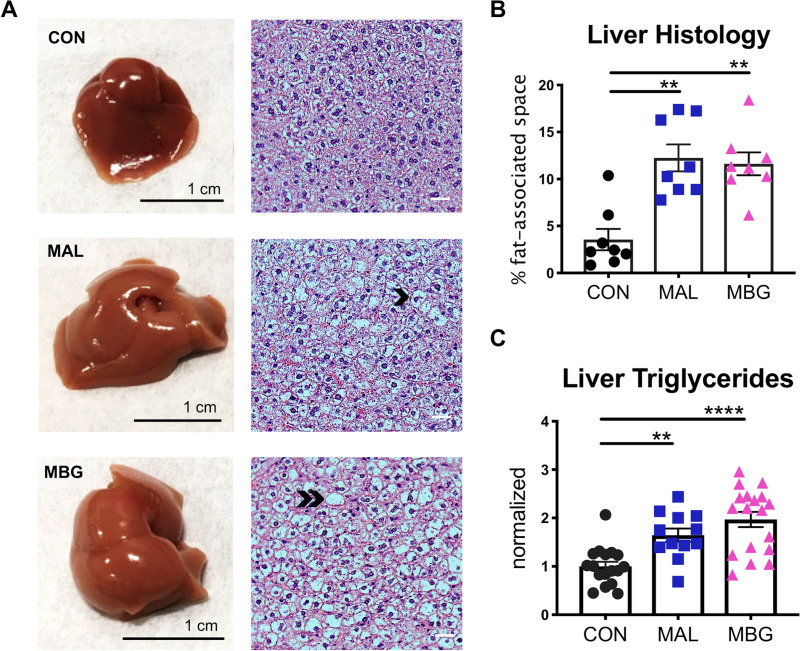
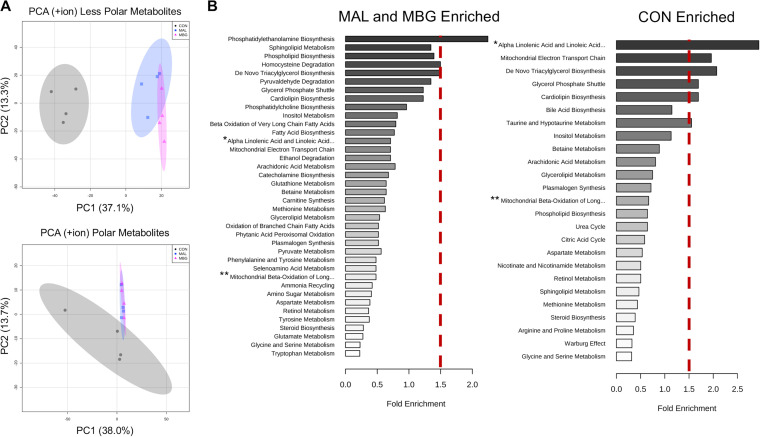
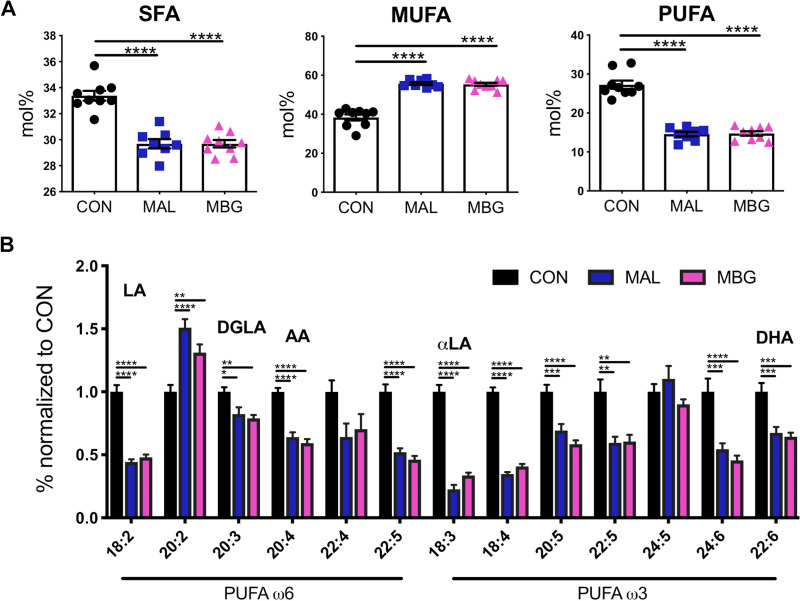
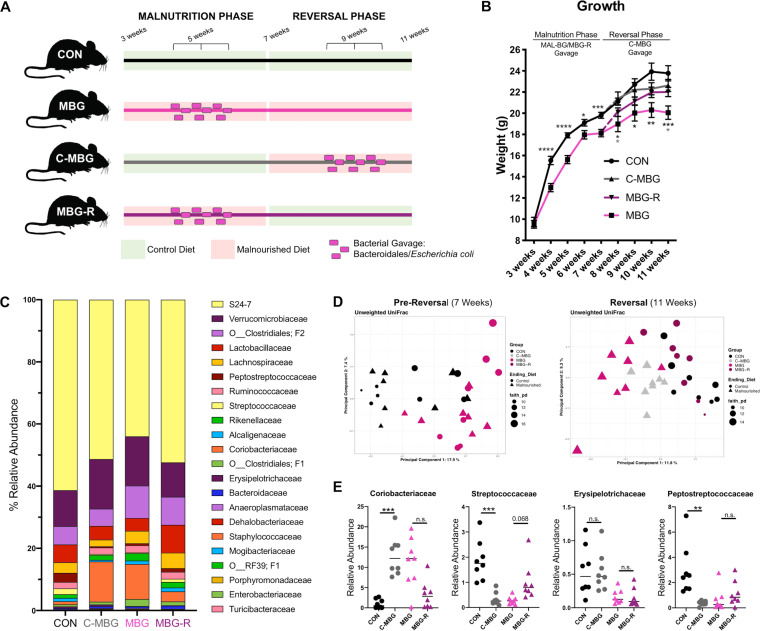
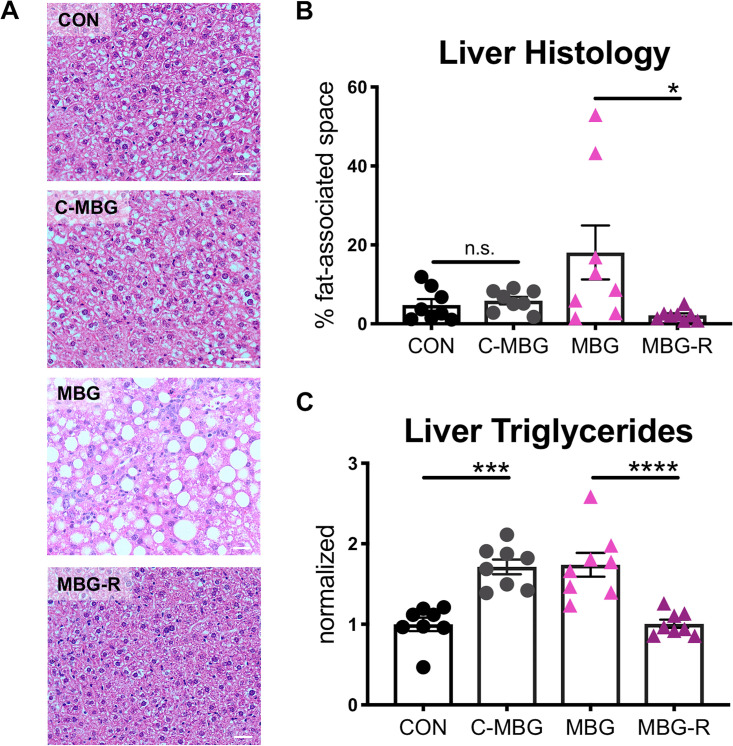
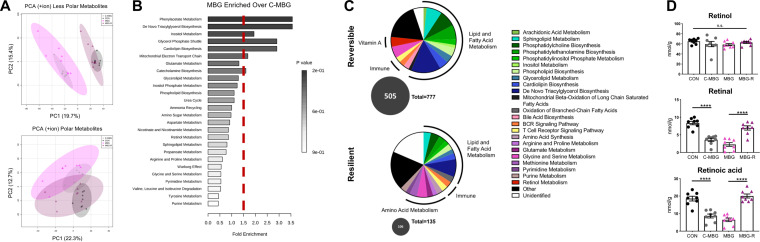
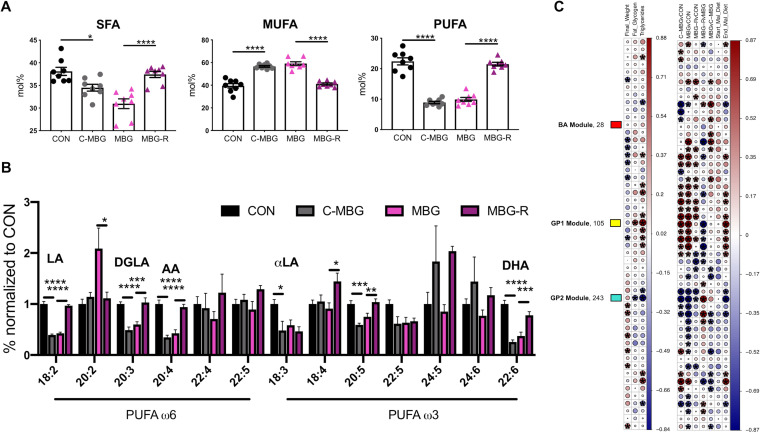
Nonalcoholic fatty liver disease (NAFLD), largely studied as a condition of overnutrition, also presents in undernourished populations. Like NAFLD, undernutrition disrupts systemic metabolism and has been linked to gut microbiota dysbiosis. Indeed, chronic exposures to fecal microbes contribute to undernutrition pathology in regions with poor sanitation. Despite a growing prevalence of fatty liver disease, the influence of undernutrition and the gut microbiota remain largely unexplored. Here, we utilize an established murine model (C57BL/6J mice placed on a malnourished diet that received iterative / gavage [MBG mice]) that combines a protein/fat-deficient diet and iterative exposure to specific, fecal microbes. Fecal-oral contamination exacerbates triglyceride accumulation in undernourished mice. MBG livers exhibit diffuse lipidosis accompanied by striking shifts in fatty acid, glycerophospholipid, and retinol metabolism. Multiomic analyses revealed metabolomic pathways linked to the undernourished gut microbiome and hepatic steatosis, including phenylacetate metabolism. Intriguingly, fatty liver features were observed only in the early-life, but not adult, MBG model despite similar liver metabolomic profiles. Importantly, we demonstrate that dietary intervention largely mitigates aberrant metabolomic and microbiome features in MBG mice. These findings indicate a crucial window in early-life development that, when disrupted by nutritional deficiency, may significantly influence liver function. Our work provides a multifaceted study of how diet and gut microbes inform fatty liver progression and reversal during undernutrition. Nonalcoholic fatty liver disease (NAFLD) remains a global epidemic, but it is often studied in the context of obesity and aging. Nutritional deficits, however, also trigger hepatic steatosis, influencing health trajectories in undernourished pediatric populations. Here, we report that exposure to specific gut microbes impacts fatty liver pathology in mice fed a protein/fat-deficient diet. We utilize a multiomics approach to (i) characterize NAFLD in the context of early undernutrition and (ii) examine the impact of diet and gut microbes in the pathology and reversal of hepatic steatosis. We provide compelling evidence that an early-life, critical development window facilitates undernutrition-induced fatty liver pathology. Moreover, we demonstrate that sustained dietary intervention largely reverses fatty liver features and microbiome shifts observed during early-life malnutrition.
非酒精性脂肪性肝病(NAFLD)在很大程度上被作为一种营养过剩的病症来研究,但在营养不良人群中也有出现。与NAFLD一样,营养不良会扰乱全身代谢,并与肠道微生物群失调有关。事实上,在卫生条件差的地区,长期接触粪便微生物会导致营养不良病理。尽管脂肪肝疾病的患病率不断上升,但营养不良和肠道微生物群的影响在很大程度上仍未得到探索。在这里,我们利用一种已建立的小鼠模型(将C57BL/6J小鼠置于营养不良饮食并接受反复灌胃 [MBG小鼠]),该模型结合了蛋白质/脂肪缺乏饮食和反复接触特定的粪便微生物。粪口污染会加剧营养不良小鼠的甘油三酯积累。MBG小鼠的肝脏表现出弥漫性脂质osis,同时脂肪酸、甘油磷脂和视黄醇代谢发生显著变化。多组学分析揭示了与营养不良的肠道微生物群和肝脂肪变性相关的代谢组学途径,包括苯乙酸代谢。有趣的是,尽管肝脏代谢组学特征相似,但仅在幼年而非成年MBG模型中观察到脂肪肝特征。重要的是,我们证明饮食干预在很大程度上减轻了MBG小鼠异常的代谢组学和微生物群特征。这些发现表明,在生命早期发育中有一个关键窗口,当因营养缺乏而受到干扰时,可能会显著影响肝功能。我们的工作提供了一项多方面的研究,即饮食和肠道微生物如何在营养不良期间影响脂肪肝的进展和逆转。非酒精性脂肪性肝病(NAFLD)仍然是一种全球流行病,但通常是在肥胖和衰老的背景下进行研究。然而,营养缺乏也会引发肝脂肪变性,影响营养不良儿童人群的健康轨迹。在这里,我们报告说,接触特定的肠道微生物会影响喂食蛋白质/脂肪缺乏饮食的小鼠的脂肪肝病理。我们利用多组学方法(i)在早期营养不良的背景下表征NAFLD,以及(ii)研究饮食和肠道微生物对肝脂肪变性的病理和逆转的影响。我们提供了令人信服的证据,表明生命早期的一个关键发育窗口促进了营养不良诱导的脂肪肝病理。此外,我们证明持续的饮食干预在很大程度上逆转了生命早期营养不良期间观察到的脂肪肝特征和微生物群变化。