Texas A&M University, Department of Biomedical Engineering, College Station, Texas, United States.
Texas A&M University, Department of Chemistry, College Station, Texas, United States.
J Biomed Opt. 2020 Sep;25(9). doi: 10.1117/1.JBO.25.9.097001.
Cardiac troponin I (cTnI) is a primary biomarker for diagnosis of myocardial infarction (MI). In contrast to central laboratory tests for cTnI, point-of-care (POC) testing has the advantage of providing results when the patient is first encountered, which helps high-risk patients to be treated more rapidly and low-risk patients to be released in a timely fashion. A paper fluidic platform is good for POC testing because the paper is abundant, low cost, and disposable. However, current cTnI assays on paper platforms use antibodies as the recognition element, which has limitations due to the high cost of production and antibody stability issues at the POC.
To develop an aptamer-based assay on a paper strip using surface-enhanced resonance Raman spectroscopy (SERRS) for detection of cTnI in the clinically relevant range at the POC.
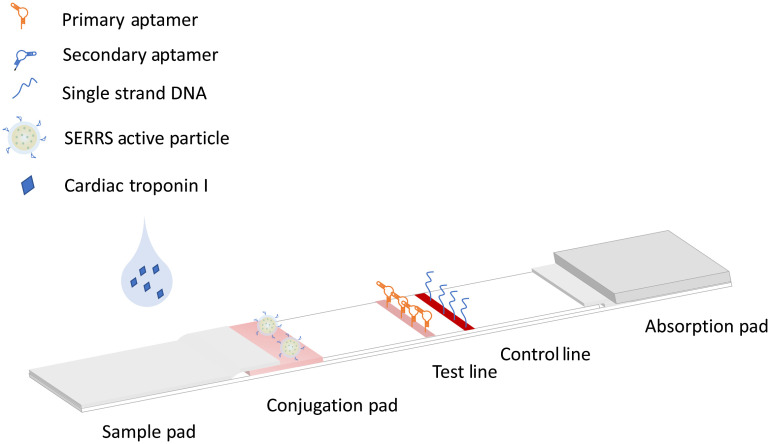
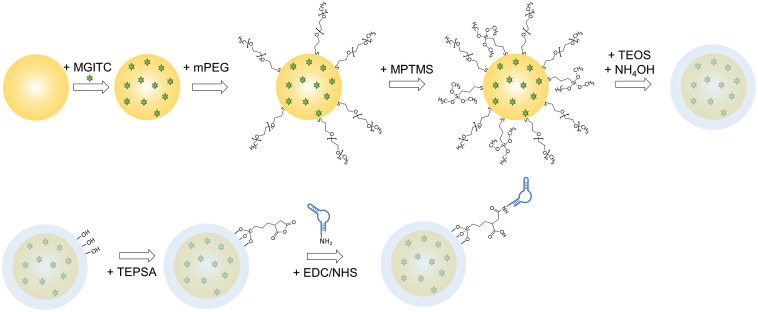
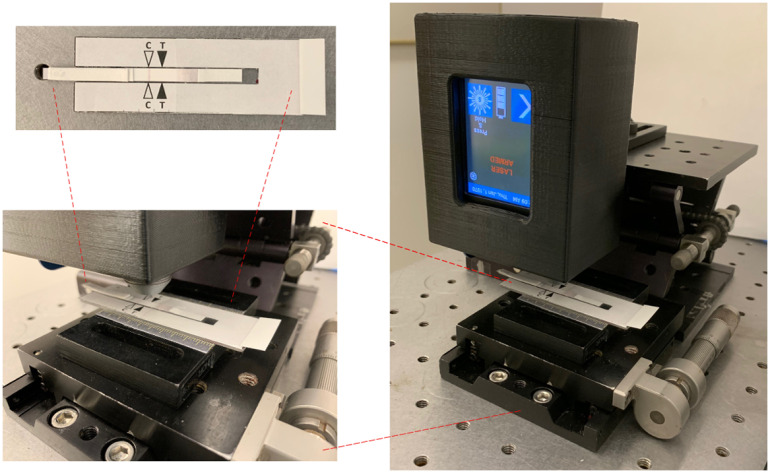
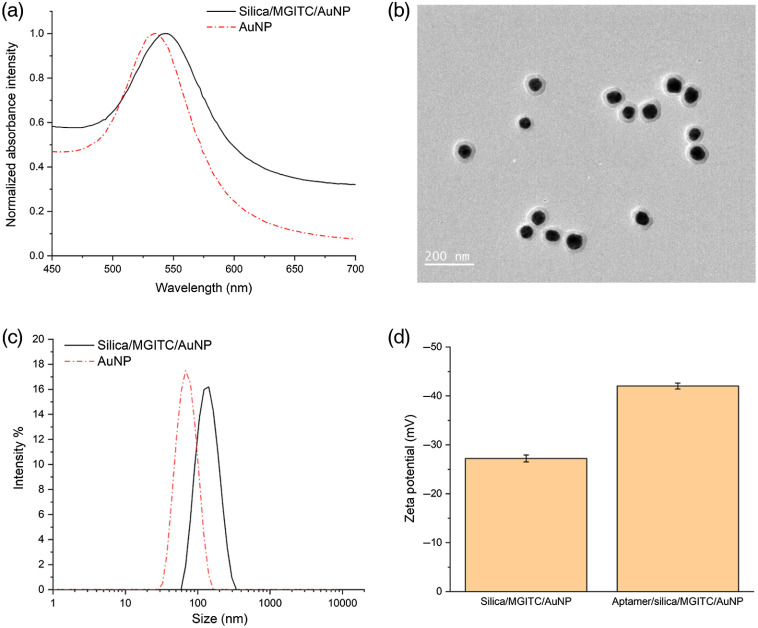
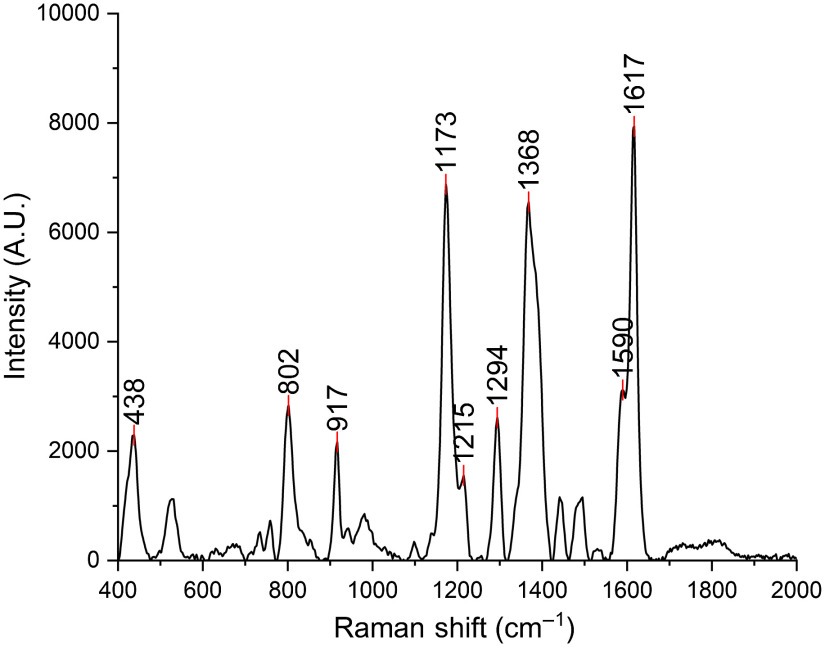
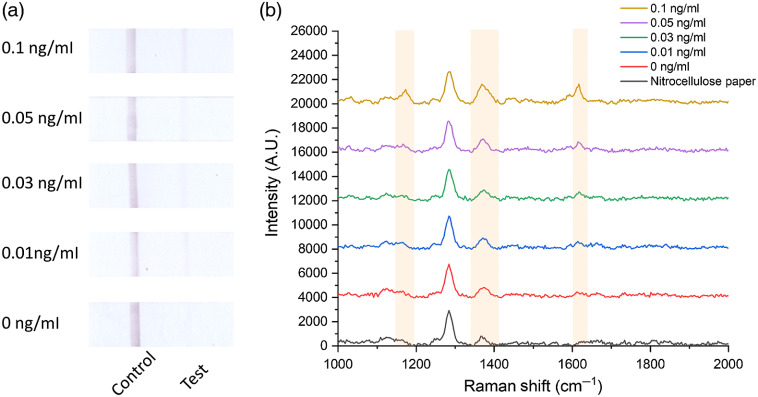
Gold nanoparticles (AuNPs) were functionalized with a Raman reporter molecule, malachite green isothiocyanate. The functionalized AuNPs were encapsulated in a silica shell and provided a SERRS signal using a handheld Raman system with a 638-nm excitation wavelength. A primary aptamer and a secondary aptamer of cTnI were used in a sandwich assay format to bind the cTnI on a test line of a paper fluidic platform. By measuring the SERRS signal from the test line, the concentration of cTnI was quantitatively determined.
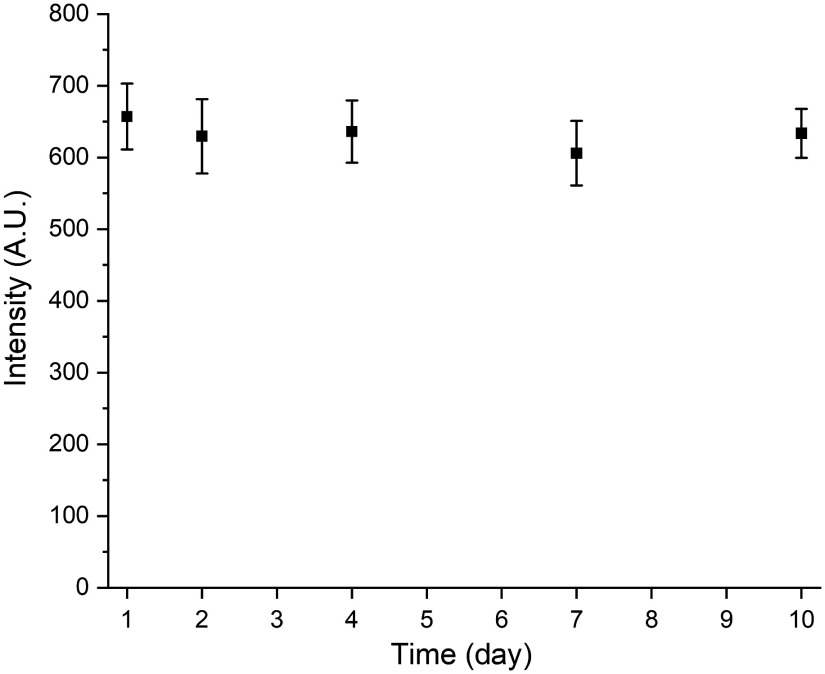
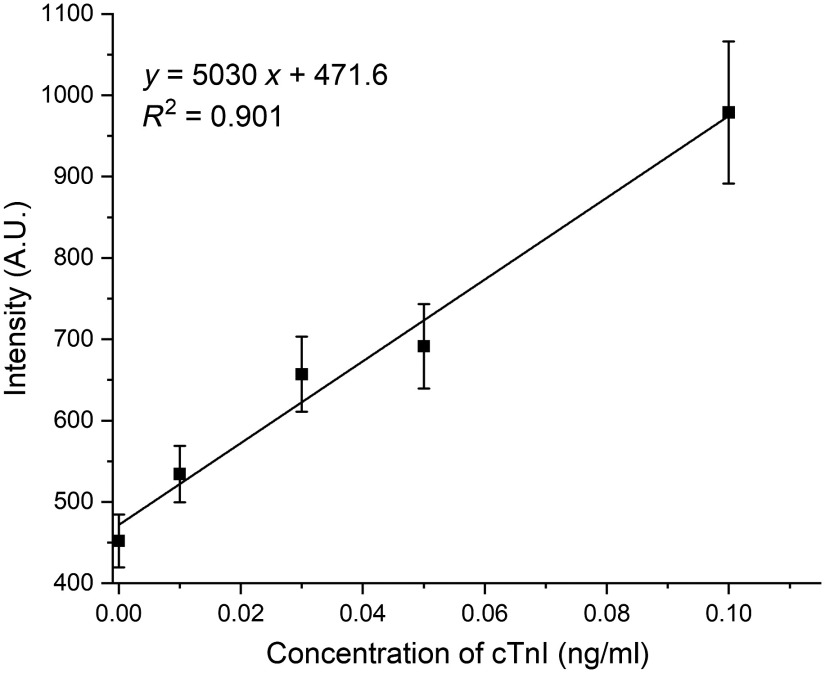
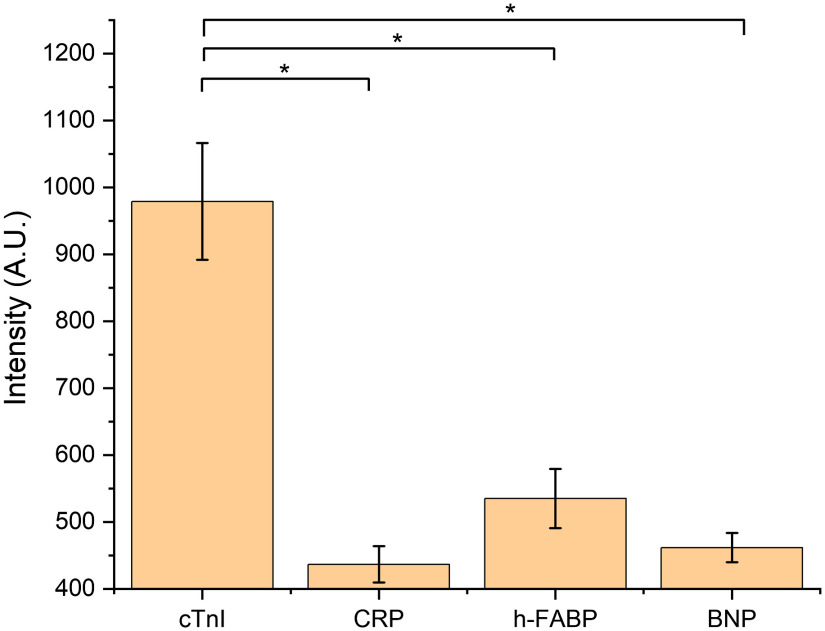
The aptamer-based SERRS assay on a paper strip had a detection range of 0.016 to 0.1 ng / ml for cTnI, had good selectivity for cTnI compared to three other markers, had good stability over 10 days, and had good performance in the more complex serum sample matrix.
The aptamer-based SERRS assay on a paper strip has the potential to provide a sensitive, selective, stable, repeatable, and cost-effective platform for the detection of cTnI toward eventual use in diagnosis of MI at the POC.
心肌肌钙蛋白 I(cTnI)是诊断心肌梗死(MI)的主要生物标志物。与中心实验室的 cTnI 检测相比,即时检测(POC)具有在首次遇到患者时提供结果的优势,这有助于更快地治疗高危患者,并及时释放低危患者。纸基平台非常适合 POC 检测,因为纸张丰富、成本低且一次性使用。然而,目前基于纸张平台的 cTnI 检测使用抗体作为识别元件,由于生产抗体的成本高以及在 POC 时抗体稳定性问题,存在局限性。
开发一种基于适体的检测方法,该方法使用表面增强共振拉曼光谱(SERRS)在 POC 处检测临床相关范围内的 cTnI。
金纳米粒子(AuNPs)用拉曼报告分子孔雀石绿异硫氰酸酯功能化。功能化的 AuNPs 被包裹在二氧化硅壳中,并使用手持式拉曼系统(激发波长为 638nm)提供 SERRS 信号。使用 cTnI 的一级适体和二级适体的三明治检测方法将 cTnI 固定在纸基流体平台的测试线上。通过测量测试线的 SERRS 信号,定量确定 cTnI 的浓度。
基于适体的 SERRS 检测方法在纸带上的检测范围为 0.016 至 0.1ng/ml,与另外三种标志物相比,对 cTnI 具有良好的选择性,在 10 天内具有良好的稳定性,并且在更复杂的血清样本基质中具有良好的性能。
基于适体的 SERRS 检测方法在纸带上具有提供敏感、选择性、稳定、可重复且具有成本效益的平台的潜力,可用于 POC 处的 cTnI 检测,最终用于 MI 的诊断。