Vechi Hareton Teixeira, Maia Lucas Rodrigues, Alves Manoella do Monte
Universidade Federal do Rio Grande do Norte, Escola Multicampi de Ciências Médicas, Departamento de Medicina, Caicó, Rio Grande do Norte, Brazil.
Universidade Federal do Rio Grande do Norte, Natal, Rio Grande do Norte, Brazil.
Rev Inst Med Trop Sao Paulo. 2020 Sep 4;62:e63. doi: 10.1590/S1678-9946202062063.
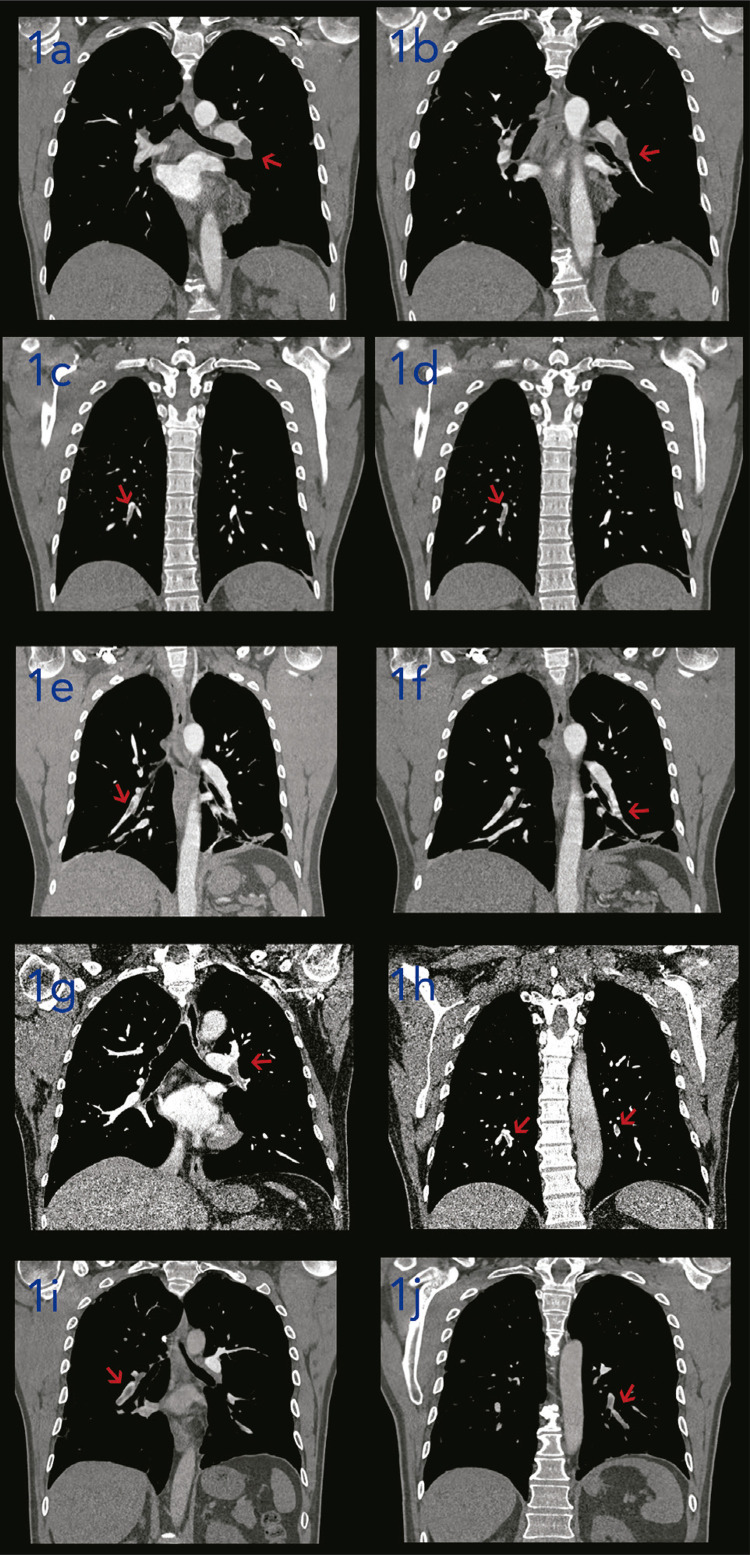
In late 2019, the severe acute respiratory syndrome coronavirus 2 (SARS-CoV-2) emerged as the cause of a cluster of pneumonia cases in China, and the corresponding disease was designated as Coronavirus Disease 2019 (COVID-19), spreading quickly around the world resulting in a pandemic. COVID-19 is associated with a set of coagulation abnormalities that increase the risk of thromboembolic events, especially in patients with severe/critical disease. We describe a series of five cases of mild COVID-19, treated in an outpatient clinic, which, after an apparent clinical improvement, developed acute pulmonary embolism (APE) between the third and the fourth week after the onset of symptoms, when they are mostly related to acute illness disappearance. Thromboembolic events are also a potential complication of mild COVID-19 and can manifest later in the disease course. This finding raises discussion about the prevention of thromboembolic events in selected group of patients with mild COVID-19.
2019年末,严重急性呼吸综合征冠状病毒2(SARS-CoV-2)在中国引发了一系列肺炎病例,相应疾病被命名为2019冠状病毒病(COVID-19),并迅速在全球传播,导致了一场大流行。COVID-19与一系列凝血异常有关,这些异常增加了血栓栓塞事件的风险,尤其是在重症/危重症患者中。我们描述了在门诊治疗的5例轻症COVID-19病例,这些病例在临床明显改善后,于症状出现后的第三至第四周发生了急性肺栓塞(APE),而此时他们大多与急性疾病的消失有关。血栓栓塞事件也是轻症COVID-19的潜在并发症,并且可能在疾病过程的后期出现。这一发现引发了对于轻症COVID-19特定患者群体中血栓栓塞事件预防的讨论。