Paes de Melo Bruno, Lourenço-Tessutti Isabela Tristan, Morgante Carolina Vianna, Santos Naiara Cordeiro, Pinheiro Luanna Bezerra, de Jesus Lins Camila Barrozo, Silva Maria Cristina Matar, Macedo Leonardo Lima Pepino, Fontes Elizabeth Pacheco Batista, Grossi-de-Sa Maria Fatima
Biochemistry and Molecular Biology Department, Universidade Federal de Viçosa (UFV), Viçosa, Brazil.
Embrapa Genetic Resources and Biotechnology, Brasilia, Brazil.
Front Plant Sci. 2020 Aug 12;11:1228. doi: 10.3389/fpls.2020.01228. eCollection 2020.
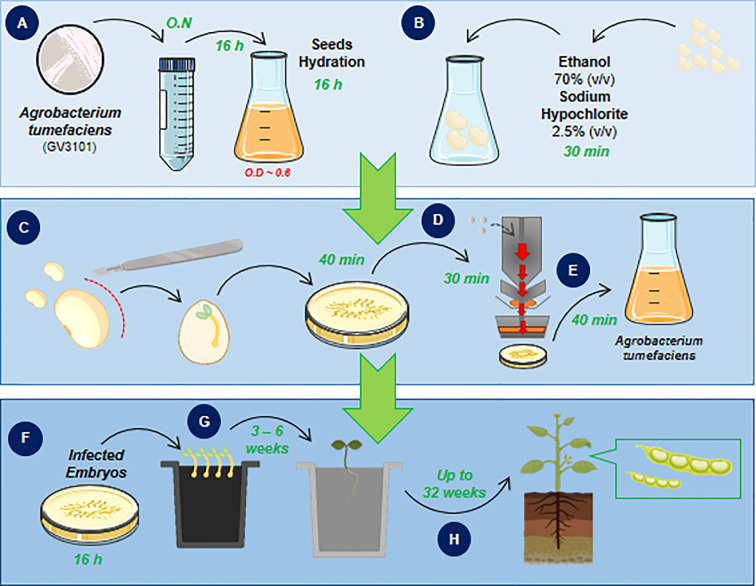
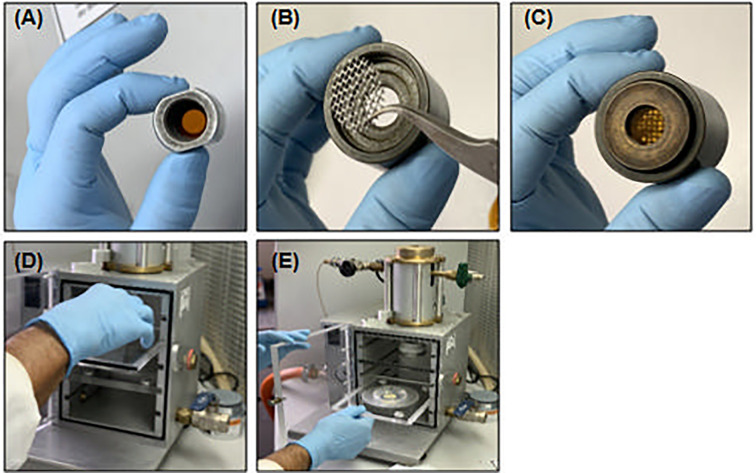
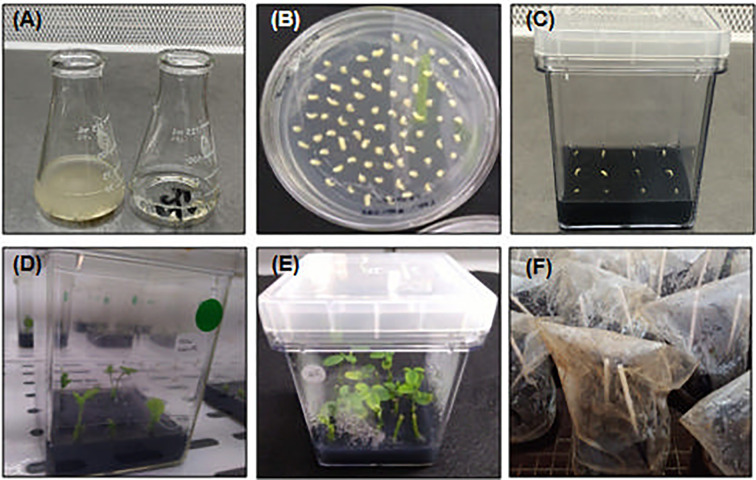
The first successful attempt to generate genetically modified plants expressing a transgene was preformed via T-DNA-based gene transfer employing mediated genetic transformation. Limitations over infectivity and tissue culture led to the development of other DNA delivery systems, such as the biolistic method. Herein, we developed a new one-step protocol for transgenic soybean recovery by combining the two different transformation methods. This protocol comprises the following steps: agrobacterial preparation, seed sterilization, soybean embryo excision, shoot-cell injury by tungsten-microparticle bombardment, -mediated transformation, embryo co-cultivation , and selection of transgenic plants. This protocol can be completed in approximately 30-40 weeks. The average efficiency of producing transgenic soybean germlines using this protocol was 9.84%, similar to other previously described protocols. However, we introduced a more cost-effective, more straightforward and shorter methodology for transgenic plant recovery, which allows co-cultivation and plant regeneration in a single step, decreasing the chances of contamination and making the manipulation easier. Finally, as a hallmark, our protocol does not generate plant chimeras, in contrast to traditional plant regeneration protocols applied in other -mediated transformation methods. Therefore, this new approach of plant transformation is applicable for studies of gene function and the production of transgenic cultivars carrying different traits for precision-breeding programs.
首次成功尝试通过基于T-DNA的基因转移介导的遗传转化来培育表达转基因的转基因植物。由于感染性和组织培养方面的局限性,导致了其他DNA递送系统的发展,如生物弹道法。在此,我们通过结合两种不同的转化方法,开发了一种新的一步法转基因大豆恢复方案。该方案包括以下步骤:农杆菌制备、种子灭菌、大豆胚胎切除、用钨微粒轰击对芽细胞造成损伤、介导转化、胚胎共培养以及转基因植物的筛选。该方案大约可在30至40周内完成。使用该方案生产转基因大豆种系的平均效率为9.84%,与其他先前描述的方案相似。然而,我们引入了一种更具成本效益、更直接且更短的转基因植物恢复方法,该方法允许在一步中进行共培养和植物再生,减少了污染的机会并使操作更容易。最后,作为一个标志,与其他介导转化方法中应用的传统植物再生方案不同,我们的方案不会产生植物嵌合体。因此,这种新的植物转化方法适用于基因功能研究以及为精准育种计划培育携带不同性状的转基因品种。