Falk Neto Joao Henrique, Tibana Ramires Alsamir, de Sousa Nuno Manuel Frade, Prestes Jonato, Voltarelli Fabricio Azevedo, Kennedy Michael D
Athlete Health Lab, Faculty of Kinesiology, Sport, and Recreation, University of Alberta, Edmonton, AB, Canada.
Graduate Program on Physical Education, Catholic University of Brasilia, Brasilia, Brazil.
Front Physiol. 2020 Aug 12;11:919. doi: 10.3389/fphys.2020.00919. eCollection 2020.
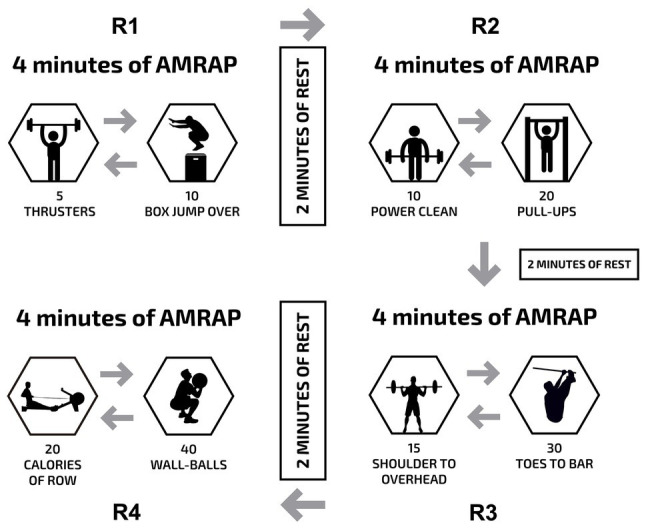
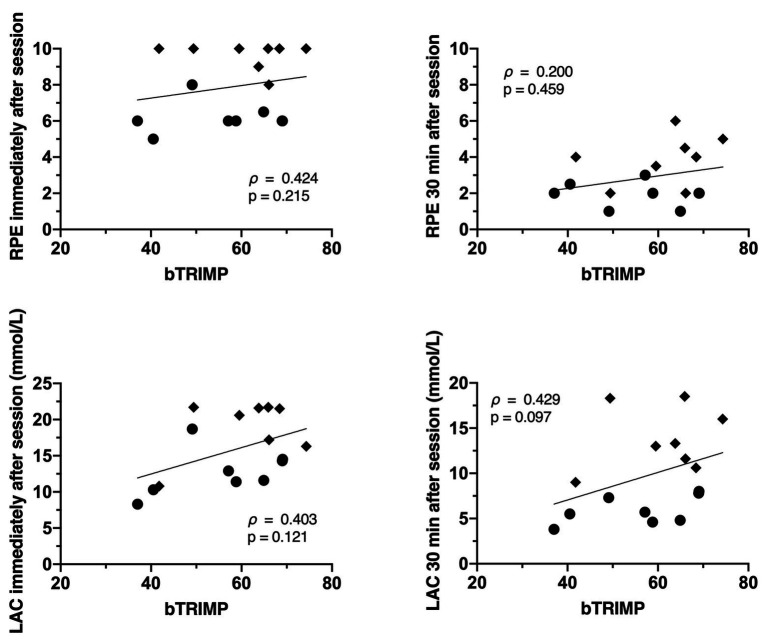
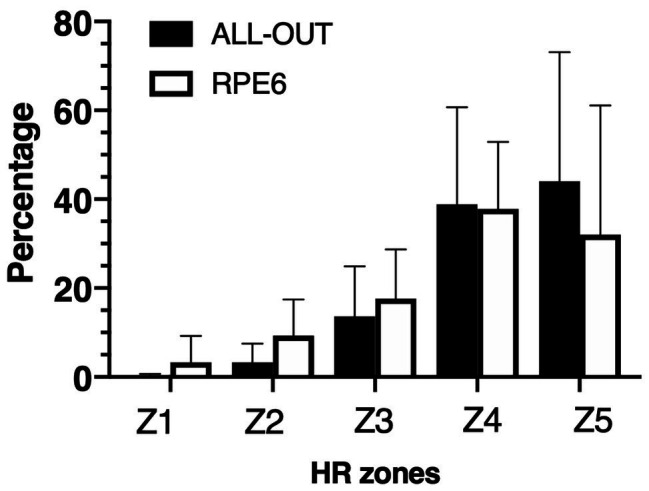
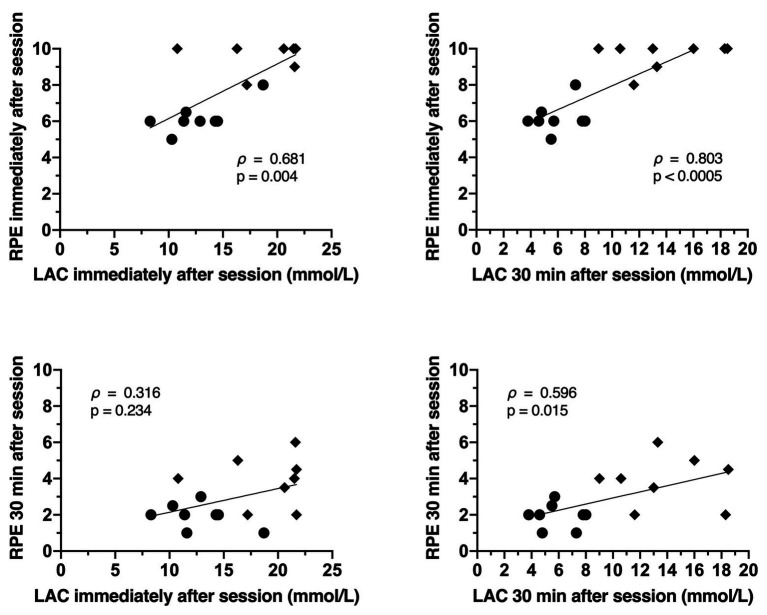
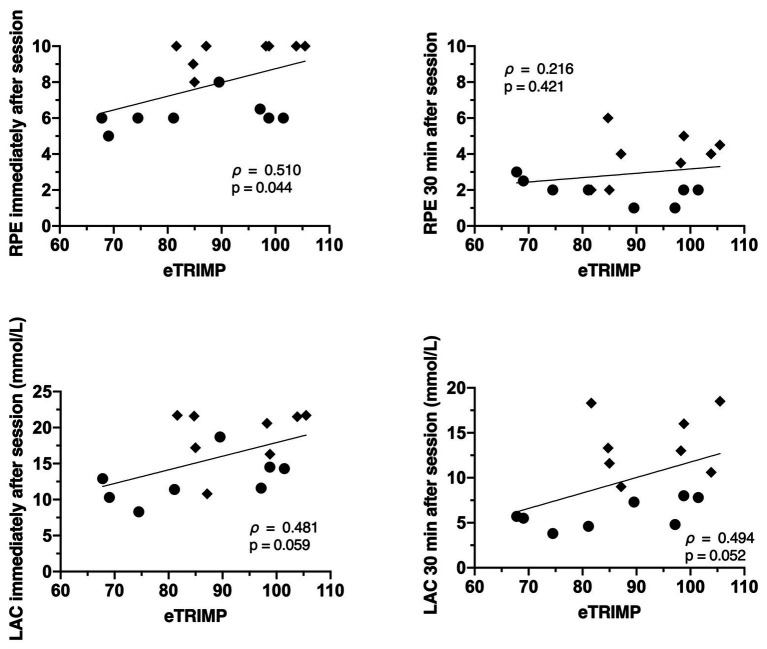
Despite its increase in popularity, little is known about how to best quantify internal training loads from functional fitness training (FFT) sessions. The purpose of this study was to assess which method [training impulse (TRIMP) or session rating of perceived exertion (sRPE)] is more accurate to monitor training loads in FFT. Eight trained males (age 28.1 ± 6.0 years) performed an ALL-OUT FFT session and an intensity-controlled session (RPE of six out of 10). Internal load was determined Edward's TRIMP (eTRIMP), Bannister's TRIMP (bTRIMP), and sRPE. Heart rate was measured continuously during the session, while blood lactate and rate of perceived exertion were measured at baseline, and immediately and 30 min after the sessions. ALL-OUT blood lactate and RPE were significantly higher immediately and 30 min after the session compared to the RPE6 condition. ALL-OUT training load was significantly different between conditions using bTRIMP (61.1 ± 10.6 vs. 55.7 ± 12.4 AU) and sRPE (91.7 ± 30.4 vs. 42.6 ± 14.9 AU), with sRPE being more sensitive to such differences [ = 0.045, effect size (ES) = 0.76 and = 0.002, ES = 1.82, respectively]. No differences in the training loads of the different sessions were found using eTRIMP (93.1 ± 9.5 vs. 84.9 ± 13.7 AU, = 0.085). Only sRPE showed a significant correlation with lactate 30 min post session ( = 0.015; = 0.596, large). sRPE was more accurate than both TRIMP methods to represent the overall training load of the FFT sessions. While the use of sRPE is advised, further research is necessary to establish its ability to reflect changes in fitness, fatigue, and performance during a period of training.
尽管功能性体能训练(FFT)越来越受欢迎,但对于如何最好地量化FFT训练课的内部训练负荷却知之甚少。本研究的目的是评估哪种方法[训练冲量(TRIMP)或主观用力程度训练课评分(sRPE)]在监测FFT训练负荷方面更准确。八名训练有素的男性(年龄28.1±6.0岁)进行了一次全力FFT训练课和一次强度控制训练课(主观用力程度为10分中的6分)。内部负荷通过爱德华兹TRIMP(eTRIMP)、班尼斯特TRIMP(bTRIMP)和sRPE来确定。训练课期间连续测量心率,同时在基线、训练课后即刻和30分钟测量血乳酸和主观用力程度。与主观用力程度为6分的情况相比,全力训练课后即刻和30分钟时的血乳酸和主观用力程度显著更高。使用bTRIMP(61.1±10.6对55.7±12.4任意单位)和sRPE(91.7±30.4对42.6±14.9任意单位)时,不同训练课条件下的全力训练负荷存在显著差异,其中sRPE对这种差异更敏感[P = 0.045,效应量(ES) = 0.76;P = 0.002,ES = 1.82]。使用eTRIMP时,未发现不同训练课的训练负荷存在差异(93.1±9.5对84.9±13.7任意单位,P = 0.085)。只有sRPE与训练课后30分钟的血乳酸存在显著相关性(P = 0.015;r = 0.596,强相关)。在表示FFT训练课的总体训练负荷方面,sRPE比两种TRIMP方法都更准确。虽然建议使用sRPE,但仍需要进一步研究来确定其反映训练期间体能、疲劳和表现变化的能力。