Sharp Coronado Hospital, Coronado, California.
San Diego County Medical Society, Scripps Health, San Diego, California.
Disaster Med Public Health Prep. 2022 Feb;16(1):321-327. doi: 10.1017/dmp.2020.344. Epub 2020 Sep 10.
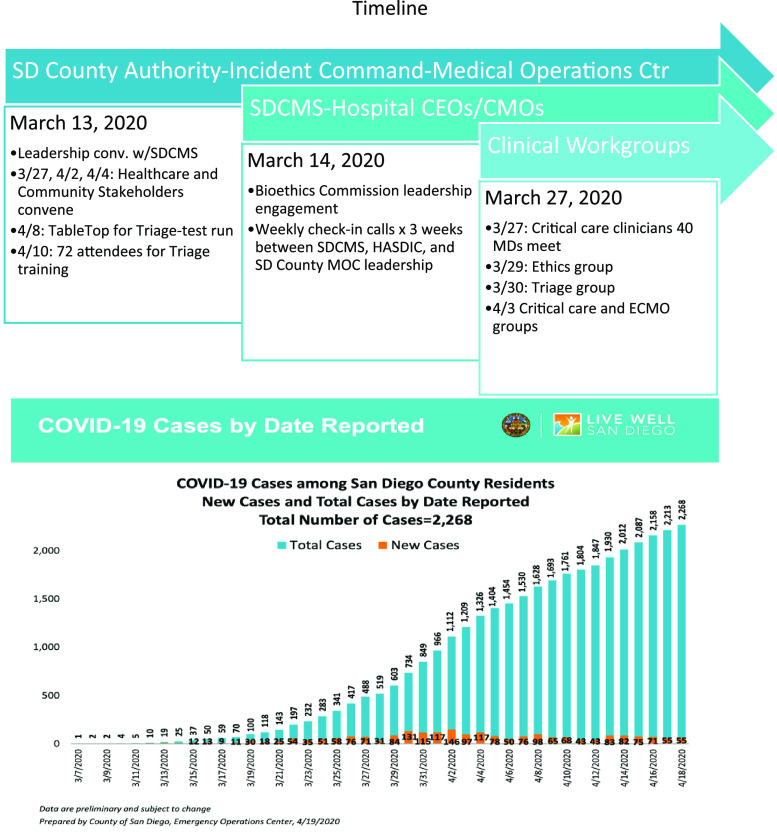
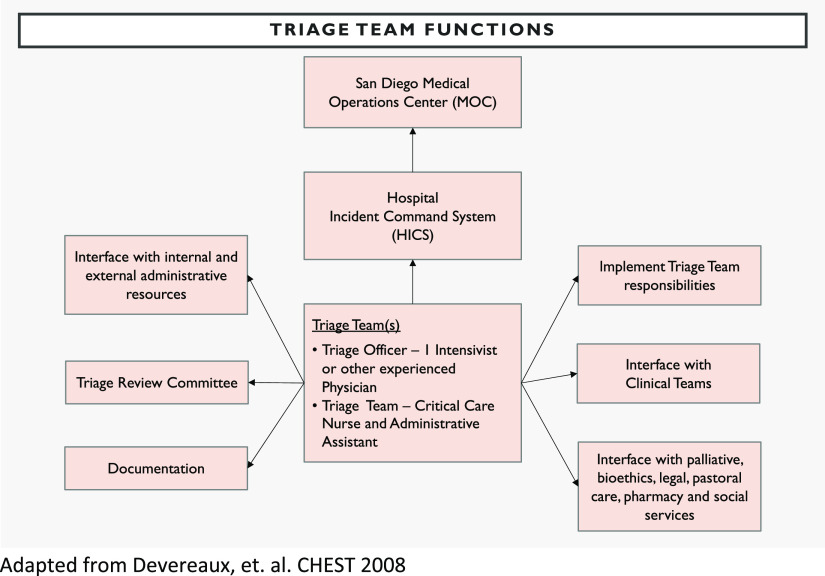
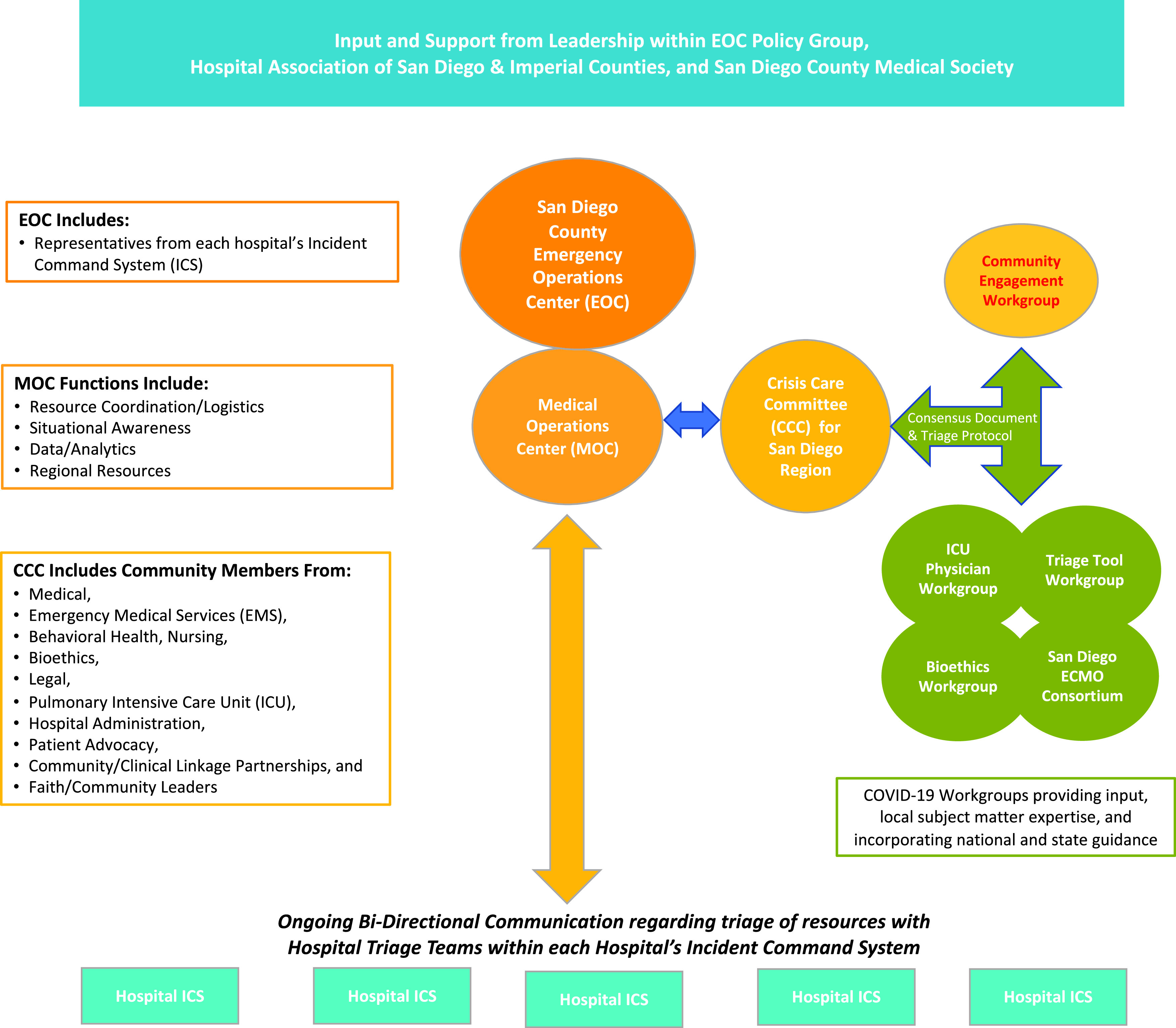
Successful management of an event where health-care needs exceed regional health-care capacity requires coordinated strategies for scarce resource allocation. Publications for rapid development, training, and coordination of regional hospital triage teams to manage the allocation of scarce resources during coronavirus disease 2019 (COVID-19) are lacking. Over a period of 3 weeks, over 100 clinicians, ethicists, leaders, and public health authorities convened virtually to achieve consensus on how best to save the most lives possible and share resources. This is referred to as population-based crisis management. The rapid regionalization of 22 acute care hospitals across 4500 square miles in the midst of a pandemic with a shifting regulatory landscape was challenging, but overcome by mutual trust, transparency, and confidence in the public health authority. Because many cities are facing COVID-19 surges, we share a process for successful rapid formation of health-care care coalitions, Crisis Standard of Care, and training of Triage Teams. Incorporation of continuous process improvement and methods for communication is essential for successful implementation. Use of our regional health-care coalition communications, incident command system, and the crisis care committee helped mitigate crisis care in the San Diego and Imperial County region as COVID-19 cases surged and scarce resource collaborative decisions were required.
成功管理医疗需求超过区域医疗能力的事件需要协调稀缺资源分配的策略。在 2019 年冠状病毒病(COVID-19)期间,缺乏快速开发、培训和协调区域医院分类团队以管理稀缺资源分配的出版物。在 3 周的时间里,100 多名临床医生、伦理学家、领导人和公共卫生当局通过虚拟会议就如何最大限度地挽救生命和共享资源达成共识。这被称为基于人群的危机管理。在监管环境不断变化的大流行期间,在 4500 平方英里的范围内快速区域化 22 家急性护理医院是具有挑战性的,但通过相互信任、透明度和对公共卫生当局的信心得到了克服。由于许多城市都面临着 COVID-19 病例的激增,我们分享了成功快速组建医疗保健联盟、危机护理标准和分类团队培训的流程。纳入持续的过程改进和沟通方法对于成功实施至关重要。使用我们的区域医疗保健联盟沟通、事件指挥系统和危机护理委员会有助于减轻圣地亚哥和帝国县地区的危机护理,因为 COVID-19 病例激增,需要进行稀缺资源的协作决策。