Villalobos Dintrans Pablo
Programa Centro de Salud Pública, Facultad de Ciencias Médicas, Universidad de Santiago, 8320000 Santiago, Chile.
Int J Environ Res Public Health. 2020 Sep 9;17(18):6546. doi: 10.3390/ijerph17186546.
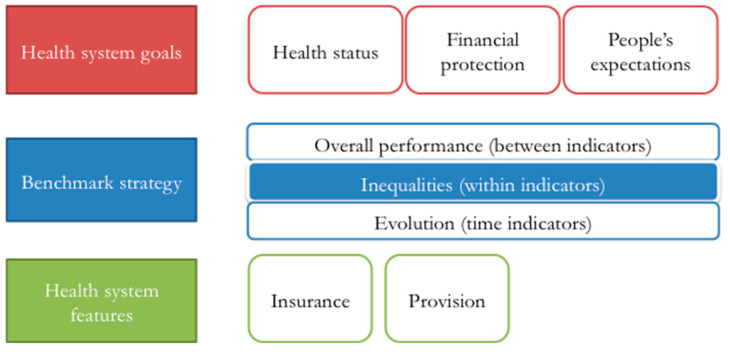
Just like many other countries around the world, Chile is facing the challenges of demographic transition and population aging. Considering this context, the question of how prepared the health system is to deal with these challenges arises; A framework to assess the health system's preparedness for aging was proposed, considering the health system's goals and features and using an equity approach. Indicators related to the health system's goals were calculated for the year 2015 using three nationally-representative sources: health status (suicide rate), financial protection (out-of-pocket and catastrophic expenditures), and responsiveness (satisfaction). Age ratios were used to compare the system's response to different age groups; Results for Chile revealed the existence of inequities, particularly when assessing the system in terms of its ability to improve health status and financial protection. These gaps increase with age, suggesting that the Chilean health system is not prepared to meet older people's needs; and These results call for a reform in the health system, as well as the need for implementing a long-term care system in the country.
与世界上许多其他国家一样,智利正面临人口结构转型和人口老龄化的挑战。考虑到这一背景,卫生系统应对这些挑战的准备情况如何这一问题便应运而生;提出了一个评估卫生系统应对老龄化准备情况的框架,该框架考虑了卫生系统的目标和特点,并采用了公平的方法。利用三个具有全国代表性的数据源计算了2015年与卫生系统目标相关的指标:健康状况(自杀率)、财务保护(自付费用和灾难性支出)以及响应能力(满意度)。年龄比率用于比较该系统对不同年龄组的响应情况;智利的结果显示存在不公平现象,尤其是在评估该系统改善健康状况和财务保护的能力方面。这些差距随着年龄的增长而扩大,这表明智利的卫生系统尚未做好满足老年人需求的准备;这些结果呼吁对卫生系统进行改革,以及在该国实施长期护理系统的必要性。