Nerurkar Sanjna Nilesh, Goh Denise, Cheung Chun Chau Lawrence, Nga Pei Qi Yvonne, Lim Jeffrey Chun Tatt, Yeong Joe Poh Sheng
Yong Loo Lin School of Medicine, National University of Singapore, Singapore 117597, Singapore.
Institute of Molecular and Cell Biology (IMCB), Agency of Science, Technology and Research (A*STAR), Singapore 169856, Singapore.
Cancers (Basel). 2020 Sep 9;12(9):2572. doi: 10.3390/cancers12092572.
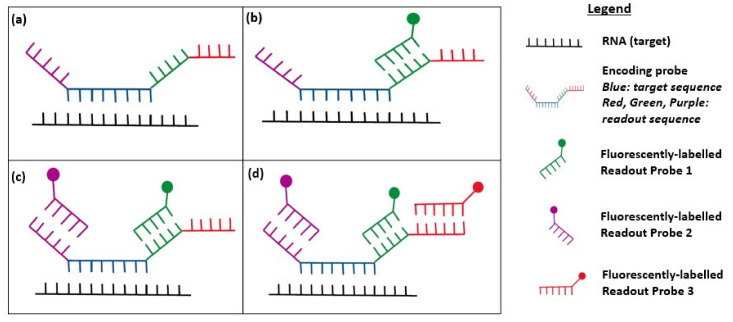
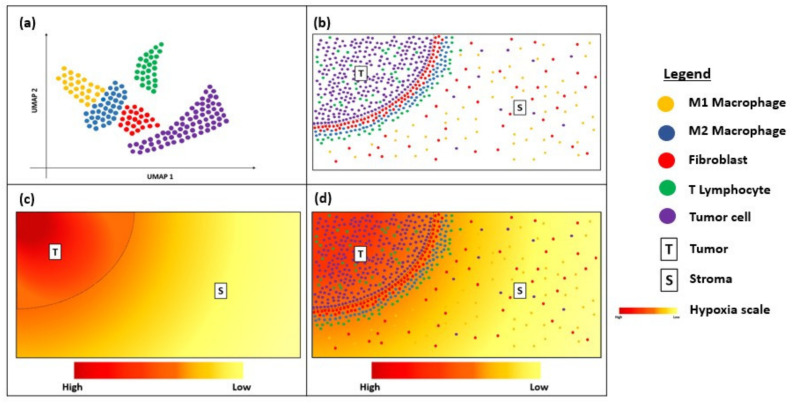
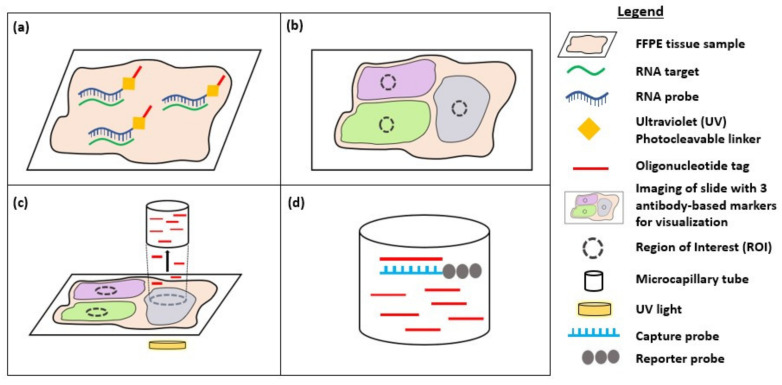
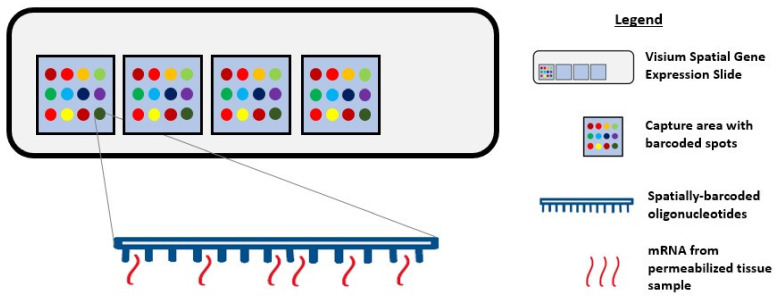
Intratumoral heterogeneity poses a major challenge to making an accurate diagnosis and establishing personalized treatment strategies for cancer patients. Moreover, this heterogeneity might underlie treatment resistance, disease progression, and cancer relapse. For example, while immunotherapies can confer a high success rate, selective pressures coupled with dynamic evolution within a tumour can drive the emergence of drug-resistant clones that allow tumours to persist in certain patients. To improve immunotherapy efficacy, researchers have used transcriptional spatial profiling techniques to identify and subsequently block the source of tumour heterogeneity. In this review, we describe and assess the different technologies available for such profiling within a cancer tissue. We first outline two well-known approaches, in situ hybridization and digital spatial profiling. Then, we highlight the features of an emerging technology known as Visium Spatial Gene Expression Solution. Visium generates quantitative gene expression data and maps them to the tissue architecture. By retaining spatial information, we are well positioned to identify novel biomarkers and perform computational analyses that might inform on novel combinatorial immunotherapies.
肿瘤内异质性对癌症患者进行准确诊断和制定个性化治疗策略构成了重大挑战。此外,这种异质性可能是治疗耐药、疾病进展和癌症复发的基础。例如,虽然免疫疗法可以带来较高的成功率,但肿瘤内的选择压力与动态进化相结合,会促使耐药克隆的出现,从而使某些患者体内的肿瘤得以持续存在。为了提高免疫治疗效果,研究人员利用转录空间分析技术来识别并随后阻断肿瘤异质性的来源。在这篇综述中,我们描述并评估了可用于癌症组织中此类分析的不同技术。我们首先概述两种知名方法,即原位杂交和数字空间分析。然后,我们重点介绍一种新兴技术——Visium空间基因表达解决方案的特点。Visium生成定量基因表达数据并将其映射到组织结构上。通过保留空间信息,我们有能力识别新的生物标志物并进行计算分析,这可能为新型联合免疫疗法提供依据。